
In stock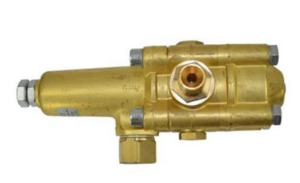


A cold-water electric unit that will not start can stop a two-person crew just as surely as a failed pump.
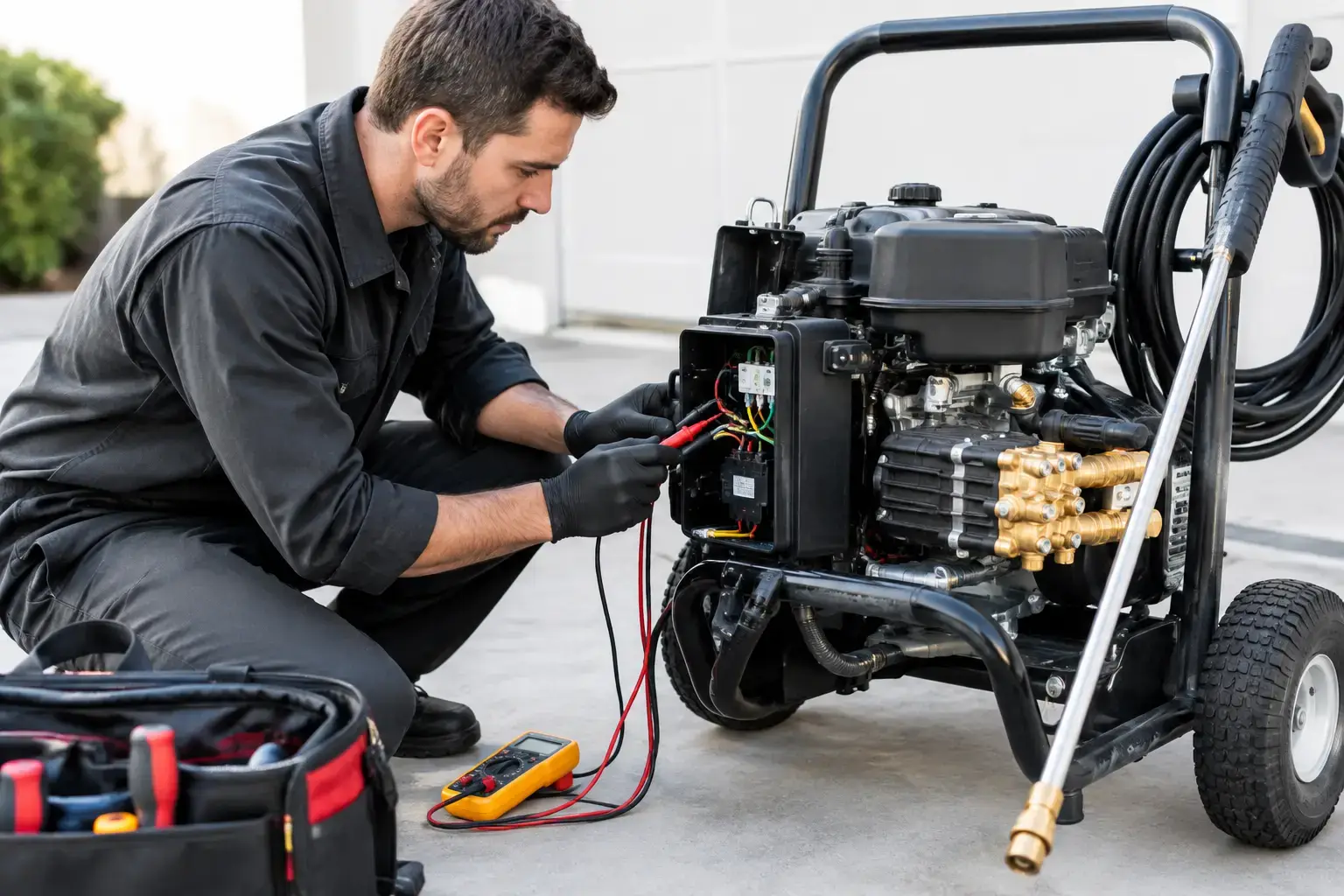
A cold-water electric unit that will not start can stop a two-person crew just as surely as a failed pump. Before replacing parts, work through this pressure washer electrical troubleshooting guide in order: incoming power, cord and plug, safety devices, controls, then motor. Most bad diagnoses happen when someone starts at the motor before proving the machine is receiving the correct power.
Commercial equipment is not a place for improvised electrical repairs. Disconnect power before opening a control box or removing a motor cover. If wiring insulation is burned, a breaker will not hold, or you are working on 240-volt equipment without the right meter and experience, stop there. Electrical faults can damage a motor, create a shock hazard, and turn a manageable repair into a control-box replacement.
The machine needs the voltage and amperage shown on its data plate, not merely a receptacle that looks like the right one. A 120-volt pressure washer plugged into a long, light-duty extension cord may hum, trip, or run hot. A 240-volt machine fed from a miswired receptacle may not start at all, or it may damage electrical components.
First, verify the branch breaker is on and that the outlet has correct voltage under load. A non-contact tester is useful for a quick check, but it does not confirm that a circuit can carry the motor load. Use a quality multimeter and follow safe testing practices. On a 120-volt circuit, check hot to neutral and hot to ground. On a 240-volt circuit, check across both hot legs and verify the equipment ground.
Do not overlook the extension cord. For a commercial washer, use the shortest practical cord with the wire gauge required by the motor manufacturer. A cord that is warm, damaged, undersized, or wound tightly on a reel creates voltage drop. The motor sees low voltage, draws more current, overheats, and may trip its overload. Replacing the motor without correcting the cord only repeats the failure.
GFCI protection is necessary around water, but nuisance trips have causes. Reset the GFCI outlet or breaker, then test the pressure washer on a known-good protected circuit if practical. If it trips immediately when the unit is plugged in, inspect the cord, plug, and wiring for moisture or damaged insulation. If it trips only when the motor starts, the motor, capacitor, switch, or a wet connection may be leaking current.
Do not bypass a GFCI to finish a job. A pressure washer combines water, conductive surfaces, and electrical load. Bypassing protection is not a field fix.
Work from the outside in. Look for flattened cord sections, jacket cuts, loose plug blades, green corrosion, and heat discoloration around the plug. A damaged ground pin matters. It is there to carry fault current safely if a component energizes the frame.
Then inspect the cord entry point at the machine. Repeated pulling can loosen terminals inside the electrical box. Strain reliefs crack, cord conductors break internally, and moisture works its way into terminals. Flexing a cord while checking continuity can reveal a break that looks fine from the outside.
On skid units and custom rigs, include the generator, shore-power inlet, transfer equipment, and any remote start or control wiring in the inspection. The pressure washer may be fine while the fault sits upstream in the rig.
Once correct power reaches the machine, move through the control circuit. The exact layout varies by brand and model, but the usual suspects are the on/off switch, pressure switch or flow switch, thermal protection, contactor, capacitor, and motor overload.
A switch can click and still fail electrically. With power disconnected, check continuity through the switch in the ON position. Inspect terminals for looseness or heat damage. High resistance at a loose terminal creates heat, and heat creates more resistance until the connection burns.
Some electric washers use a pressure switch or flow-activated control to start and stop the motor as the trigger is released. If the machine will not start, confirm water flow is on and the gun trigger is open when the manufacturer calls for it. A stuck pressure switch, failed microswitch, or damaged actuator can make the machine appear electrically dead.
On units with a contactor, listen for a distinct pull-in when the start command is given. No pull-in can point to a failed control switch, open safety circuit, bad coil, or missing control voltage. A contactor that pulls in but does not pass power may have burned contacts. This is a repair that calls for a meter, not guesswork.
A humming motor is a different problem than a completely dead machine. Shut it off quickly. Letting a stalled motor hum can overheat windings in seconds.
Start by checking the pump and motor for mechanical drag. With power disconnected, verify the motor shaft can turn as designed. A seized pump, frozen crankcase, failed bearing, or debris-driven pump failure can overload the motor. In cold weather, a frozen pump can look like an electrical failure until the coupling will not turn.
If the pump turns freely, inspect the start capacitor or run capacitor where equipped. A swollen capacitor, leaking oil, or burned terminal is a clear reason to replace it with the correct microfarad rating and voltage rating. Capacitors can retain a dangerous charge, so do not handle one casually.
A motor that hums with a good capacitor and free pump may have a centrifugal switch issue, damaged start winding, or internal motor failure. At that point, a motor shop or experienced pressure-washer technician can determine whether repair makes economic sense. On an older direct-drive unit, the honest answer is sometimes replacement rather than labor-intensive motor work.
A breaker that trips is reporting a problem, not causing one. Confirm the circuit is sized for the machine and does not also carry lights, heaters, compressors, or another large load. Then inspect for low voltage, an undersized extension cord, a binding pump, failed capacitor, and damaged wiring.
Many commercial motors have a manual reset overload. If it has tripped, let the motor cool before resetting it. Repeatedly resetting an overload without finding the cause risks winding damage. Check the cooling fan and shroud as well. Mud, lint, chemical residue, or a blocked air path can make a motor run hot even when the electrical supply is correct.
If the breaker trips instantly, disconnect the motor leads only if you are qualified to do so and test the circuit methodically. An instant trip can indicate a shorted cord, switch, capacitor, contactor, or motor winding. Burned odor, carbon tracking, and melted insulation are stop signs, not items to tape over.
Not every start-stop complaint is electrical. A worn unloader, plugged nozzle, failed thermal relief valve, air leak, or water-starved pump can create operating conditions that make the motor cycle, labor, or overheat. Verify inlet water supply, clean the inlet filter, use the correct nozzle size, and check that the unloader is functioning before condemning electrical components.
This matters most on machines that start and stop with the trigger. If pressure bleeds down internally, the control may command frequent starts. That is hard on contactors, capacitors, and motors, but the root cause may be hydraulic. Start with the job and the machine's operating behavior, not the most convenient part to replace.
Call for service when voltage is correct at the machine but the motor will not run, when the breaker or GFCI continues to trip, or when you find burned wiring, a damaged control box, or a suspected motor-winding fault. Bring the machine's model and serial information, voltage requirements, and a clear description of when the fault occurs. Does it trip at plug-in, on startup, under pressure, or after twenty minutes of operation? That detail shortens diagnosis.
At Dieter's Industrial, the repair decision starts with the failure, expected parts and labor, and what the machine is worth in your operation. A proper electrical diagnosis protects more than the pressure washer. It protects the next scheduled job, the crew standing by, and the revenue tied to a machine that needs to start every time.
Everything the guide mentions, on the shelf in Lewisberry and shipped same day on orders in by 2 pm.
If the checks above did not get it running, stop throwing parts at it. Drop it at the shop in Lewisberry or ship it in, we diagnose it, and you get a number before any work starts. Every brand, not just the ones we sell.
We will pre-fill "Won't start / no power" on the form — change it if that is not quite it.