

Pressure Washer Nozzles: Size Them for the Job
A sound pump, a clean filter and the right engine speed can still clean poorly if the nozzle is wrong. The nozzle is a calibrated restriction. Here is how to read it, size it to the machine, and know when it has worn out.
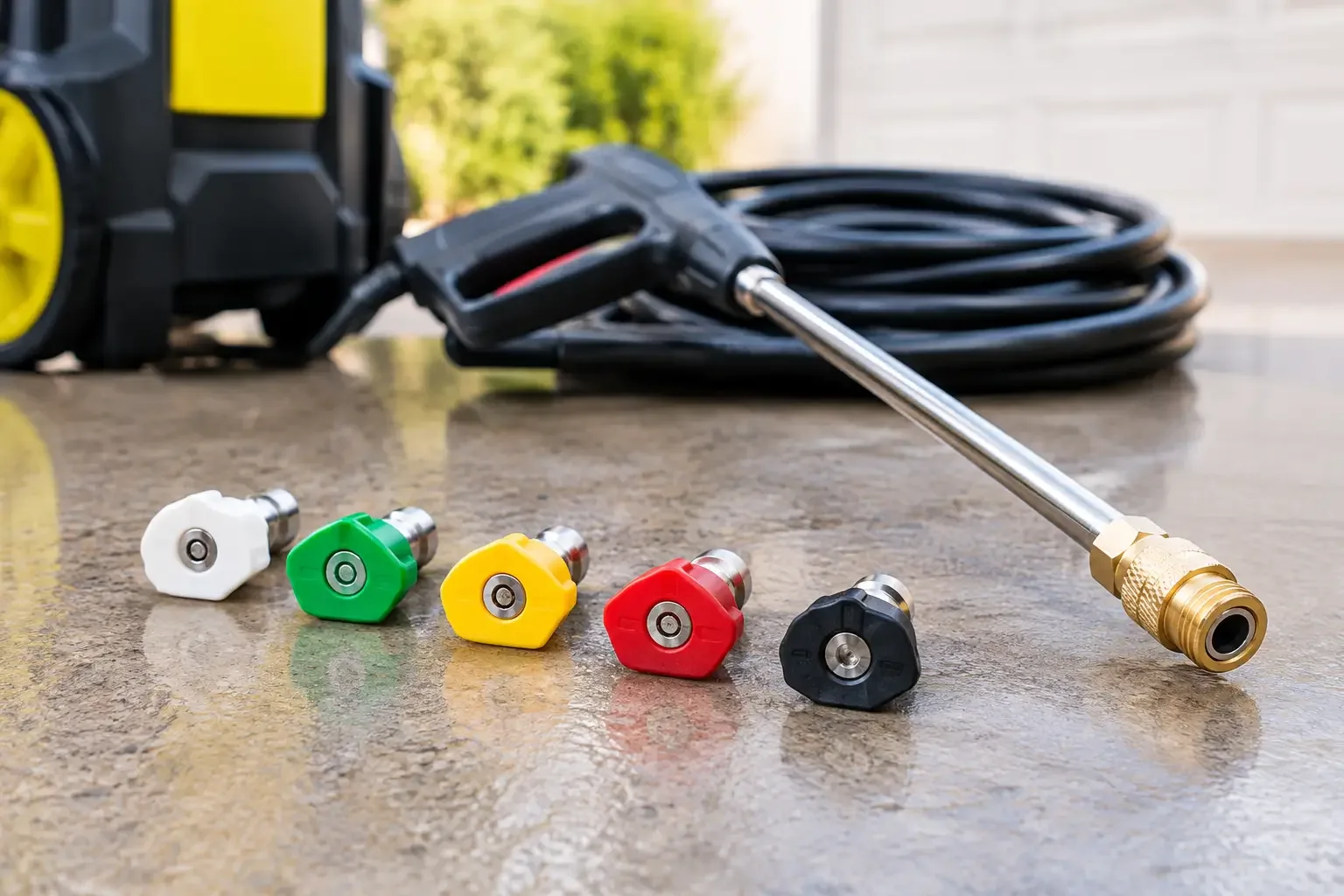
A pressure washer can have a sound pump, a clean inlet filter, and the right engine speed, then still clean poorly because the pressure washer nozzles are wrong. It happens every day: an operator installs a tip that looks close enough, loses working pressure, and starts blaming the machine. The nozzle is a calibrated restriction. Get it wrong, and it changes how the entire system performs.
Start with the job, but size the nozzle to the machine first. Spray angle, material, orifice size, and connection style all matter. They do not matter in the same order.
What a Pressure Washer Nozzle Actually Controls
The nozzle creates the restriction that lets the pump build pressure. Its orifice must pass the machine’s rated gallons per minute at the intended operating pressure. A nozzle that is too large passes too much water, reducing pressure. One that is too small restricts flow too heavily, raises pressure, and can force the unloader to bypass more often than it should.
That is why PSI alone is not enough when ordering tips. A 4,000 PSI nozzle may be correct on one washer and wrong on another 4,000 PSI washer if their flow ratings are different. A 4 GPM machine and an 8 GPM machine require very different orifice sizes, even when both carry the same pressure rating. (PSI vs. GPM explains why the two numbers do different jobs.)
For commercial operators, this is more than a performance issue. A mismatched nozzle can create inconsistent cleaning results, excessive unloader cycling, premature nozzle wear, and avoidable pump trouble. When a truck crew says a machine “just doesn’t hit like it used to,” inspect the nozzle before pulling the pump apart.
Read the Numbers Before You Install the Tip
Most commercial quick-connect nozzles use a four- or five-digit marking. The first two digits usually identify the spray angle. The final digits identify the orifice size. For example, a 25035 tip is generally a 25-degree nozzle with a 3.5 orifice.
The angle tells you the shape of the fan. The orifice tells you whether the tip matches the machine’s GPM and PSI. Both need to be right.
A nozzle sizing chart is useful, but verify the actual rating on the unit or pump. Do not size from a decal that may reflect a different configuration, an old pump, or a previous owner’s setup. A hot-water skid with a 5.5 GPM pump at 3,500 PSI needs a different tip than a cold-water unit rated at 5.5 GPM and 4,000 PSI. Our nozzle sizing calculator takes the machine’s GPM and PSI and gives you the orifice number.
If the correct orifice is between common sizes, do not guess based on what is in the toolbox. Ask whether the machine is intended to operate at its stated pressure, whether it has been modified, and whether the gauge reading is trustworthy. A worn gauge can send a technician down the wrong path just as easily as a worn tip.
Nozzle Wear Is Not a Minor Detail
A nozzle does not stay the same size forever. Water carries mineral content, fine grit, and debris. High hours, hard water, and poor filtration gradually enlarge the orifice. As the opening grows, working pressure falls.
The change is often slow enough that crews compensate without realizing it. They stand closer, slow their walking pace, turn up chemical strength, or make extra passes. That costs time on every job. On fleet work, concrete cleaning, and agricultural washdown, lost impact adds up quickly.
Replace worn nozzles on a schedule based on use and water conditions, not only when a tip is visibly damaged. Keep a known-good test nozzle for troubleshooting. If machine pressure returns with the test tip installed, the old nozzle has given you an answer.
Choose Spray Angle by Surface and Standoff Distance
Once the orifice is correct, choose the fan angle for the surface and the cleaning task. Narrower patterns concentrate impact. Wider patterns cover more area but reduce impact at any given distance.
A 0-degree nozzle delivers a concentrated stream. It has a place for targeted work, such as clearing a clogged drain channel or cutting through a stubborn spot where the surface can tolerate it. It is not a general cleaning tip. On siding, wood, painted equipment, rubber, decals, or vehicle finishes, a 0-degree tip can leave a permanent mark before the operator realizes what happened.
A 15-degree nozzle provides aggressive impact for durable surfaces and concentrated soil. A 25-degree nozzle is often the general-purpose working fan for equipment, concrete, and many exterior applications. A 40-degree nozzle is better suited to rinsing, more delicate surfaces, and situations where coverage matters more than cutting action. A 4-tip J-rod keeps all of them on the wand so the crew switches angles instead of skipping the switch.
There is no universal best angle. A 25-degree tip held too close can damage a surface. A 15-degree tip held at the proper distance may clean safely and efficiently. Material condition matters too. Old oxidized paint, deteriorated mortar, weathered wood, and loose aggregate require a more cautious approach than sound concrete or heavy steel.
Test a small area first, especially when the cost of damage exceeds the value of faster cleaning. That is common with fleet graphics, restaurant facades, historic masonry, and painted agricultural equipment.
Specialty Nozzles Solve Specific Field Problems
Not every cleaning job should be handled with a standard fan tip. Specialty nozzles can improve production, but only when their limits are understood.
A rotating nozzle, commonly called a turbo nozzle, combines a focused stream with a spinning action. It can remove heavy buildup from concrete, block, and other durable materials faster than a standard fan tip. It also concentrates a lot of energy. Use the correct size, maintain proper distance, and keep it moving. Turbo nozzles are a poor choice for soft wood, fragile masonry, vehicle finishes, and most painted surfaces.
Soap nozzles are designed for downstream chemical injection. They use a larger orifice to lower backpressure and allow the injector to draw chemical. If you install a standard high-pressure nozzle while expecting downstream soap to flow, the injector usually stops drawing. That is not necessarily an injector failure. (Chemical injector not drawing soap walks the rest of that diagnosis.)
Rinse nozzles return the system to high pressure after chemical application. Keep soap and rinse tips clearly marked and organized. A color-coded rack is helpful, but confirm the actual orifice marking because colors are not always consistent across manufacturers.
For soft washing, do not treat a pressure washer tip as a substitute for a properly designed soft-wash application setup. The method, chemical concentration, flow, and surface sensitivity are different. A dedicated shooter tip sized to the soft-wash pump is the right part for that job. Forcing a pressure washer into the wrong role is how siding gets damaged and crews waste hours managing runoff and repeat work.
Match the Connection and the Temperature Rating
A correctly sized nozzle that does not fit the gun or lance is still the wrong part. Commercial systems commonly use quick-connect plugs and sockets, but connection sizes and thread types vary. Verify whether the nozzle mounts directly to a wand, a ball valve, a surface cleaner bar, or a specialty gun.
Hot-water work adds another requirement: temperature rating. A tip used downstream of a burner must be rated for the temperatures that machine produces. Standard components may soften seals, discolor, or fail prematurely under sustained hot-water use. The same rule applies to guns, hoses, couplers, and swivels.
Do not ignore nozzle body material. Stainless steel holds up well in many commercial environments. Hardened inserts and ceramic components can offer longer life in high-hour or abrasive-water applications, though the right choice depends on the work and replacement cost. A contractor running five days a week may benefit from longer-wearing components. An occasional-use wash bay may not justify the same spend.
A Fast Troubleshooting Order When Pressure Is Low
When pressure drops, start with the simple items before diagnosing a pump or unloader. First, confirm water supply volume and check inlet filtration. Then inspect the nozzle for wear, blockage, or the wrong orifice. Test pressure with a known-good, correctly sized tip.
If pressure is still low, check for leaks at hoses, couplers, guns, and fittings. Then look at unloader operation, belt condition where applicable, engine RPM or motor performance, and pump condition. On hot-water equipment, separate cleaning performance from pressure performance. A burner problem may leave pressure intact but make grease removal much slower. (Why a pressure washer won’t build pressure covers the full sequence; burner troubleshooting covers the heat side.)
This order prevents expensive guesswork. Dieter’s Industrial sees plenty of machines brought into the repair bay for suspected pump failure when a worn nozzle, plugged inlet screen, or unloader adjustment was the real issue.
Keep the Right Nozzles on the Truck
A working crew should carry more than one tip. Keep the correct daily-use fan nozzle, a wider rinse nozzle, the appropriate soap nozzle if using downstream injection, and a specialty tip only when the job calls for it. Store them clean and protected. A tip rolling around in a toolbox collects debris and can plug the first time it is used.
Label nozzles by both angle and orifice, not just color. Record the machine’s rated GPM, PSI, and normal nozzle size where the crew can find it. When a nozzle goes missing on a job, that information keeps someone from installing the nearest available tip and sending the machine into the wrong operating range.
The right nozzle is inexpensive compared with lost production, damaged property, or unnecessary pump work. Treat it like the precision wear part it is, and your pressure washer will clean closer to the way it was built to clean. Run your machine’s numbers through the nozzle calculator, browse the nozzles we stock, or ask us if your orifice lands between sizes.