

How to Choose Pressure Washer PSI and GPM
A machine can show impressive PSI on a spec sheet and still be the wrong tool for the work. Start with the soil, the surface, the production target and the water supply.
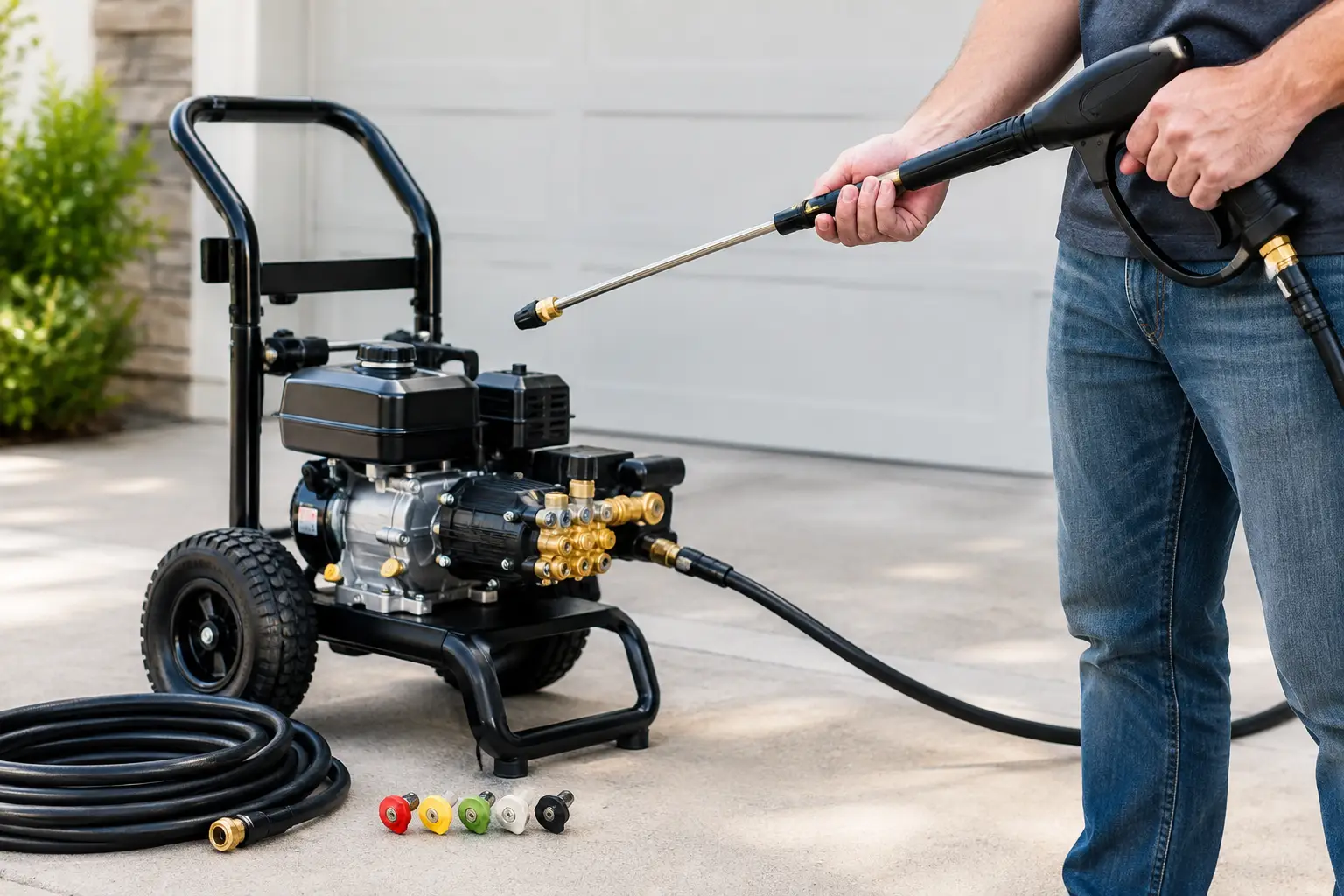
A machine can show impressive PSI on a spec sheet and still be the wrong tool for the work. A contractor cleaning concrete all day needs a different machine than a fleet operator washing road film, and neither should buy based on the biggest number in the catalog. When operators ask how to choose pressure washer PSI and GPM, the useful answer starts with the soil, surface, production target, and water supply.
PSI and GPM work together, but they do different jobs. Pick the wrong balance and you may get slow cleaning, damaged surfaces, constant water-starvation problems, or a machine that spends more time in the repair bay than on billable work.
How to choose pressure washer PSI and GPM for the job
PSI means pounds per square inch. It is the force of the water striking the surface. Higher pressure can break the bond between a surface and stubborn soil, but it also raises the risk of etching concrete, stripping paint, cutting wood fibers, forcing water behind siding, or damaging vehicle finishes.
GPM means gallons per minute. It is the volume of water moving across the work. Flow is what carries loosened dirt away, rinses detergent, and determines how quickly you can cover a large area. For many commercial cleaning jobs, GPM has more to do with production than operators expect.
A useful way to compare machines is cleaning units: PSI multiplied by GPM. A 4,000 PSI, 4 GPM unit produces 16,000 cleaning units. A 3,000 PSI, 5.5 GPM unit produces 16,500. Their total output is close, but they will not clean the same way. The 4,000 PSI unit hits harder. The 5.5 GPM unit moves more water, rinses faster, and generally keeps a surface cleaner moving at a better pace.
Do not treat cleaning units as the whole decision. They do not account for hot water, nozzle selection, chemical application, pump quality, engine size, or whether your customer has enough water available to feed the machine. They are a comparison tool, not a buying plan.
Start with the soil, not the catalog
Think about what you are trying to remove and what it is attached to. Mud, dust, salt, loose debris, and routine road film usually respond well to moderate pressure with adequate flow and detergent. Heavy grease, oil, animal fat, gum, hydraulic residue, and baked-on industrial grime often need heat and chemistry before they need more PSI.
This is where new operators commonly overspend on pressure. If you are cleaning greasy equipment or commercial kitchen-exhaust components with cold water, jumping from 3,500 to 4,000 PSI may help somewhat, but it will not replace hot water. A properly sized hot-water machine with the right detergent can reduce cleaning time substantially while allowing you to use safer working pressure.
Surface material matters just as much. Concrete can usually tolerate more pressure than painted metal, vinyl, wood, stucco, or vehicle finishes. Even within concrete work, new concrete, decorative finishes, soft mortar joints, and deteriorated surfaces demand caution. The operator, nozzle, standoff distance, and dwell time all affect results. A high-pressure machine in untrained hands can turn a profitable job into a damage claim quickly.
Common commercial ranges
For vehicle fleets, equipment washing, building maintenance, and general contractor work, 3,000 to 4,000 PSI with 4 to 5.5 GPM is a common commercial range. It provides enough pressure for difficult soil while delivering the water volume needed to rinse efficiently.
For flatwork, a 4 GPM machine is workable, but 5.5 to 8 GPM changes production when paired with a properly matched surface cleaner. More flow lets the surface cleaner operate at a larger diameter and maintain a cleaner path without striping. If concrete is a major revenue stream, do not choose a machine solely because it has 4,000 PSI. Look hard at flow — our 8+ GPM machines are built for exactly this work.
For soft washing, PSI is intentionally low. The work is done with chemical mix, controlled application, dwell time, and gentle rinsing. A high-pressure washer may still have a place on the truck for flatwork or equipment, but it is not a substitute for a purpose-built soft-wash system.
For agricultural washdown, food-related washdown, and heavy degreasing, hot water and higher GPM often matter more than extreme pressure. You need to move soil off the surface, manage runoff, and keep working through long cleaning cycles. That points toward commercial-duty components, a properly sized burner, and an honest look at duty cycle.
Match flow to your water supply
A pressure washer pump cannot create water that is not there. If a machine requires 5.5 GPM and the available spigot or supply line only delivers 3.5 GPM, the pump can starve. Starvation causes cavitation, heat, vibration, pressure fluctuations, and premature pump damage.
Before selecting a unit, test the actual water source at the jobsite when possible. A simple bucket test tells more than an assumption based on hose size. Time how long it takes to fill a known container, then calculate the available gallons per minute. Also account for long supply runs, restrictive fittings, shared water use, poor well recovery, and water filters that have not been serviced.
If your work routinely takes you to properties with marginal water supply, a buffer tank may be the right answer. The tank must be sized and plumbed correctly so the machine receives a consistent feed. This is especially relevant for high-flow rigs, mobile fleet washing, and jobs where the customer’s water pressure drops during peak use.
Pressure, nozzle, and hose must agree
The rating on the machine is only part of the system. Nozzle orifice size determines whether the pump can operate at its intended pressure and flow. A nozzle that is too small can overpressure the system and force the unloader to work harder than it should. A nozzle that is too large can leave you with disappointing pressure and poor cleaning performance.
As a practical rule, choose nozzles using the machine’s actual PSI and GPM rating — the nozzle sizing calculator does the math — then verify them when performance changes. Nozzles wear. As the orifice enlarges, pressure drops and the operator may assume the pump is failing. Sometimes the repair is a nozzle set, not a pump rebuild.
Hose length also costs pressure. Long runs, undersized hose, quick-connect restrictions, and extra fittings all add loss. A machine that performs well at the trailer may feel weak 250 feet away. For long-distance cleaning, plan the hose diameter and reel setup around the work instead of adding hose after the fact.
Consider duty cycle and repair reality
A homeowner-style machine may claim attractive PSI, but commercial work exposes the difference between a weekend rating and a production machine. If the washer will run several hours a day, look at the pump design, engine or motor, unloader, frame, hose rating, burner components on hot-water units, and parts support.
More PSI and GPM also mean more demand on every component. A high-flow machine needs adequate inlet plumbing, proper bypass management, correctly rated hoses, and regular maintenance. It is not a reason to avoid capacity. It is a reason to buy capacity that matches your workload and can be serviced when something fails.
For a contractor building a first rig, a 4,000 PSI, 4 GPM cold-water unit can be a versatile starting point for many jobs. But if the business plan is centered on large flatwork, fleet washing, or agricultural equipment, buying a higher-flow machine early may save a costly upgrade later. If grease is the core problem, put hot water in the conversation before adding pressure.
A good equipment decision should leave room for the way your business will operate six months from now, not just the first job on the schedule. Start with the surfaces you clean, the soil you remove, and the hours you expect to run. Then choose PSI for safe impact, GPM for production, and a machine built to stay working when the schedule is full. (For the short version, see 3,000 or 4,000 PSI? You probably need GPM.)