

How to Select a Washer for Concrete Cleaning
A concrete job can make a machine look good or expose every weak point it has. To select a washer for concrete cleaning, start with the contamination, square footage, water access, and production target, not the highest PSI number on a spec sheet. A unit that strips a small sidewalk may be completely wrong for a weekly parking-garage route, a grease-stained loading dock, or a large commercial flatwork contract.
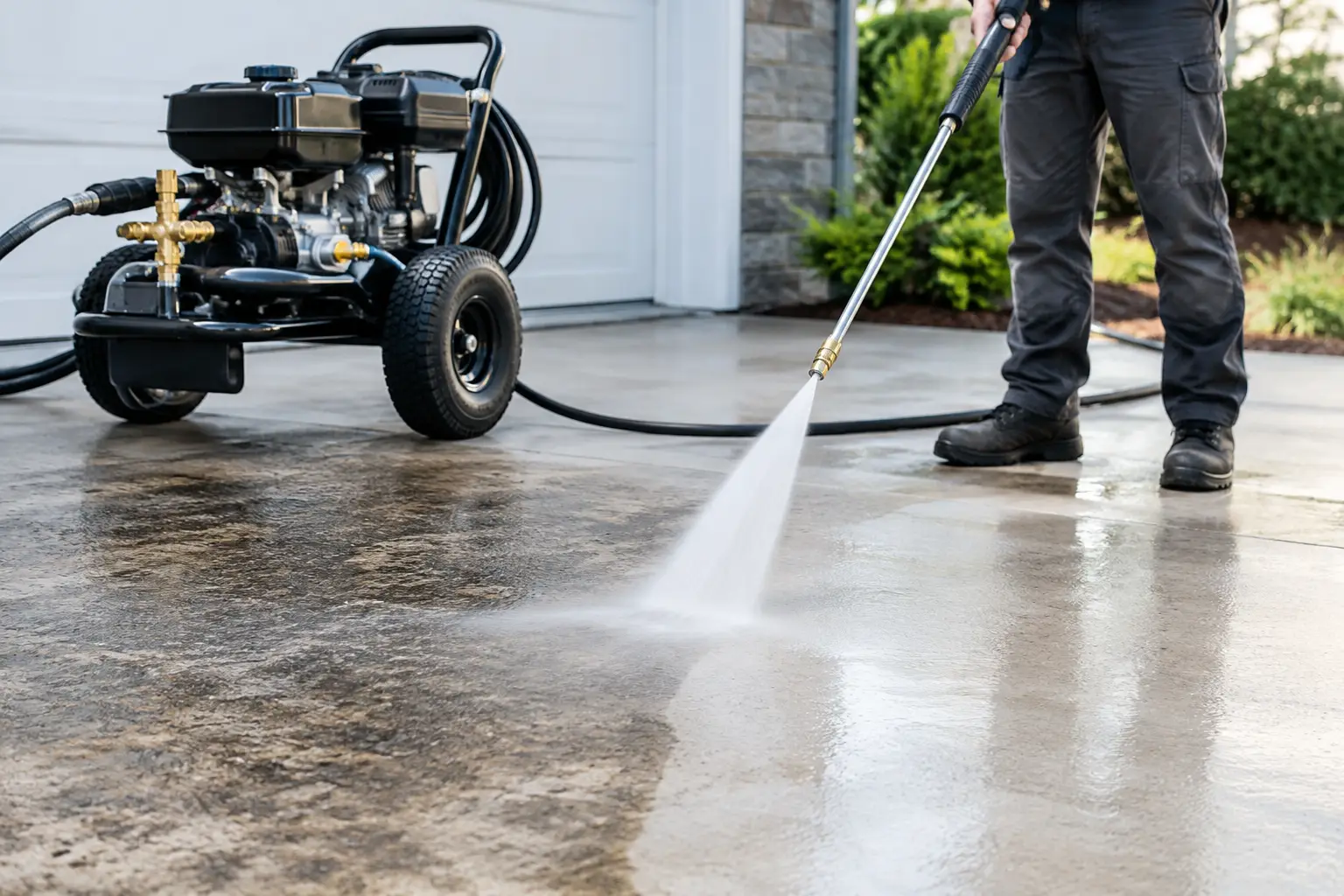
A concrete job can make a machine look good or expose every weak point it has. To select a washer for concrete cleaning, start with the contamination, square footage, water access, and production target, not the highest PSI number on a spec sheet. A unit that strips a small sidewalk may be completely wrong for a weekly parking-garage route, a grease-stained loading dock, or a large commercial flatwork contract.
Concrete is durable, but it is not forgiving of bad equipment choices. Too little water flow means slow cleaning and visible lap marks. Too much pressure with the wrong nozzle can scar cured concrete, blow out damaged joints, or leave wand marks that create a callback. The right setup puts cleaning energy where it counts while keeping the operator moving.
Start With the Concrete and the Soil
“Concrete cleaning” covers several very different jobs. Light organic buildup on sidewalks, general grime around storefronts, tire marks in a parking area, oil beneath fleet equipment, and food grease at a dumpster pad do not call for the same machine or process.
For basic maintenance cleaning, cold water is often enough when paired with proper detergent and a surface cleaner. Dirt, pollen, loose grime, and many light stains respond well to a commercial cold-water unit with adequate flow. The goal is consistent coverage and rinse volume, not maximum impact at the tip. A surface-cleaner detergent like SC-Plus does a lot of the work before the water ever hits.
Oil, grease, hydraulic fluid, animal fat, and heavily tracked industrial soils are different. Heat changes the job. Hot water helps break down petroleum and grease so a degreaser like Carbon-X can lift it from the surface instead of simply pushing it around. If grease removal is part of your regular revenue, a hot-water pressure washer is usually a production decision, not a luxury purchase. It can reduce dwell time, improve results, and keep an operator from making repeated passes over the same area.
There are limits. A hot-water machine will not erase every old oil stain from porous concrete, especially where contamination has soaked deep into the slab. Degreaser selection, dwell time, agitation, recovery requirements, and realistic customer expectations still matter. Equipment is part of the system, not a substitute for process. (Rust stains are their own problem and need their own chemistry.)
PSI and GPM: Know What Each One Does
PSI provides impact. GPM provides flushing power and determines how quickly you can clean a broad surface. Contractors often focus on PSI because it is the number customers recognize, but GPM is frequently the better indicator of production on concrete. (The PSI vs. GPM guide covers the trade-off in detail.)
A 4 GPM commercial washer can handle smaller sidewalks, residential driveways, and occasional flatwork. It is a workable entry point for an owner-operator, particularly when jobs are not yet large enough to justify a dedicated trailer or skid. But on expansive flatwork, 4 GPM can become the bottleneck. The operator may have enough pressure to clean, but not enough volume to run a larger surface cleaner efficiently or rinse debris away quickly.
For regular commercial concrete cleaning, 5.5 to 8 GPM is where productivity improves noticeably. More flow supports a larger surface cleaner, reduces striping, and shortens rinse time. An 8 GPM machine does not automatically make every job twice as fast, because layout, water supply, pretreatment, and wastewater handling affect production. Still, it gives a crew more capacity when the work is there.
PSI should fit the surface and the accessory. Many concrete applications work well in the 3,000 to 4,000 PSI range. Higher pressure has a place, but it is not a blanket upgrade. On older concrete, decorative finishes, exposed aggregate, or deteriorated joints, excessive pressure can cause damage. A machine should be sized for the work you intend to sell, then controlled with the correct nozzle, distance, and cleaning technique.
Match the Surface Cleaner to the Machine
A surface cleaner is the main production tool for flatwork. The washer and surface cleaner need to be matched, not bought as separate afterthoughts. Too large a cleaner on too little flow produces weak results, slow rotor speed, and striping. Too small a cleaner wastes the capacity of a high-flow washer and wears out the operator on larger jobs.
A common working range is roughly 4 inches of surface-cleaner diameter per GPM, with adjustments for the design of the cleaner and the type of work. A 4 GPM machine may run a 19-inch cleaner well. A 5.5 GPM unit commonly supports a 20- to 24-inch cleaner. Higher-flow machines can operate 24- to 28-inch units or larger when the jobsite has adequate water supply.
Do not make the purchase decision based only on deck diameter. Look at swivel quality, bearing design, rotor-arm balance, hose routing, gun comfort, and replacement-part availability. A surface cleaner that vibrates, leaks at the swivel, or cannot maintain consistent rotation will turn a profitable job into a repair stop.
Hot Water, Cold Water, or a Two-Machine Setup?
Cold-water equipment is simpler, generally costs less up front, and has fewer systems to maintain. There is no burner, fuel system, coil, ignition component, or freeze-sensitive burner plumbing to service. For contractors focused on residential concrete, building wash support, or general property maintenance, a cold-water machine may be the correct place to start.
Hot-water equipment adds cost and maintenance, but it earns its keep on grease-heavy work. Restaurant pads, service bays, fleet yards, equipment shops, agricultural washdown areas, and industrial facilities often demand heat because cold water alone takes too long. If those jobs make up a meaningful part of your schedule, buying cold water to save money can cost more in labor and lost production over time. (The hot vs. cold guide walks through the numbers.)
Some established operators run both. A high-flow cold-water washer handles general flatwork and rinsing, while a hot-water unit like the BE 5.5 GPM hot skid goes to grease jobs and cold-weather work. That arrangement adds equipment expense, but it also prevents a burner-equipped machine from being tied up on jobs where heat offers little advantage.
Water Supply Can Limit a Good Machine
Before stepping up to 8 GPM or more, verify what the site can deliver. A pressure washer pump cannot make water that is not there. Weak spigots, undersized supply hoses, restrictive filters, and long hose runs can starve the pump, causing cavitation and premature damage. (See the water supply guide.)
On mobile rigs, a properly sized buffer tank protects the pump from inconsistent municipal supply and allows the machine to run at its rated flow. The tank, plumbing, float valve, filtration, and bypass routing have to be designed as a system. A high-GPM washer installed with undersized plumbing will not perform like the brochure says it should.
Water recovery may also affect the equipment decision. If you are cleaning grease, oil, or areas where runoff enters storm drains, plan for containment and recovery before the job is sold. A powerful washer without a recovery plan can create an environmental problem and an unhappy facility manager.
Buy for Uptime, Not Just Initial Price
Concrete cleaning is hard on equipment. Hoses drag across abrasive surfaces. Guns get dropped. Surface-cleaner swivels run for hours. Pumps deal with dirty water supply, and hot-water systems add burners and coils to the maintenance list.
Choose commercial-grade components that can be serviced: a repairable pump, available unloaders, standard fittings, quality hose, and an engine or motor with local parts support. Check whether the machine has a real frame, protected controls, accessible service points, and enough hose capacity for the jobs you plan to perform. A 50-foot hose may be fine for a driveway. It is not enough for many commercial sites.
Also consider how equipment downtime will be handled. A lower-priced machine is not a bargain if replacement parts take weeks or no one can diagnose the problem when pressure drops in the middle of a route. At Dieter’s Industrial, the same people who help match a washer to the work also see what fails in the repair bay. That matters when deciding whether a certain configuration is practical for your operating schedule.
Build the Setup Around the Work You Want
If your work is mostly small residential flatwork, a dependable cold-water unit around 4 GPM, a correctly sized surface cleaner, quality hose, and good chemical technique can produce clean results without overspending. If you are pursuing recurring commercial properties, fleet yards, restaurant pads, or large concrete routes, prioritize GPM, heat where grease is involved, tank capacity, hose management, and serviceability.
The best washer is not the biggest one on the lot. It is the one that finishes your normal job efficiently, survives your workload, and can be repaired quickly when something eventually wears out. Start with the job you need to complete on Monday morning, then size the machine around doing that job profitably every week. If you want a second opinion on the spec, call the shop and tell us what you are cleaning.