In stock


A commercial pressure washer can have the right PSI, the right GPM and a freshly rebuilt pump, then still perform poorly because the water supply cannot keep up. This is the side of the machine that gets overlooked until a pump chatters, an unloader cycles or a crew loses pressure halfway through a job.
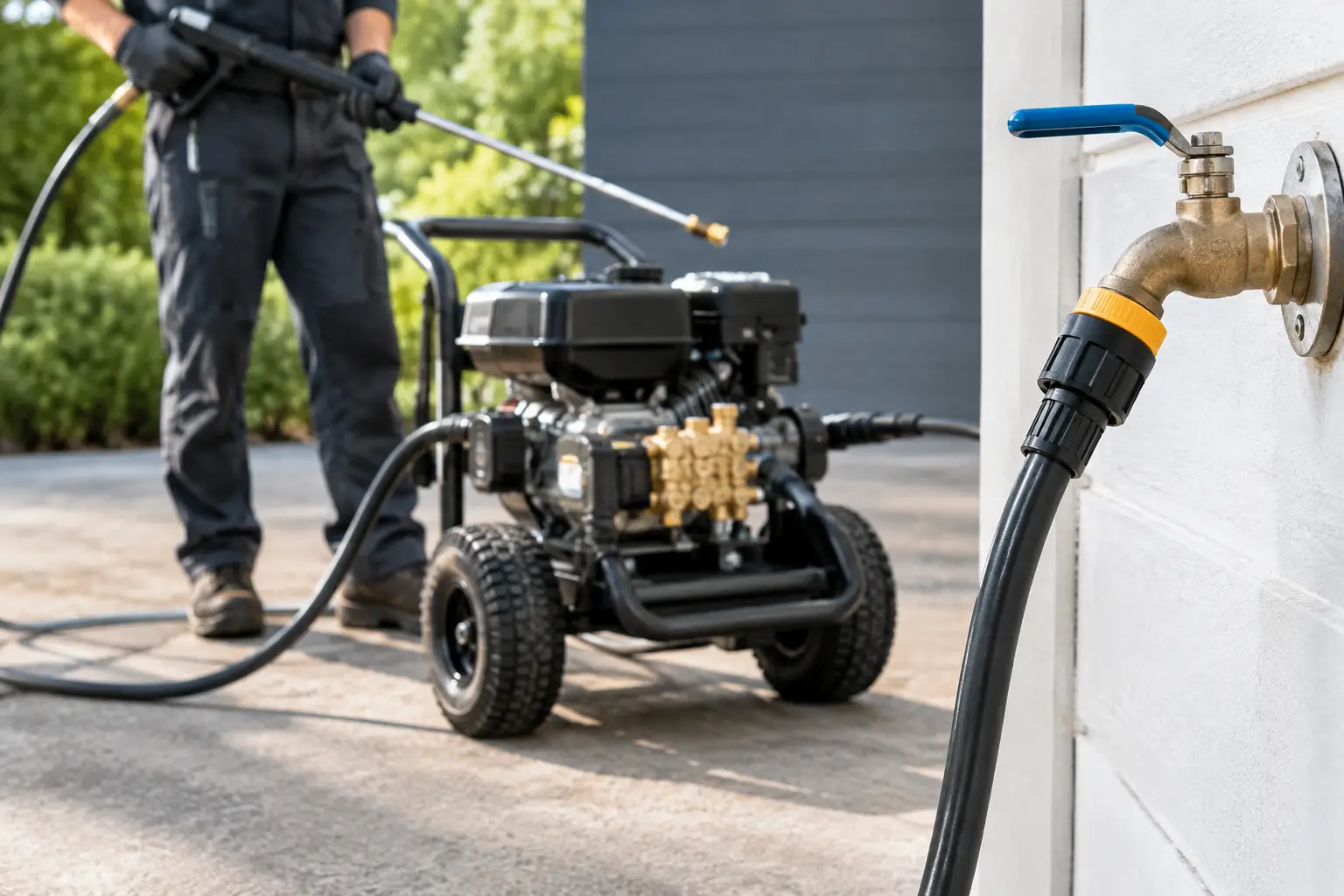
A commercial pressure washer can have the right PSI, the right GPM, and a freshly rebuilt pump, then still perform poorly because the water supply cannot keep up. This pressure washer water supply guide covers the side of the machine that gets overlooked until a pump chatters, an unloader cycles, or a crew loses pressure halfway through a job.
Start with the machine’s water demand, not the hose bib or tank you happen to have available. Water at the pump inlet must arrive in enough volume, at usable pressure, without air leaks, restrictions, or debris. When it does not, the pump is being starved. That costs cleaning speed first, then components.
A pressure washer pump needs more incoming water than its rated output. A 4 GPM machine does not live comfortably on a supply that only barely delivers 4 GPM. You need a margin for hose friction, fittings, filters, elevation changes, and the real-world output of the water source.
For a direct-feed machine, a practical target is a source that can supply at least 1 to 2 GPM above the pump’s rated flow while maintaining adequate inlet pressure. A 4 GPM washer should have a dependable 5 to 6 GPM supply. An 8 GPM hot-water skid needs considerably more than a residential spigot that looks fine on paper.
Do not judge flow by how forcefully water comes out of a garden hose. Time how long it takes to fill a known-size container. If a 5-gallon bucket takes one minute to fill, the source is producing 5 GPM. Test it through the same hose, filter, and fittings the machine will use. That is the number that matters.
Contractors often focus on PSI because it is the number customers recognize. At the pump inlet, GPM is usually the first concern. The machine cannot create water that is not there. (If you are still deciding between the two numbers, the PSI vs. GPM guide covers it.)
A higher-GPM unit can clean large flatwork, fleets, and agricultural equipment much faster, but it also places greater demand on the water source. An 8 GPM machine fed by an undersized hose may run acceptably while the trigger is open, then stumble when the unloader sends water into bypass. A hot-water system adds another reason to get this right: inconsistent flow can complicate burner operation and contribute to avoidable shutdowns.
Most commercial pressure washer pumps are designed for a flooded inlet or positive inlet pressure. The acceptable range depends on the pump and equipment design, so follow the manufacturer’s specifications. In general, city water pressure in the normal 30 to 60 PSI range is usually workable if volume is sufficient and restrictions are controlled.
Too little inlet pressure can cause cavitation. That is when the pump does not receive a solid column of water and vapor pockets collapse inside it. The operator may hear a rattling or gravel-like sound, see pulsation at the gun, or notice pressure falling off under load. Keep running it that way and you can damage valves, seals, plungers, and other expensive pump parts.
Too much inlet pressure is also a problem, especially on equipment connected to high-pressure municipal systems or boosted building water. Install a regulator when required. The correct answer is not always “more pressure.” It is stable, clean water within the pump’s inlet limits.
A long, undersized supply hose is one of the most common field mistakes. It may be convenient to carry a lightweight 5/8-inch garden hose, but convenience disappears when it turns an 8 GPM washer into a low-flow repair ticket.
For many 4 to 5.5 GPM machines, a quality 3/4-inch supply hose is a sound starting point. Larger-flow machines, long runs, and tank-feed applications may need 1-inch plumbing or larger. The correct diameter depends on total hose length, pump flow, fittings, and whether the pump is drawing from a tank or being fed under pressure.
Every restriction counts. Quick-connects, small hose swivels, clogged screens, narrow plumbing elbows, kinked hose, and cheap splitters all reduce available flow. A short, full-bore hose with clean fittings will outperform a long hose assembly loaded with restrictions.
If the machine performs well at the shop but not at the jobsite, compare the supply setup before blaming the pump. Move it to a short hose directly from a known good source. If the problem disappears, work backward through the customer’s hose, filter, plumbing, and water connection.
A buffer tank is often the right answer when a site has weak water flow, when you need to protect against inconsistent municipal supply, or when you are building a truck or skid rig. But a tank does not automatically solve a supply problem. The plumbing has to support the pump.
The tank outlet should be large enough, the run to the pump should be short and unrestricted, and the outlet should sit high enough to provide a flooded inlet whenever possible. Gravity feed is easier on the pump than asking it to pull water through long plumbing runs. Use components rated for the application, including a proper bulkhead fitting, shutoff valve, strainer, and hose that will not collapse under suction.
A tank needs enough usable capacity to handle the difference between incoming water and pump demand. If your machine uses 8 GPM and the site supplies 5 GPM, the tank loses about 3 gallons every minute while you are spraying. A 225-gallon tank gives you meaningful work time, but it is not unlimited. Plan around the actual cleaning cycle, refill opportunities, payload limits, and local water access.
A buffer tank can prevent starvation while a low-flow source continues feeding it. A reserve tank is sized to complete a job with little or no refill. Those are different design goals. (We went deeper on sizing in Pressure Washer Tanks for Commercial Rigs.)
For mobile operators, more water means more weight. Water weighs about 8.34 pounds per gallon. A 325-gallon tank adds more than 2,700 pounds before you count the trailer, skid, burner, hose reels, chemicals, and equipment. Start with the job, the truck or trailer rating, and the refill plan — not the biggest tank that will physically fit. A 100-gallon slim tank or a 55-gallon tank is often the honest answer for a half-ton truck.
Inlet filtration protects pump valves and seals from rust flakes, sand, scale, and tank debris. It is cheap insurance, provided the filter is sized correctly and maintained.
Use a properly sized inlet strainer with enough screen area for the machine’s GPM. Check it routinely, especially when filling from older hydrants, agricultural sources, well water, or a tank that has been sitting. A plugged strainer can create the same symptoms as a weak water source.
Do not use an overly fine filter at the pump inlet unless the system was designed for it. Fine filtration has a place, but it creates restriction as it loads up. If the job requires specialty treatment for sediment, minerals, or other water-quality issues, place filtration where it will not starve the pump and service it on schedule.
Pressure-side leaks make a mess. Suction-side leaks may not drip at all, but they can pull air into the system and cause pulsation, loss of pressure, or erratic pump performance.
Inspect the inlet hose, clamps, threaded fittings, tank bulkhead, strainer bowl, and O-rings. Look for soft hose, cracks, loose clamps, damaged threads, or fittings that were sealed with the wrong material. On a tank-fed system, an air leak can be enough to make a perfectly good pump look like it needs rebuilding.
Before authorizing pump work, a technician should verify supply volume, inlet restriction, and air leaks. At Dieter’s Industrial, that kind of check is part of treating the cause instead of selling a part that will fail again under the same conditions.
Before sending a crew to a large commercial site, confirm four things:
That five-minute check is especially worthwhile before fleet work, flatwork, farm washdown, or any job where the machine will run for hours. A pressure washer rarely fails at a convenient time, and a water-starved pump does not care that the schedule is tight.
Set up the water side with the same care you give nozzles, chemicals, and burner maintenance. Your pump will run quieter, your crew will keep cleaning, and you will spend less time diagnosing a problem that started at the hose connection. If it still won’t build pressure after the supply checks out, bring it in.
Everything the guide mentions, on the shelf in Lewisberry and shipped same day on orders in by 2 pm.

If the checks above did not get it running, stop throwing parts at it. Drop it at the shop in Lewisberry or ship it in, we diagnose it, and you get a number before any work starts. Every brand, not just the ones we sell.
We will pre-fill "Something else" on the form — change it if that is not quite it.


