In stock


When a hot-water pressure washer starts blowing smoke, the burner is telling you combustion is off.
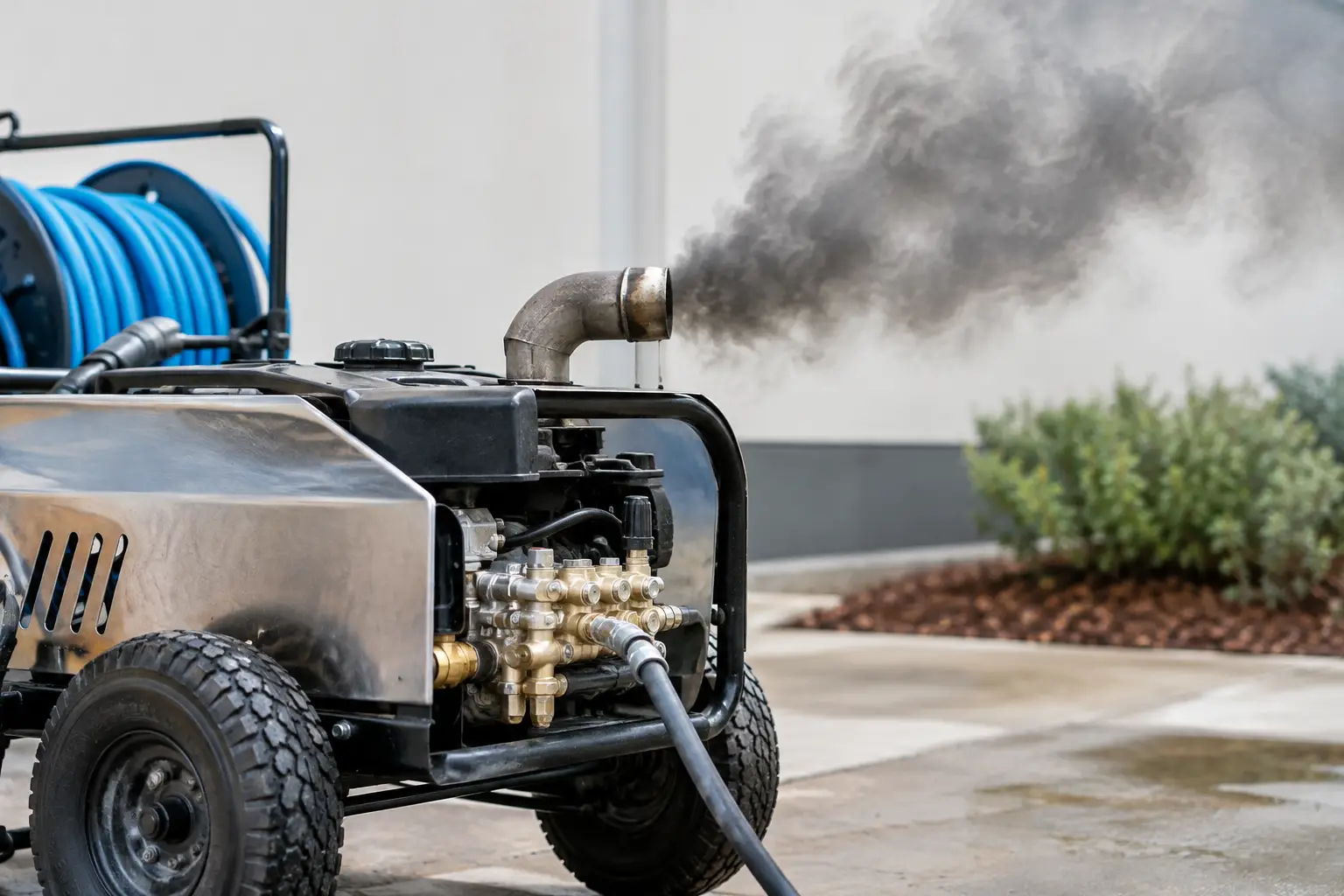
When a hot-water pressure washer starts blowing smoke, the burner is telling you combustion is off. The question is not just what causes burner smoke, but whether you are dealing with a minor setup issue, a service item, or a condition that can soot up the coil and put the machine out of service.
A clean-burning burner should produce very little visible exhaust once it is running. A brief puff at startup can happen, especially in cold weather, but steady black, white, gray, or fuel-smelling smoke needs attention. Keep running it and you risk a carbon-packed coil, poor heat transfer, higher fuel use, and eventually an expensive burner or coil repair.
Most burner smoke comes down to one problem: the burner has the wrong mix of fuel, air, ignition timing, or heat. The burner may be getting too much fuel, not enough combustion air, poor fuel atomization, or intermittent spark. Restrictions on the exhaust side can create similar symptoms.
The smoke color can point you in the right direction, but color alone does not diagnose the machine. Start with the machine's operating conditions, then work through the fuel system, ignition system, air settings, and coil or stack.
Black smoke is usually soot. In plain terms, the burner is receiving more fuel than it can burn cleanly, or it does not have enough air to complete combustion. This is one of the most common burner complaints we see on commercial hot-water units.
A dirty or partially blocked burner air intake is an easy place to start. Mud dauber nests, dust, chaff, oily buildup, and damaged intake screens can restrict airflow. The burner blower wheel can also collect debris or wear enough that it no longer moves the air it should.
Fuel-side issues can cause the same result. An incorrect nozzle size, nozzle with the wrong spray angle, excessive fuel pressure, or a worn nozzle can overfuel the chamber. Nozzles are wear items. A nozzle may still pass fuel while producing a poor spray pattern that burns dirty.
Do not adjust the air band blindly until the smoke disappears. Opening the air too far can create hard starts, flame dropout, and excessive heat loss. Burner adjustment needs to match the specified nozzle, pump pressure, fuel type, and combustion chamber. If a burner was recently serviced and began smoking afterward, verify those basics before chasing more complicated failures.
White or light gray smoke that smells strongly of diesel or kerosene often means fuel is entering the chamber without igniting correctly. You may see it on startup, when the burner cycles, or after the unit has been sitting.
Weak ignition is a common cause. Check the electrodes for correct gap, alignment, cracking, and carbon tracking. A failing ignition transformer or igniter may spark inconsistently, especially under damp conditions. Loose electrode connections and damaged high-voltage leads are equally capable of turning a normal startup into a smoky one.
Poor atomization belongs on the list too. Water-contaminated fuel, a plugged fuel filter, a restricted fuel line, air leaks on the suction side, or a failing fuel pump can keep the nozzle from producing a clean spray. Cold fuel thickens, which is why marginal fuel systems often show up first during winter work.
If the burner locks out, repeatedly resets, or fires with a loud delayed "whoomp," stop cycling it. Each failed ignition attempt can load the chamber with fuel. That is not a condition to troubleshoot by trial and error with the machine running.
Blue-tinted smoke is less common, but it can indicate oil contamination, incorrect fuel, or fuel that has degraded in the tank. Old fuel can collect water and sediment, particularly in equipment that sits through part of the year. Using gasoline in a diesel or kerosene-fired burner is dangerous and can damage components. Drain and correct the fuel supply rather than trying to burn through it.
Also check for external fuel leaks. A leaking fitting, cracked hose, or failed pump seal can put fuel where it does not belong. Fuel odor around the machine is not just an efficiency issue. Shut the burner down, address the leak, and clean any spilled fuel before restarting.
A good troubleshooting path prevents a small problem from becoming a soot-covered coil. Let the machine cool first, disconnect power where appropriate, and follow the manufacturer's service instructions for your specific burner.
Start by confirming the fuel. Make sure the tank contains clean, correct fuel and that the fuel shutoff is open. Drain water from a separator if equipped, and inspect the filter for restriction. If the fuel looks cloudy, smells stale, or has visible contamination, replace it rather than gambling on the burner.
Next, inspect the air path and exhaust. Check the burner intake, blower housing, air shutter, exhaust stack, and coil outlet for obstructions. A nest in the stack or a blocked coil can retain heat and disrupt draft. Never run the machine inside a building or enclosed wash bay without properly designed exhaust ventilation. Carbon monoxide is colorless, and a burner can be dangerous even when the exhaust looks clean.
Then inspect the nozzle and electrodes. Use the nozzle specification listed for that burner, not a close-enough nozzle from another machine. The firing rate, spray angle, and pattern all matter. Replace damaged electrodes and set them to the burner's required measurements. A visual spark check may reveal a complete failure, but it does not prove the ignition system is strong enough under operating conditions.
Finally, look at the machine's water flow. A hot-water pressure washer needs proper water flow through the coil to carry heat away. Low incoming water supply, a clogged inlet filter, a stuck unloader, a plugged nozzle, or a partially obstructed coil can lead to overheating. That may not be the original cause of smoke, but it can make burner problems worse and damage safety components.
A burner that ran rich for weeks can leave soot on the outside of the coil passages. That insulation effect matters. The burner may be firing, but less heat reaches the water, so the operator turns up the thermostat or lets the unit run longer. Fuel consumption rises while water temperature falls.
At that point, replacing a nozzle alone may solve the visible smoke but not restore performance. The coil and combustion chamber may need cleaning, and the burner should be set up properly afterward. If the coil has scaled internally, that is a separate water-side problem that can also reduce heating performance and increase stress on the system.
Watch for a burner that sounds normal but cannot maintain temperature, produces a hot or smoky stack, or trips the high-limit switch. Those are signs to stop treating the issue as a simple adjustment.
Experienced operators can handle routine fuel filters, nozzle replacement, and basic inspection when they have the correct specifications. But a burner that smokes after those checks may need fuel-pressure testing, ignition testing, draft evaluation, and combustion analysis. Those are not guesses you want to make on a revenue-producing machine.
Get the machine checked if smoke continues after clean fuel and a correct nozzle, if the burner repeatedly locks out, if you hear delayed ignition, or if there is visible soot around the coil, cabinet, or stack. A technician can determine whether the repair is a tune-up, a fuel-pump issue, a damaged burner motor, or a coil problem worth addressing before it gets worse.
At Dieter's Industrial, we see the best outcomes when operators stop at the first signs of smoke instead of running until the machine will no longer heat. A clean-burning burner protects the coil, keeps fuel costs under control, and helps make sure your hot-water washer is ready when the next job cannot wait.
Everything the guide mentions, on the shelf in Lewisberry and shipped same day on orders in by 2 pm.
If the checks above did not get it running, stop throwing parts at it. Drop it at the shop in Lewisberry or ship it in, we diagnose it, and you get a number before any work starts. Every brand, not just the ones we sell.
We will pre-fill "Burner won't fire / smokes" on the form — change it if that is not quite it.