In stock


A hot-water machine that makes pressure but delivers cold water costs you on every job. Separate a true burner failure from a water-flow, fuel, or safety-control problem before you buy a single part.
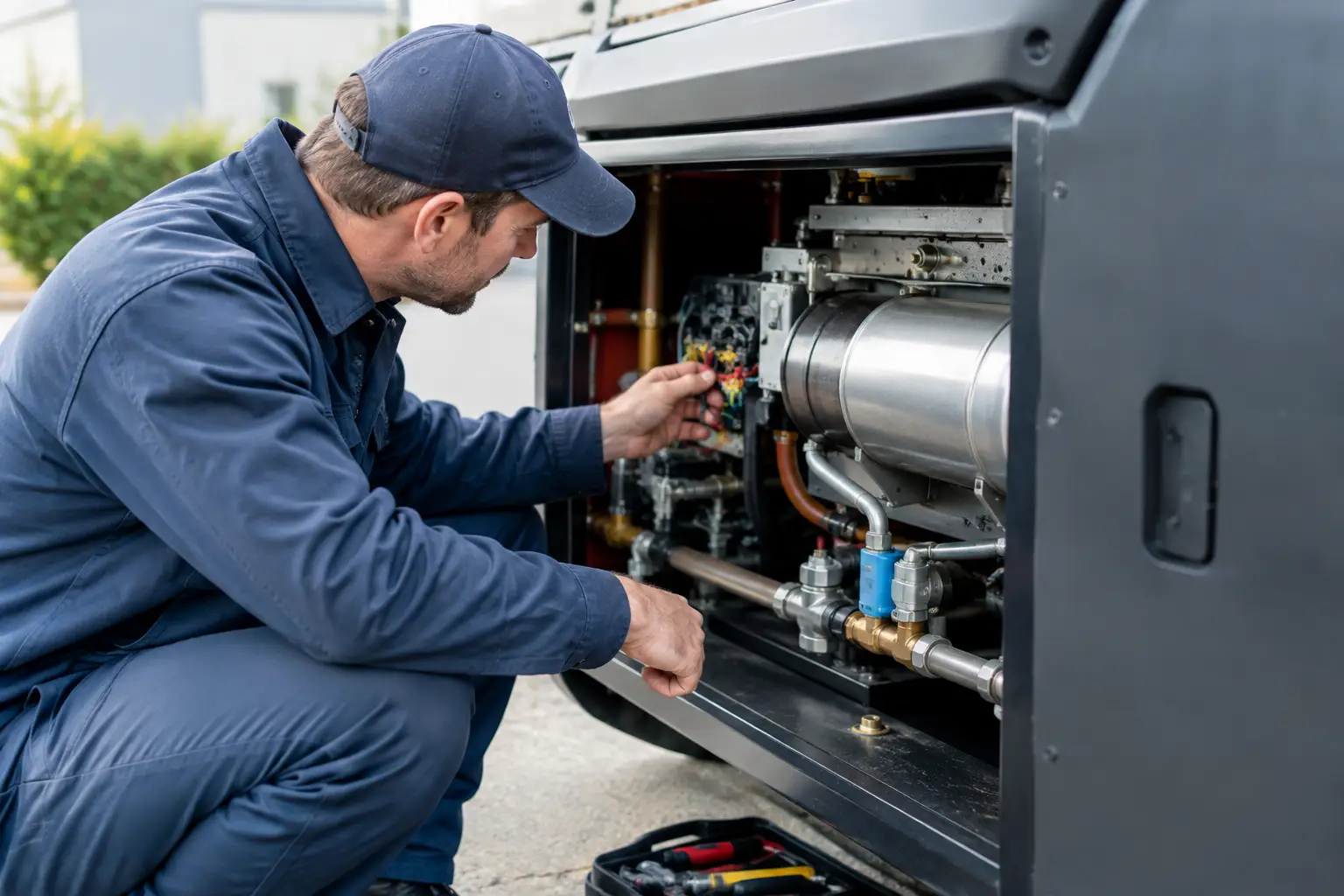
A hot-water machine that still makes pressure but delivers cold water is not a minor inconvenience. On fleet, grease, agricultural, and kitchen-exhaust work, lost heat means slower cleaning, more chemical use, and a job that may no longer pencil out. Effective hot water pressure washer burner troubleshooting starts by separating a true burner failure from a water-flow, fuel, or safety-control problem.
Do not start by replacing parts. Burner components can be expensive, and swapping a nozzle, ignition transformer, or fuel pump without testing can leave the real issue untouched. Start with the symptom, work through the operating sequence, and stop if you find a fuel leak, damaged wiring, a cracked fuel line, or heavy soot around the burner.
A typical oil-fired hot-water pressure washer needs several things to happen in order. The machine must have adequate water flow, the burner control circuit must receive power, the flow or pressure switch must prove water movement, the fuel solenoid must open, the ignition system must spark, and the blower must supply the correct combustion air. A safety control can interrupt that sequence at more than one point.
That order matters. If the burner does nothing when you pull the trigger, the fault is often in the flow-proving circuit, wiring, switch adjustment, or control power. If the burner motor runs but there is no flame, move toward fuel delivery and ignition. If it lights but smokes, rumbles, or trips out, look at combustion setup, fuel quality, airflow, and coil condition.
Before opening the burner cabinet, turn off the machine, allow the coil to cool, disconnect power, and close the fuel supply where applicable. Never bypass a high-limit, flow switch, pressure switch, or other safety device to "see if it works." Those controls are there to prevent an overheated coil, uncontrolled firing, or a serious injury.
First, verify the obvious operating conditions. Is the burner switch on? Is the machine producing the correct pressure and flow? Is the trigger gun open? Many machines will not fire in bypass or at insufficient flow because the flow switch or pressure switch never closes.
A restricted nozzle, plugged inlet filter, collapsed supply hose, starving water tank, or worn pump can reduce flow enough to keep the burner off. A machine can still show pressure on the gauge and fail to move the volume needed to prove the burner circuit. Check the nozzle size against the machine's rated GPM and PSI — the nozzle sizing calculator will tell you — before assuming the burner is at fault. (If pressure itself is the problem, start with six things to check, in order.)
If water flow is correct, inspect the electrical side. Check the breaker, fuse, burner switch, wiring terminals, ground connections, and connectors exposed to vibration or moisture. Then test whether the flow or pressure switch closes when the trigger is pulled. Switch failures are common, but so are broken wires near the coil, frame, and burner housing.
A multimeter is more useful here than guesswork. Verify power into the burner control circuit and power leaving it when water flow is proven. If you are not comfortable testing live electrical circuits, this is the point to bring in a qualified technician.
When the blower motor runs, the machine is getting far enough through the sequence to command a burn. The next question is whether fuel and spark are both present.
Start with fuel. Confirm there is clean fuel in the tank and that the pickup tube is submerged. Water-contaminated diesel, old kerosene, algae in a tank, clogged filters, cracked suction lines, and a weak fuel pump can all prevent ignition. In colder weather, untreated fuel can gel or thicken enough to restrict the system — see the burner won't fire on a cold morning. A clear or serviceable fuel filter often tells the story quickly.
Check that the fuel shutoff solenoid is receiving power and opening when the burner is commanded on. A solenoid may click and still fail to pass enough fuel, so fuel pressure and nozzle output matter. Follow the burner manufacturer's pressure specification. Do not adjust the fuel pump pressure by ear or by flame appearance alone.
Next, inspect ignition. A worn electrode, cracked porcelain, damaged ignition lead, poor electrode gap, or weak transformer can leave the burner with fuel but no reliable spark. Electrode settings are specific to the burner and nozzle assembly. Even a small change in tip position can affect ignition and flame stability.
Use an approved spark tester and follow the burner manufacturer's procedures. Do not hold a wire near the electrode with your hand or improvise a test around fuel vapor. If fuel is present but ignition has failed repeatedly, ventilate the area and clear the unburned-fuel condition before another start attempt.
A burner that starts and immediately locks out is telling you it cannot maintain a safe flame. On many burner controls, that points to the flame-sensing circuit, but the underlying cause can still be poor fuel delivery, an incorrect nozzle, contaminated fuel, weak ignition, or improper air adjustment.
Check the nozzle first if service history is unknown. A nozzle is a wear item, not a permanent component. It must match the burner specification for flow rate, spray angle, and spray pattern. Installing a nozzle that is "close enough" can cause delayed ignition, poor combustion, excessive smoke, or flame failure.
Also inspect the photocell or flame sensor, its wiring, and the sight path to the flame. Soot on the sensor or burner chamber can make the control think the flame disappeared. Clean only as directed by the burner manufacturer. If the sensor is clean but lockout continues, verify combustion rather than automatically replacing the control.
If the burner stays running but water temperature is weak, confirm the machine is actually firing continuously under load. A cycling flow switch, loose connection, or unstable pressure can cause short burner cycles that feel like poor heat output.
Then consider the relationship between GPM and burner capacity. Higher water volume requires more BTUs to achieve the same temperature rise. A machine running above its designed flow, or a burner operating below its rated fuel pressure, may make warm water without ever reaching useful cleaning temperature. (More on sizing flow in how to choose pressure washer PSI and GPM.)
Scale inside the coil is another common commercial-service issue, especially where hard water is involved. Scale insulates the water from the coil wall and restricts flow. The result can be slow heating, pressure loss, overheating, and shortened coil life. Coil descaling is a controlled service procedure, not a matter of pouring random acid into the system.
Black smoke and soot mean incomplete combustion. Do not keep running the machine and hope it clears up. Soot coats the coil, reduces heat transfer, fouls sensors, and can turn a basic tune-up into a coil or burner repair.
Common causes include a dirty or wrong nozzle, restricted combustion air, a dirty blower wheel, blocked air intake, low fuel pressure, poor-quality fuel, or incorrect electrode settings. A restricted exhaust stack can also disrupt combustion. White smoke may indicate unburned fuel from poor ignition, while a sharp fuel smell can point to leaks or failed combustion.
Proper burner adjustment requires more than opening or closing an air band until the smoke looks better. A technician should verify fuel pressure, nozzle specification, draft where applicable, and combustion quality with the proper test equipment. That is especially true after replacing a fuel pump, blower motor, control, or coil.
The burner depends on water movement to carry heat away from the coil. A sticking unloader, undersized nozzle, blocked hose, restricted inlet, or failing pump can create erratic flow conditions that cycle the burner or trip a high-limit. If a high-limit opens, find out why. Replacing it without correcting the overheating condition is a fast way to damage the coil.
Watch the machine while it operates. Does pressure surge when the burner cuts out? Does the burner stop only when the trigger is released? Does the thermal relief valve discharge? Those details help distinguish a burner problem from an unloader, bypass, pump, or nozzle issue — here is how to tell the unloader and thermal relief valve apart.
Most operators can safely check fuel level, filters, obvious wiring damage, nozzle condition, water supply, and burner cleanliness. Combustion tuning, electrical diagnosis under load, coil descaling, fuel-pressure setup, and repeated lockout faults are better handled with the right gauges and test equipment.
At Dieter's Industrial, the repair decision is not just whether a burner can be fixed. It is whether the repair returns dependable uptime at a cost that makes sense for the machine and the work it supports. Record the exact symptom, machine model, fuel type, and any fault code before calling or bringing it in. That information shortens diagnosis and gets you closer to hot water instead of another lost day on the schedule.
A burner problem is rarely random. Follow the firing sequence, test one system at a time, and treat smoke, soot, fuel leaks, and repeated safety trips as stop signs rather than inconveniences.
Everything the guide mentions, on the shelf in Lewisberry and shipped same day on orders in by 2 pm.
If the checks above did not get it running, stop throwing parts at it. Drop it at the shop in Lewisberry or ship it in, we diagnose it, and you get a number before any work starts. Every brand, not just the ones we sell.
We will pre-fill "Burner won't fire / smokes" on the form — change it if that is not quite it.