
In stock


A spray gun can turn a productive wash day into a parked truck fast. Separate a gun failure from a hose, nozzle, unloader, or pump issue before you order parts.
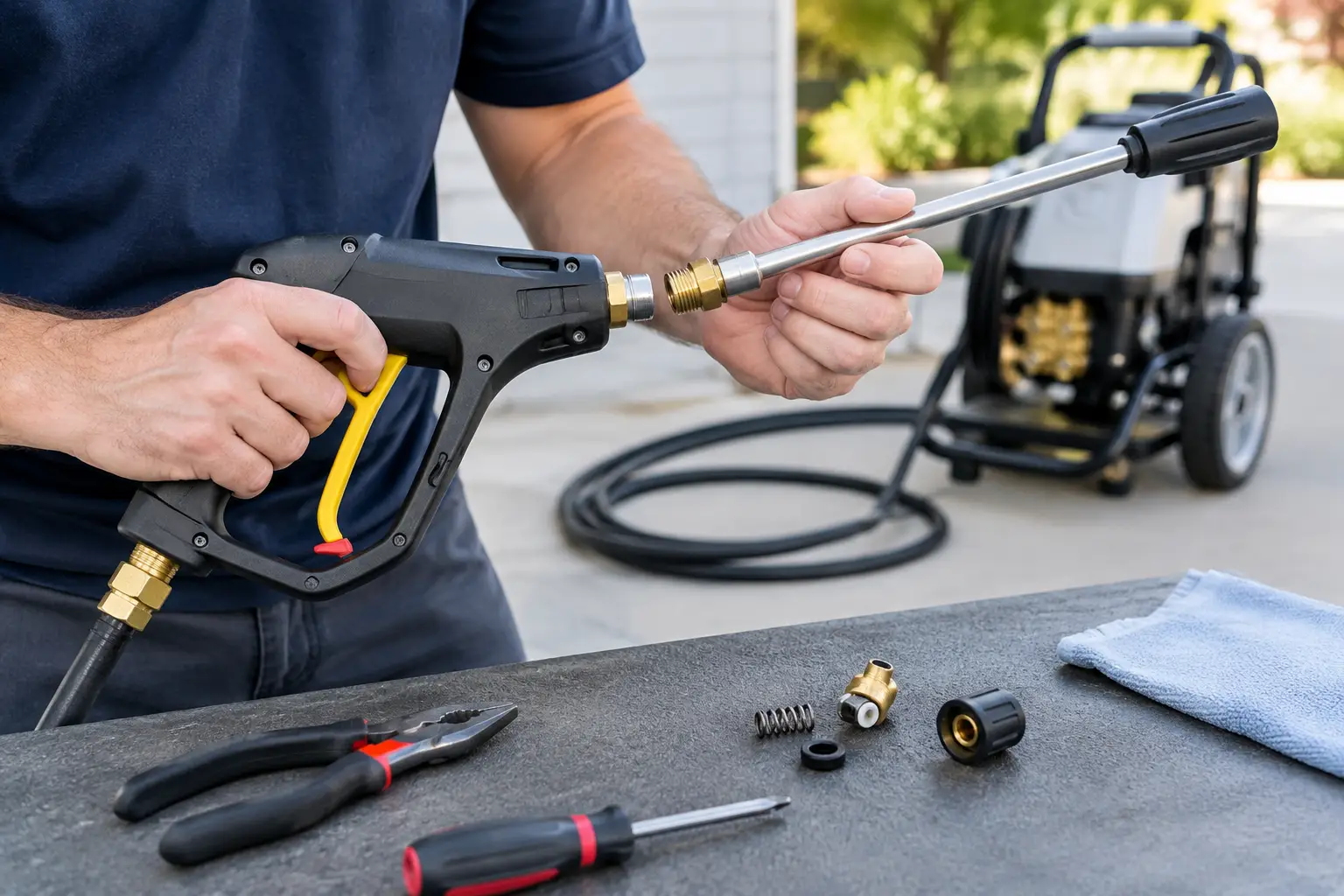
A spray gun can turn a productive wash day into a parked truck fast. When you need to repair pressure washer spray gun problems, start by separating a gun failure from a hose, nozzle, unloader, or pump issue. The gun is the operator's control point, but it is only one part of a pressurized system. Guessing at the failed component wastes time, parts, and billable hours.
For commercial operators, a spray gun is not a consumer-grade accessory. It is a safety component that must match the machine's PSI, GPM, temperature rating, inlet connection, and working environment. A gun that drips, sticks, will not shut off, or is difficult to trigger deserves attention before it becomes an injury risk or damages the rest of the equipment.
The most common mistake is ordering a trigger kit because the gun is leaking. First, identify where the water is coming from and when it happens. Water leaking from the front of the gun with the trigger released usually points to a worn valve seat, O-ring, or internal piston assembly. Water coming from the hose connection is more likely a damaged inlet fitting, swivel, thread seal, or hose end.
If the gun leaks only while the trigger is pulled, inspect the lance connection, quick-connect socket, plug, and nozzle holder. A cracked lance or worn quick-connect O-ring can look like a gun-body failure from the operator's position.
A gun that will not trigger can have an internal problem, but it can also be holding trapped pressure. Shut the machine down, close the water supply if needed, point the gun in a safe direction, and relieve pressure before assuming the trigger mechanism is seized. On a hot-water unit, allow the system to cool before disassembly. Hot water, trapped pressure, and a rushed repair are a bad combination.
Remove the nozzle first and inspect it. A plugged nozzle can make a gun feel unusually hard to operate and can raise system pressure beyond what it should be. A worn nozzle does the opposite: it lowers working pressure, increases flow, and often leads operators to blame the gun or pump.
Next, inspect the hose and gun inlet. A hose that is twisting constantly may have a failed swivel or no swivel at all. Twisting puts unnecessary load on the gun inlet and eventually damages fittings, threads, and hose ends. If the connection is loose, do not try to solve it with excess thread tape. Identify whether the fitting seals on threads, an O-ring, or a cone seat, then use the correct replacement part.
With the machine off and pressure relieved, cycle the trigger several times. It should move smoothly and return fully when released. A rough, sticky, or slow return usually means contamination, corrosion, a damaged spring, or deteriorated seals inside the valve body. Chemical exposure matters here. Strong degreasers, sodium hypochlorite, and acid products can shorten seal life when the gun is not rated for that chemical service or is left sitting with product in the line.
A gun that chatters, kicks, or pulses may not be the source of the problem. Check water supply volume, inlet filters, nozzle condition, pump valves, and unloader operation. If the machine builds pressure normally but drops pressure only when a particular gun or lance is installed, then the restriction or leak is likely downstream. If every gun produces the same pulse, look upstream.
This distinction matters because a spray gun is inexpensive compared with a pump rebuild, but replacing it will not cure an unloader that is hunting or a pump that is starving for water.
Most repairable professional guns use a serviceable valve assembly made up of a stem or piston, seat, spring, and O-rings. Some models are designed to be rebuilt. Others are effectively disposable once the internal assembly wears out. Before opening the gun, confirm that a rebuild kit is available for the exact make and model. Similar-looking guns often use different valve dimensions and seal materials.
Depressurize the machine completely. Disconnect the gun from the hose and lance, then work on a clean bench. Dirt introduced during a gun repair will score sealing surfaces and put you back where you started.
Open the gun according to its construction. On many commercial trigger guns, the rear cap or retaining hardware gives access to the valve assembly. Keep components in order as they come out. Inspect the spring for corrosion or distortion, the valve stem for scoring, and the seat for grooves, cracks, or a flattened sealing surface.
Replace O-rings with the correct size and material. An O-ring that looks close enough may swell, soften, or fail under heat and chemical exposure. Lightly lubricate seals with a lubricant compatible with the seal material and the service application. Do not coat the inside of the gun with random grease from the truck. Petroleum products can damage certain elastomers and collect grit.
Reassemble the gun without forcing parts into place. Once it is back together, reconnect it and test at low risk first. Keep the gun pointed into a safe wash area, verify that the trigger releases cleanly, then check for leaks at the inlet, body, outlet, and lance connection. Never test a repaired gun against your hand, boot, or clothing. A pressure washer stream can inject water and contaminants under the skin.
Rebuilding makes sense when the gun body is sound, parts are readily available, and the gun is correctly rated for the machine. It is often the right call for a quality hot-water gun or a specialized unit with a swivel, insulated handle, chemical-resistant seals, or an unusual connection setup.
Replacement is usually the smarter move when the gun body is cracked, threads are stripped, the trigger guard is damaged, internal parts are heavily corroded, or a rebuild kit costs too much relative to a new commercial gun. That is especially true when the gun has been used beyond its pressure, flow, or temperature rating.
Do not replace a failed commercial gun with the first low-cost option that fits the hose. Match the replacement to the machine's maximum working PSI and GPM, not just its current settings. A 4 GPM gun on an 8 GPM machine creates a restriction and can fail prematurely. For hot-water work, verify the temperature rating. For fleet washing, kitchen exhaust, agricultural work, or chemical-heavy soft washing, consider seal compatibility and whether a swivel will reduce operator fatigue and hose damage.
Most spray-gun failures are not mysterious. They come from running contaminated water, leaving chemicals in the system, dragging the gun by the hose, dropping it on concrete, operating with worn quick-connects, or letting equipment freeze. A few minutes of end-of-day care is cheaper than losing a crew halfway through a contract.
Flush detergents and corrosive chemicals from the hose, gun, and downstream components after the job. Inspect quick-connect O-rings regularly and replace them before they begin leaking. Keep spare nozzles, plugs, sockets, and a properly rated backup gun on the truck. Those are small inventory items, but they protect a full day of revenue when a trigger starts sticking at a customer site.
For operators around Central Pennsylvania who need help sorting out a gun issue versus a larger machine problem, Dieter's Industrial can evaluate the complete setup, not just sell a part across the counter. The right repair starts with the actual failure and the way the equipment is being used.
A spray gun should feel predictable every time you pull the trigger. If it does not, take it out of service long enough to diagnose it correctly. That short pause is better than sending an operator back to work with a control component you cannot trust.
Everything the guide mentions, on the shelf in Lewisberry and shipped same day on orders in by 2 pm.


If the checks above did not get it running, stop throwing parts at it. Drop it at the shop in Lewisberry or ship it in, we diagnose it, and you get a number before any work starts. Every brand, not just the ones we sell.
We will pre-fill "Something else" on the form — change it if that is not quite it.