
In stock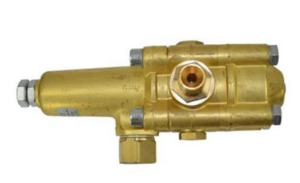


A pump that will not build pressure at 6:30 a.m. is not just a repair ticket. It can put a crew, a truck, a customer appointment, and tomorrow's schedule at risk.

A pump that will not build pressure at 6:30 a.m. is not just a repair ticket. It can put a crew, a truck, a customer appointment, and tomorrow's schedule at risk. This downtime cost example shows how a seemingly ordinary pressure-washer failure can cost far more than the part that caused it.
For a commercial cleaning contractor, the useful question is not, "What does this pump repair cost?" It is, "What will this machine being down cost before I am back on the job?" That number gives you a much clearer basis for deciding whether to repair, replace, rent, or keep a backup unit ready.
A repair invoice is visible. The rest of downtime tends to show up in smaller, less obvious losses: payroll while the crew waits, a missed route, travel to pick up parts, rescheduling calls, and a customer who starts looking for another vendor after a missed service window.
Pressure-washing equipment creates a special problem because most contractors cannot simply substitute a smaller machine. If a hot-water skid is down, a cold-water unit may keep a crew busy, but it may not remove grease at the required pace or meet the job specification. If a 8 GPM fleet-washing machine is down, sending a 4 GPM backup can turn an overnight route into an all-day job.
The real cost depends on the work. A one-person residential crew can often reshuffle smaller jobs. A kitchen-exhaust cleaner with a fixed overnight route, or a fleet contractor working around vehicle availability, has much less room to move. Downtime gets expensive when the machine is tied directly to a promised time window.
Consider a two-person commercial pressure-washing crew scheduled for a restaurant pad and dumpster-area cleaning job. The job is priced at $1,450. It normally takes five hours on a hot-water machine producing 4.8 GPM at 3,500 PSI, including setup, cleanup, and travel.
At startup, the burner fires but the pump will not hold pressure. A quick check rules out a clogged nozzle and a starving water supply. The unloader is bypassing internally, and the local part is not available until the next morning. The crew cannot complete the job properly with its cold-water backup.
Start with the revenue that is immediately affected. The $1,450 job is postponed. If the customer accepts the new date and the crew can fill the open slot with another billable job, the delay may not cost the full $1,450. But the contractor still has labor and disruption costs that day.
Assume the two technicians cost the business $28 per hour each in loaded labor after wages, payroll burden, and basic benefits. They spend two unproductive hours diagnosing the machine, loading up, speaking with the customer, and arranging the repair. That is $112 in labor expense before either technician produces revenue.
Add 90 miles of unplanned truck travel between the jobsite, shop, and parts counter. At a conservative operating cost of 70 cents per mile, that is another $63. The diagnostic time and travel alone have created $175 in direct downtime cost.
Now factor in the schedule. The crew loses the opportunity to perform a smaller $525 job that could have fit into the afternoon. The customer also asks for a $100 credit because the restaurant's service entrance was not ready for the next morning's delivery. The repair itself comes to $385 for an unloader, fittings, shop labor, and testing.
The cost of the failure is not $385. It is:
$385 repair cost + $112 idle labor + $63 unplanned travel + $525 missed job opportunity + $100 customer credit = $1,185.
That total still assumes the original $1,450 job is completed later at full price. If the restaurant cancels and awards the work elsewhere, the immediate lost revenue can push the event above $2,600. That is why a repair decision based only on the price of one component can be misleading.
Do not count every postponed job as a full loss. If you complete the work two days later and incur no extra labor, it is delayed revenue, not permanently lost revenue. It still matters for cash flow and scheduling, but it should not be treated the same as a canceled job.
A better estimate separates three buckets: direct expense, lost gross profit, and customer-risk cost. Direct expense includes repair labor, parts, overtime, rentals, and wasted crew time. Lost gross profit is the profit you cannot recover from a canceled or displaced job. Customer-risk cost covers credits, penalties, or the long-term damage of failing a recurring account.
Use a realistic number. Inflating downtime costs will make every repair look foolish. Ignoring them will make an aging machine look cheaper than it is.
You do not need elaborate software to get useful numbers. Keep a simple worksheet for each revenue-producing rig. Record its average daily billed revenue, crew size, loaded hourly labor, common job types, and whether another machine can handle the work without reducing quality or speed.
Then calculate two figures. The first is your hourly downtime cost for a short interruption. Add loaded hourly crew cost, a reasonable share of truck and travel expense, and the gross profit likely lost if the crew cannot be reassigned.
The second is your daily downtime cost for a major failure. Include the actual repair or rental estimate, likely overtime to recover the schedule, contract penalties or credits, and the value of work that may be canceled rather than moved.
For example, a three-person fleet-wash crew with $96 per hour in loaded labor does not need a catastrophic breakdown to feel the impact. Four lost hours means $384 in labor alone. Add a missed service stop, emergency parts freight, and an overnight reschedule, and a worn hose, failed ignition transformer, cracked coil, or pump issue can become a four-figure event quickly.
A high downtime number does not automatically mean replace every machine at the first problem. A quality commercial unit with a sound frame, engine, coil, and plumbing may be worth a pump rebuild or burner repair. Professional equipment is built to be serviced, and many failures are contained to wear components.
The decision changes when repairs are stacking up. If a machine needs a pump this month, a coil next month, and has recurring electrical or burner trouble after that, look at the full condition of the unit. Repeated failures create more than parts costs. They consume crew time and confidence, and they make it hard to promise dates to customers.
Compare the repair estimate with the machine's remaining useful life and the cost of a substitute. A rental may protect a high-value contract while your unit is repaired. A backup machine may be cheaper than repeated emergency rentals if your business has fixed routes or compliance-driven accounts. On the other hand, tying up cash in a backup hot-water machine may not make sense for an owner-operator whose work can be rescheduled without much fallout.
At Dieter's Industrial, the practical approach is to inspect the full machine, not just sell the next part. A clear estimate and an honest condition assessment give you the information to decide whether a repair protects uptime or simply delays replacement.
The failures that cost the most are often the ones that could have been found during routine checks. Watch for pump oil that has turned milky, pressure that slowly fades, hose abrasions, leaking quick connects, burner smoke, delayed ignition, fuel contamination, and bypass water getting hot while the gun is closed.
Keep the parts that match your particular equipment and workload. A spare set of correctly sized nozzles, inlet filter, seals, O-rings, quick connects, repair fittings, and a quality hose can turn a roadside failure into a short delay. For hot-water equipment, carrying the right fuel filter and knowing the burner service history can prevent a lot of bad guesses.
Just as important, do not run a failing machine until it becomes an expensive failure. Continued operation with a water-starved pump can damage packings and plungers. Bypassing a safety component or forcing a burner through repeated lockouts can turn a manageable repair into a larger one.
The best time to calculate your downtime cost is when the rig is running well and the schedule is calm. Once a crew is standing in a customer lot with no pressure, every decision costs more.
Everything the guide mentions, on the shelf in Lewisberry and shipped same day on orders in by 2 pm.
If the checks above did not get it running, stop throwing parts at it. Drop it at the shop in Lewisberry or ship it in, we diagnose it, and you get a number before any work starts. Every brand, not just the ones we sell.
We will pre-fill "Something else" on the form — change it if that is not quite it.