In stock


A pressure washer pump rarely fails without leaving clues. It starts taking longer to build pressure, pulses at the gun, runs hotter than normal, or leaks where it did not leak last week.
A pressure washer pump rarely fails without leaving clues. It starts taking longer to build pressure, pulses at the gun, runs hotter than normal, or leaks where it did not leak last week. Washer pump lifespan is not a fixed hour number because the pump’s working conditions matter as much as its nameplate rating. A commercial triplex pump that is fed clean water, run at the right RPM, and serviced on schedule can deliver years of productive work. The same pump can be damaged in a season by dry running, freeze damage, overheating, or a machine set up beyond its limits.
For a contractor, the useful question is not simply, “How long should this pump last?” It is, “What is taking life out of this pump, and can I stop it before the machine costs me a job?”
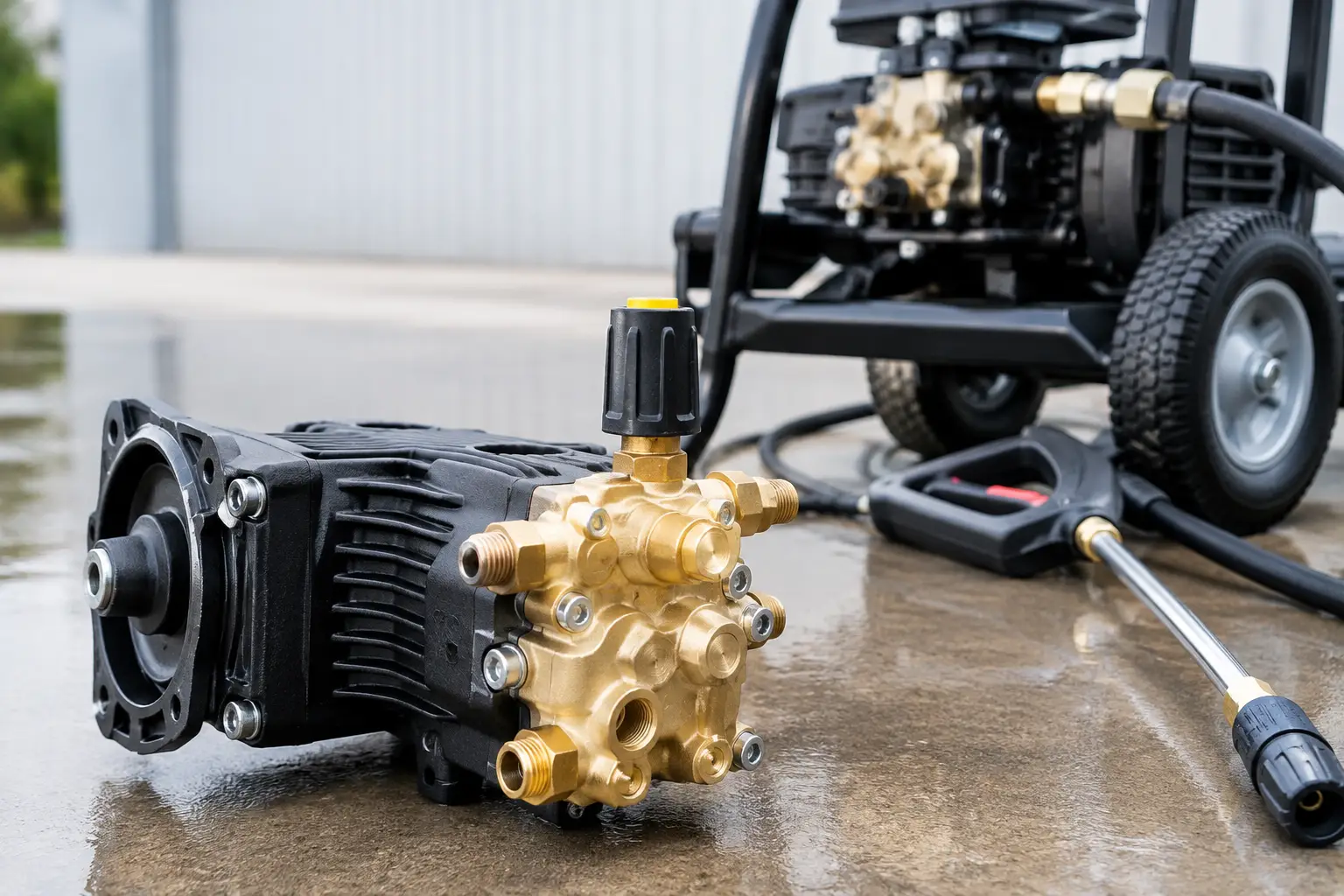
Most professional pressure washers use a triplex plunger pump. Inside are plungers, seals, valves, crankcase bearings, and oil that work together under high pressure. These pumps are repairable, which is one reason they make sense on revenue-producing equipment. But repairable does not mean indestructible.
Duty cycle is the first factor. A machine used two hours a week on light residential work lives a different life than a hot-water unit running day after day in a wash bay. Hours alone still do not tell the whole story. Ten hours of steady washing with the trigger open is generally easier on a pump than ten hours of frequent trigger cycling, long bypass periods, poor inlet water supply, and operators changing nozzles without checking the orifice size.
Water quality matters more than many operators expect. Sand, scale, rust, and mineral-heavy water wear check valves and seals. Well water can be hard on equipment if scale control is ignored. Water that carries debris from a tank, supply hose, or jobsite connection can score components quickly. A clean, correctly sized inlet filter is cheap protection, but only if it is checked and cleaned instead of treated as a permanent install-and-forget part.
Operating temperature is another major divider. The pump needs water flow to carry heat away. When the trigger is released, the unloader routes water into bypass. That is normal for short periods. Letting a machine sit in bypass for several minutes is not. The water recirculates, gets hot, and can damage seals, valves, and packings. A thermal relief valve can discharge overheated water, but it is a safeguard, not permission to leave the unit idling.
Dry running is one of the fastest ways to turn a serviceable pump into a repair. The pump depends on incoming water for lubrication and cooling at the wet end. Starving it for even a short time can overheat and damage seals.
Before starting, make sure the supply is on, the hose is not kinked, the tank has adequate water, and the inlet connection is not pulling air. If the pump is fed from a buffer tank, confirm that the tank outlet, float valve, plumbing, and filter can support the machine’s GPM. A 5.5 GPM washer cannot make up for a supply system that only delivers three gallons per minute.
Air leaks deserve the same attention. A loose garden-hose fitting or cracked inlet hose may not look dramatic, but air entering the system causes cavitation. Cavitation sounds rough or gravelly and can create pressure fluctuation. Left alone, it erodes internal components and beats up seals and valves.
PSI and GPM are not decorative numbers. The nozzle controls the restriction the pump works against. A nozzle orifice that is too small can drive operating pressure above the pump’s intended rating. A nozzle that is too large lowers pressure and may lead an operator to adjust the unloader incorrectly in an effort to get performance back.
The pump, unloader, hose, gun, fittings, and nozzle need to be matched as a system. If someone installs a new pump or swaps nozzles, check pressure with a known-good gauge. Do not set an unloader by sound or by cranking it down until the machine “feels stronger.” Excess pressure creates heat, strains components, and can create a much more expensive failure than the original complaint.
Frequent trigger work is common in fleet washing, kitchen exhaust work, and tight residential areas. That does not automatically hurt a pump. Long idle periods do. Train every operator to shut the machine down when stepping away for more than a brief interruption.
Bypass heat is especially hard on hot-water machines, where the incoming water may already be warm and the entire unit is working in a higher-temperature environment. If a pump repeatedly runs hot, inspect the unloader operation, thermal relief valve, nozzle sizing, and water supply before assuming the pump itself is the root cause.
A triplex pump crankcase needs the right oil at the right level. Milky oil is a warning sign that water has entered the crankcase, often through failed packings or seals. Running with contaminated oil can take out bearings and connecting rods, turning a seal job into a larger rebuild.
In Pennsylvania and any market with freezing temperatures, winterizing is not optional. Water trapped in a pump, hose, coil, or fitting expands when it freezes. A cracked manifold from freeze damage may show up immediately, or it may reveal itself as a leak once the next season starts. Pump saver or antifreeze formulated for pressure-washer storage is inexpensive compared with a pump manifold or replacement assembly.
The right schedule depends on the machine, water source, and workload, but daily attention prevents many avoidable repairs. Before starting, inspect the inlet filter, water supply, hoses, fittings, oil level, and nozzle. During operation, listen for cavitation, pressure pulsing, unusual vibration, or an unloader that is cycling when it should not be. At shutdown, relieve pressure, drain or protect the system as conditions require, and do not leave chemical sitting where it can migrate into components it should not reach.
At regular service intervals, change pump oil according to the pump manufacturer’s schedule, inspect for leaks around the manifold and crankcase, and verify actual operating pressure. If your crew uses more than one nozzle, label them by orifice and keep worn nozzles out of rotation. Nozzles wear gradually, so operators often compensate without realizing the machine’s pressure and flow performance have changed.
Chemical handling also deserves discipline. Downstreaming keeps harsh chemicals out of the pump when set up correctly. Running chemical through the pump is a different situation and may require compatible seals, valves, and flushing procedures. Read the chemical and equipment requirements rather than assuming every cleaner is safe for every pump.
Leaking packings, worn valves, and damaged seals are often normal rebuild work on a quality triplex pump. A rebuild can make financial sense when the crankcase is sound, the manifold is intact, parts are available, and the pump matches the machine’s needs.
Replacement becomes the better call when freeze damage cracks the manifold, the crankcase has failed internally, corrosion is extensive, or the repair estimate approaches the value of a correct new pump. This is also the time to ask whether the original pump was right for the work. A contractor who has grown from occasional house washing to daily fleet work may need more GPM, a different drive configuration, or a buffer-tank setup that supports continuous operation.
A repair shop should inspect the whole pressure side before quoting a pump. A failing unloader, restricted inlet, faulty gauge, worn nozzle, or incorrect belt drive can damage a replacement pump just as effectively as the old one. At Dieter’s Industrial, that system-level check is part of keeping a repair from becoming a repeat visit.
Do not wait for zero pressure to investigate a change in machine behavior. Pressure pulsing, hot bypass water, oil discoloration, new leaks, and a rough-sounding pump are early warnings that give you options. Catch the issue while it is a valve, seal, hose, filter, or adjustment problem, and the machine is more likely to be back on the truck instead of parked in the repair bay.
The best way to extend pump life is plain shop discipline: give it enough clean water, use the correct nozzle, avoid long bypass time, protect it from freezing, and service the small problems before they become major ones. That work is not glamorous, but it protects the part of the pressure washer that keeps your crew earning.
Everything the guide mentions, on the shelf in Lewisberry and shipped same day on orders in by 2 pm.
If the checks above did not get it running, stop throwing parts at it. Drop it at the shop in Lewisberry or ship it in, we diagnose it, and you get a number before any work starts. Every brand, not just the ones we sell.
We will pre-fill "Pump noise or damage" on the form — change it if that is not quite it.