

How to Winterize Commercial Wash Equipment
A frozen pump head can turn a routine morning start into a lost day, a repair bill, and a crew waiting on a machine that should have been ready to work.
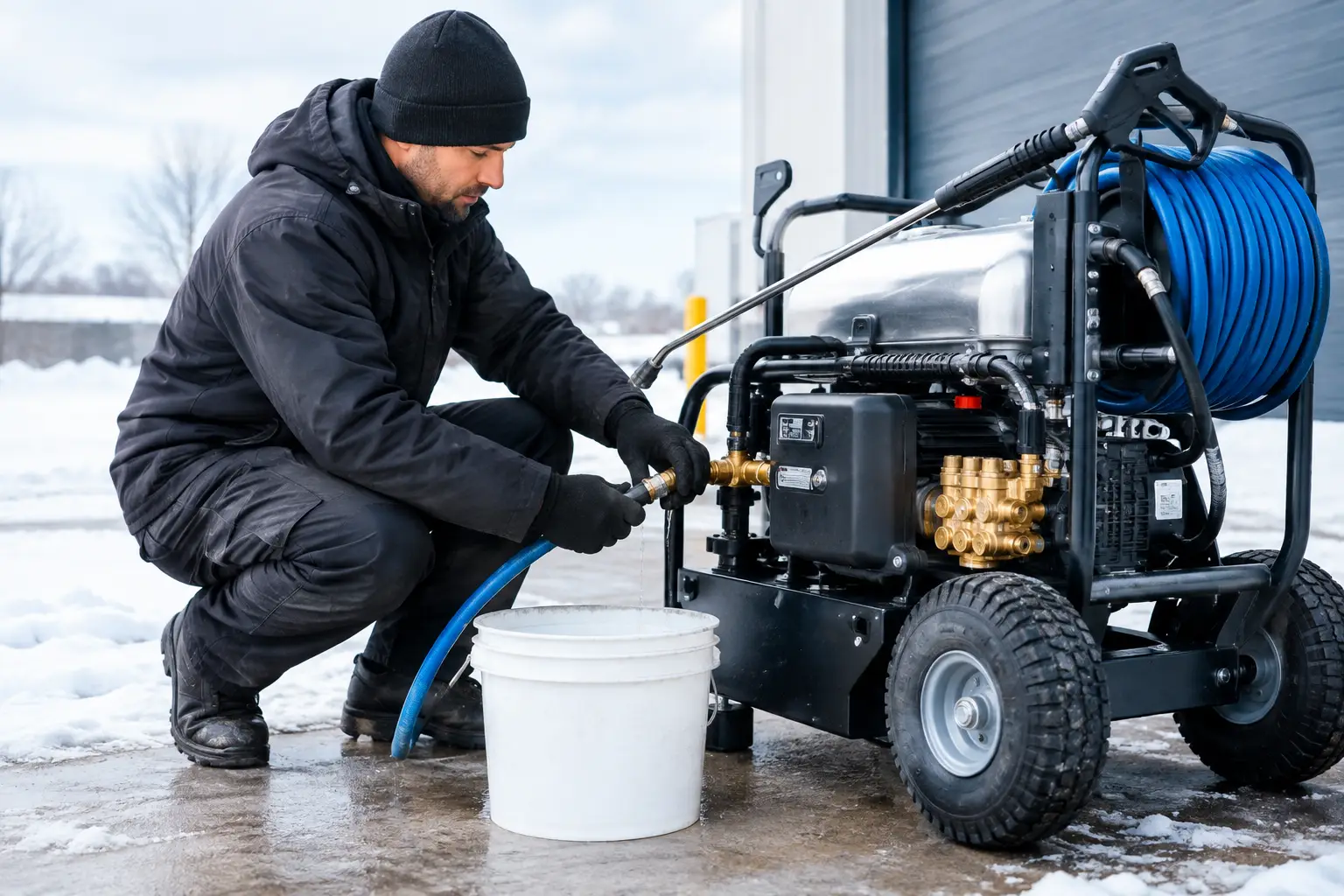
A frozen pump head can turn a routine morning start into a lost day, a repair bill, and a crew waiting on a machine that should have been ready to work. To winterize commercial wash equipment properly, you need to protect every place water can sit - not just the pump. That includes the coil, unloader, hoses, gun, inlet plumbing, chemical injector, float tank, and any auxiliary wash system on the rig.
Draining a machine is not the same as winterizing it. A few ounces of water trapped behind a check valve, in a hose reel, or at the bottom of a coil can freeze hard enough to crack brass, split a manifold, or push out a fitting. Commercial equipment has more water paths than most operators realize. The right procedure depends on whether you are storing equipment for the season, parking it outside overnight, or working through winter and protecting it at the end of each day.
When to Winterize Commercial Wash Equipment
If the machine will see temperatures at or below freezing, protect it before you put it away. Do not count on a truck box, enclosed trailer, or unheated shop to stay warm enough. They slow down the temperature drop, but they do not prevent it during a cold Pennsylvania night.
For an operator washing year-round, winterization is often an end-of-shift procedure rather than a once-per-season task. A machine kept in a reliably heated building may not need to be antifreezed every night, but the standard changes if there is any chance of a power outage, a failed heater, or an overnight parking stop away from the shop. Uptime is usually worth more than the few minutes and gallons of antifreeze it takes to protect the system.
A fully drained cold-water unit can sometimes survive a mild freeze. That is a gamble, not a service procedure. Hot-water machines require more care because the coil creates a long, low-point-rich water path that is difficult to drain completely.
Start With a Clean Water System
Before introducing antifreeze, flush out detergent, degreaser, bleach, or acid residue. Run clean water through the machine, downstream injector, chemical pickup line, and hose until the system is clear. This matters most on soft-wash equipment and combination rigs, where leftover chemical can attack components or react poorly with the winterizing fluid.
On a hot-water pressure washer, turn the burner off and let the coil cool before winterizing. Never run antifreeze through a firing burner. The goal is to displace water through the complete fluid path, not to heat the solution or create unnecessary vapor in the coil.
If your machine has a float tank, drain and rinse it first. Water remaining in the tank can freeze, and a tank that looks empty can still hold enough water around fittings or in a low spot to create trouble. Check the supply hose as well. Leaving a garden hose or fill hose connected outside is one of the easiest ways to invite a split fitting or frozen inlet.
Use the Right Antifreeze, Not Whatever Is on the Shelf
Use a non-toxic propylene glycol RV or marine antifreeze rated for freezing conditions in your area, or a pump-protection product approved for your equipment. Do not use automotive ethylene glycol antifreeze in wash equipment. It is toxic, creates an environmental problem if discharged, and does not belong anywhere near exterior-cleaning work.
Windshield washer fluid is also a poor substitute. Its freeze protection varies, it may contain alcohols that are hard on certain components, and it is not intended to protect pumps, seals, or commercial wash systems. A pump saver can be useful for a small direct-drive pressure washer, but it generally does not provide enough volume to protect a full hot-water coil, long hose, reel, and plumbing package.
Read the product label and verify the protection rating. Some pink RV antifreeze is rated for burst protection rather than continuous freeze protection at the number shown on the jug. If you expect sustained severe cold, use the mixture and procedure recommended by the machine manufacturer rather than assuming any pink fluid is good enough.
Protect Every Water Path
The exact hookup varies by machine, but the working principle is consistent: feed antifreeze into the water inlet, run the machine with the burner off, and discharge it through the gun until a solid, consistent stream of antifreeze appears. Keep the gun open long enough to move the solution through the pump, unloader, coil, hose, and nozzle.
For a unit with a float tank, introduce antifreeze through the tank or the manufacturer-approved winterizing connection. For direct-feed machines, use the inlet hose or a winterizing adapter. Keep enough antifreeze available to displace all the water. A compact cold-water unit may need only a few gallons. A hot-water skid with a large coil, dual hose reels, or a long supply line can require considerably more.
Watch what comes out of the gun. At first, the discharge will be diluted as the antifreeze pushes water from the system. Continue until the color is uniform and the output is no longer watery. Then cycle the trigger a few times to make sure the gun, lance, and nozzle are protected. If possible, move the hose reel during the process so low spots do not hold a pocket of water.
Do not forget these common freeze points:
- Downstream injectors, chemical pickup tubes, and check valves
- Hose reels, jump hoses, quick connects, and swivel fittings
- The unloader bypass circuit and thermal relief valve
- Float-tank fittings, filters, and inlet strainers
- Surface cleaners, spray bars, and rotary unions
- Soft-wash pumps, hose reels, proportioners, and transfer plumbing
Surface cleaners deserve special attention. A pressure washer may be winterized correctly while the surface cleaner sitting beside it still has water in the swivel and spray bar. Run antifreeze through it or drain it according to its manufacturer procedure. The same goes for foam cannons, remote chemical systems, and any accessory that carries water.
Hot-Water Washers Have One Expensive Weak Point
A hot-water coil is too costly to treat casually. Its long tubing run holds water even after the machine appears drained, and freeze damage can show up as a coil leak only after the unit is back under pressure. On a diesel-fired washer, leave the burner off while circulating antifreeze and make sure the coil receives the solution before shutdown.
Do not confuse burner fuel with the wash-water system. Diesel does not need to be drained just because temperatures drop, although fuel condition still matters for machines sitting for extended periods. Water contamination in fuel, a weak battery, and a plugged fuel filter can create their own winter no-start problems. Those issues are separate from freeze protection, but they often show up on the same cold morning.
If you are storing a hot-water machine for weeks or months, inspect the coil, fuel lines, battery condition, and burner enclosure after winterization. Covering the machine may keep dust off, but a wet tarp can trap moisture and accelerate corrosion. Store equipment dry and protected, with enough air movement to prevent condensation from becoming another repair job.
Soft-Wash and Chemical Rigs Need Their Own Procedure
Soft-wash equipment cannot be treated exactly like a pressure washer. Diaphragm pumps, proportioners, bleach tanks, metering valves, and dedicated chemical lines all have different compatibility requirements. First flush out sodium hypochlorite and any chemical residue with clean water. Then protect the water-side components with an approved winterizing fluid.
Do not blindly circulate antifreeze into a tank that still contains bleach or acid. Flush the system, follow the pump manufacturer's compatibility guidance, and keep products separated. In many cases, draining tanks and winterizing the pumps and plumbing is the practical approach. It depends on the rig design, how often it will be used, and whether the tanks can be kept in a heated space.
Check the Machine Before the First Freeze Job
When cold weather breaks, do not immediately hook up and go to full pressure. Inspect the pump manifold, fittings, coil connections, gun, hose ends, and unloader for cracks or seepage. Start with water flow and low pressure, then bring the system up gradually. A split component may not reveal itself until pressure reaches operating range.
If the pump is frozen when you arrive, do not start the engine or force the pump to turn. Move the machine to a warm area and let it thaw completely. Forcing a frozen pump can turn a potentially recoverable situation into a damaged crankcase, broken plungers, or a failed drive component.
Winter work puts enough pressure on a schedule without making your equipment the weak link. Build winterizing into the shutdown routine, keep the proper fluid on the truck, and treat every water-carrying accessory as part of the system. The machine that is protected at the end of the day is far more likely to earn money when the next cold morning starts.