

Hood Cleaning Setup Case Study for Real Uptime
This hood cleaning setup case study shows how to spec a dependable hot-water rig for grease work, chemical delivery, recovery needs, and field repairs.
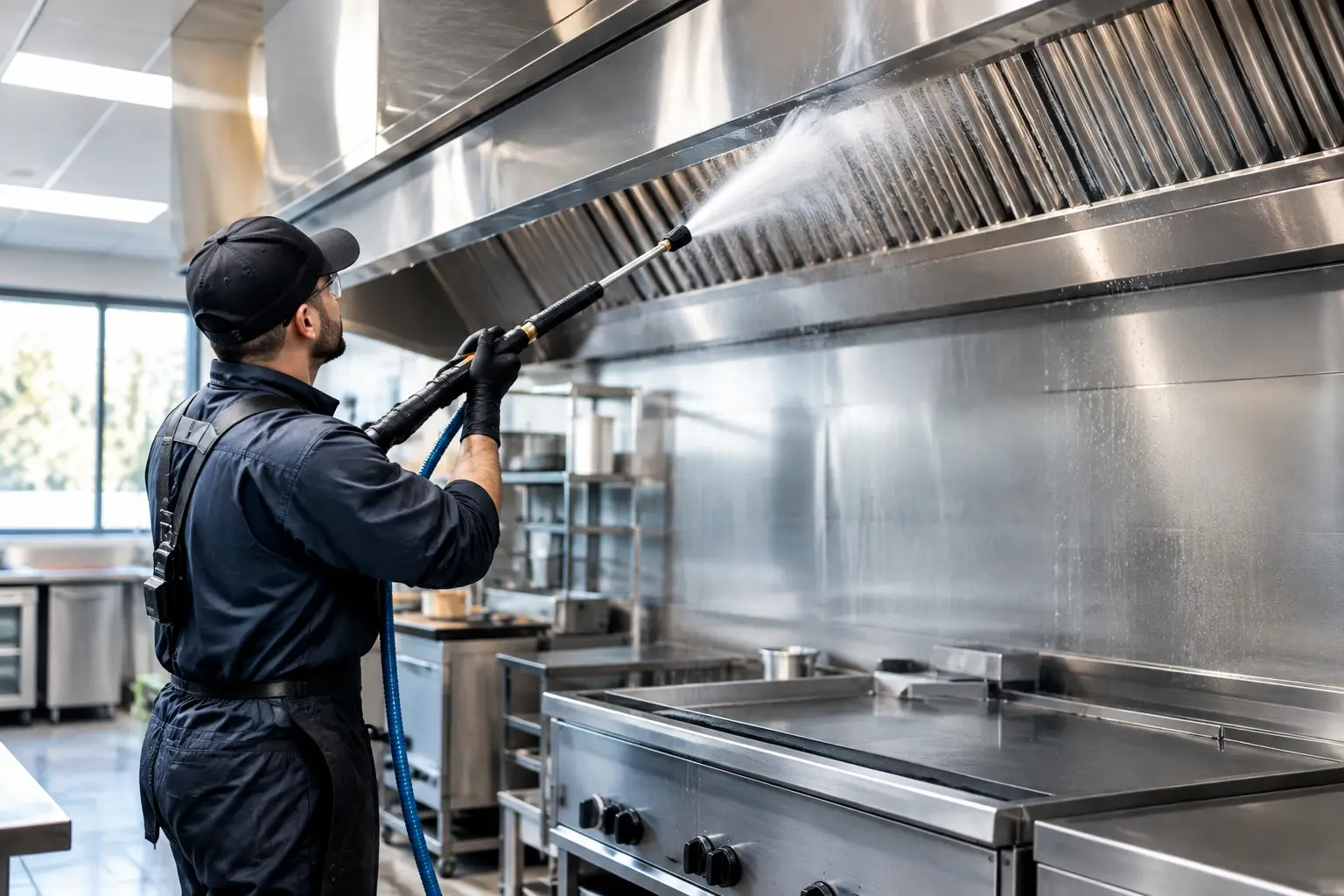
A kitchen-exhaust crew can lose a profitable overnight route over something as small as an undersized hose reel, a weak burner, or a chemical injector that does not pull correctly. This hood cleaning setup case study follows the equipment decisions behind a practical rig built for recurring grease work - not a catalog-perfect machine that becomes a problem after a few months in the field.
The operator in this example had moved beyond occasional restaurant work. He had recurring accounts, two technicians on most jobs, and a schedule built around evening and overnight access. His existing cold-water washer could rinse detergent, but it was slow on baked-on grease, consumed too much labor, and left the crew waiting on equipment instead of moving through the kitchen.
The job was not simply to buy a larger pressure washer. It was to build a setup that could deliver heat, dependable flow, usable chemical application, enough hose for real restaurant layouts, and service access when a component failed.
Start With the Hood Cleaning Job, Not the Machine
Commercial hood cleaning involves more than spraying the visible hood canopy. A working crew may be cleaning plenums, filters, accessible duct sections, rooftop fans, and surrounding surfaces while protecting electrical components, fire-suppression equipment, cooking equipment, and the restaurant itself. The setup has to fit that workflow.
The operator initially asked for high PSI. That is a common starting point, but it is not the main answer for grease work. Pressure helps break material loose, especially with the right nozzle and stand-off distance. Heat, chemical dwell time, and water volume do much of the heavy lifting. A machine with excessive pressure and limited GPM can make a tight, aggressive stream without moving enough hot water to rinse grease and detergent efficiently.
For this application, the recommendation centered on a commercial hot-water machine in the 4 to 5 GPM range, with pressure appropriate for controlled degreasing rather than maximum impact. The exact PSI depends on the pump, hose length, nozzle sizing, and the surfaces being cleaned. The point was to create a usable balance: enough force to work efficiently, enough flow to rinse, and enough heat to soften grease without turning every job into a fight.
A hot-water unit also had to be selected with the service side in mind. Burner systems add components - fuel filtration, ignition, fuel pump, electrodes, flow switches, safety controls, and a coil. That complexity is worthwhile when hot water shortens cleaning time, but only if the crew understands basic maintenance and has a repair resource when the burner quits at the wrong time.
The Hood Cleaning Setup Case Study: Building Around Workflow
The final configuration was a trailer-based setup rather than a truck-mounted build. The operator needed to preserve his pickup for daytime estimating and supply runs, and he wanted the option to drop the trailer if a vehicle required service. That is a reasonable trade-off. A truck-mounted rig can be faster to deploy and may protect equipment better, but a trailer can be the right financial and operational choice for a growing company.
The heart of the trailer was a commercial hot-water pressure washer, mounted where the burner exhaust had proper clearance and where technicians could reach the pump, unloader, battery, fuel components, and control panel. Equipment that cannot be serviced without removing half the trailer will cost time later.
The rig included a buffer tank sized for the crew's route and water-access conditions. Many restaurants provide usable water, but relying on every connection to be available, accessible, and flowing well is not a serious operating plan. A buffer tank gives the pressure washer a consistent supply and lets the crew work through minor water-flow limitations. It does not replace understanding local water and disposal requirements, and it adds weight quickly. Tank capacity must be matched to trailer payload, axle rating, and the weight of the machine, reels, tools, fuel, and recovery equipment.
A properly sized supply line from the tank to the washer mattered as much as the tank itself. Starving a pump causes cavitation, unstable pressure, and premature pump damage. If the machine is rated for 5 GPM, the feed plumbing cannot be treated as an afterthought.
Two hose reels were included: one for high-pressure hose and one for supply hose. The pressure reel carried enough hose to reach common kitchen and rooftop access points without forcing the trailer into a poor parking position. More hose is not always better, though. Long hose runs create pressure loss, add setup time, and increase the chance of abrasion or kinking. The correct answer is usually enough hose for the route, with a practical extension available for the occasional difficult site.
The crew also kept a dedicated short hose for close-in work. That sounds minor, but it reduces drag inside cramped kitchens and makes it easier to control the gun around equipment.
Chemical Delivery Was Not an Add-On
The operator's old setup used a basic downstream injector. It worked inconsistently, especially with long hose runs and certain detergents. For hood work, that inconsistency shows up as wasted chemical, poor dwell, and technicians compensating with more pressure or more passes.
The revised setup used a chemical application method chosen for the degreaser and the intended dilution ratio. The detergent had to be compatible with the injection components, hose, seals, and surfaces being cleaned. Strong caustic products can be effective on grease, but they require correct dilution, appropriate personal protective equipment, thorough rinsing, and careful protection of aluminum, painted surfaces, and sensitive equipment.
The crew carried separate, clearly labeled chemical containers and avoided using the pressure washer pump as a place to run harsh chemical unnecessarily. This protects expensive pump components and keeps the process more predictable. The right delivery method depends on the chemical, but the principle does not change: apply at a known ratio, allow dwell time, then rinse with enough hot water to remove the residue.
Recovery, Containment, and the Parts That Do Not Make the Sales Sheet
A hood cleaning rig is incomplete if it only considers spray power. Grease-laden wastewater cannot be allowed to run wherever it wants. The crew built containment and recovery into the job plan, using collection methods appropriate to the kitchen layout and the customer's disposal arrangement. Requirements vary by municipality, property owner, and job conditions, so this needs to be confirmed before work begins rather than argued about after the floor is wet.
The trailer also made room for the items that keep a route moving: spare nozzles, quick connects, O-rings, gun repair kits, a backup injector, filters, hose menders, fuel filters, basic hand tools, and absorbent material for small spills. None of these items produce a dramatic before-and-after photo. They do prevent a $10 fitting from canceling a night of work.
The machine was equipped with nozzle options for controlled application and rinsing, not just the most aggressive tip available. A technician cleaning near baffle filters, lights, control panels, or finished surfaces needs control. More pressure is not a substitute for judgment.
What the Operator Learned After the First Routes
The first improvement was labor time. Heat and adequate flow reduced the number of repeated passes on heavy grease. The larger gain, however, was consistency. The crew could arrive with the same water supply plan, chemical ratio, hose layout, and cleanup process at each location.
The second lesson was that maintenance had to be scheduled around the route. Burner fuel filters, inlet filters, nozzles, oil levels, belts where applicable, hose wear, and quick-connect condition were checked before they became a field failure. A hot-water skid that sits all week and gets inspected only when it will not fire is going to cause trouble.
Winter operation required its own discipline. Any machine, hose, coil, tank, or plumbing exposed to freezing conditions needs to be protected before it is parked. Freeze damage to a coil or pump can turn a routine week into an expensive repair. The crew also learned not to diagnose every pressure problem as a pump failure. A clogged inlet filter, worn nozzle, leaking quick connect, injector restriction, or unloader issue can all produce symptoms that look similar from the trigger gun.
Build for Service Access, Not Just Delivery Day
The right hood cleaning setup is the one that helps a crew finish the route, protect the property, and get ready for the next job without creating a repair problem of its own. That means matching PSI and GPM to the work, using hot water where it earns its keep, planning chemical and wastewater handling, and leaving room to service the components that will eventually wear.
Dieter's Industrial approaches builds from that side of the counter. The same shop that helps specify a rig also sees what happens when pumps are starved, burners are neglected, hoses are undersized, and layouts leave no access for repairs. Start with the job, then build a setup that your crew can operate, maintain, and keep earning with when the schedule gets busy.