

Best Industrial Cleaning Chemicals for Real Jobs
Choose the best industrial cleaning chemicals for soil, surface, water temperature, and equipment limits to avoid pump or coating damage in the field.
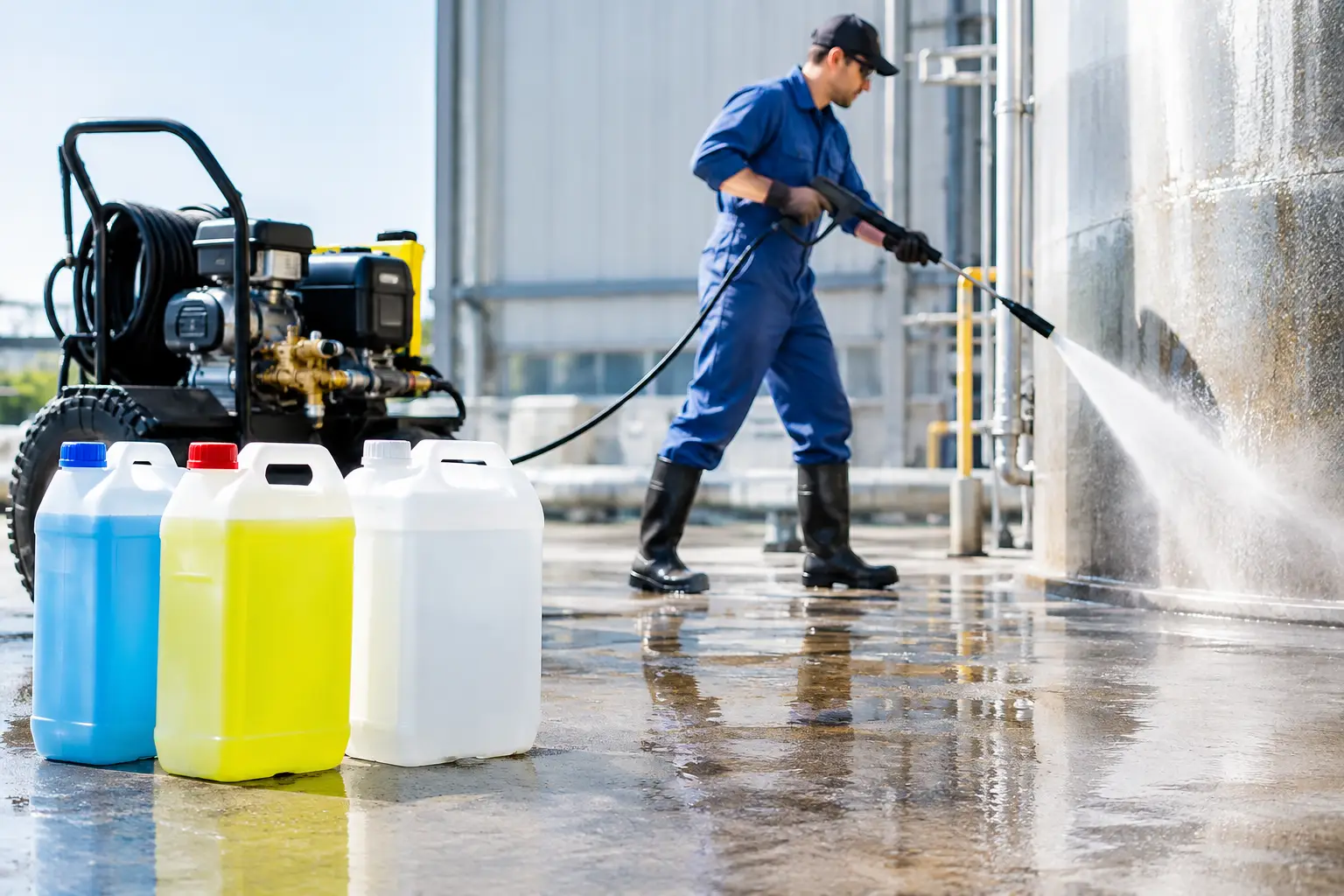
A hot-water washer can have the PSI, GPM, and burner capacity to make quick work of a fleet - then lose the job to the wrong soap. The best industrial cleaning chemicals are not simply the strongest products on the shelf. They are the products matched to the soil, the surface, the water temperature, the application method, and the equipment carrying the load.
Start with the job, not the catalog. A contractor washing greasy dumpsters needs a different chemistry than a crew removing mineral deposits from concrete, washing livestock facilities, or cleaning oxidized siding. Using the wrong product wastes labor at best. At worst, it stains aluminum, strips paint, ruins a polished surface, or shortens the life of hoses, seals, injectors, and pumps.
What Makes an Industrial Chemical the Right One?
Commercial cleaning chemistry has to do more than make foam. It needs to loosen a specific type of contamination at a workable dilution, rinse predictably, and fit the workflow. For pressure-washing operators, that also means it must be compatible with how the product is applied.
The four parts of the cleaning equation are chemistry, heat, agitation, and time. Increase one, and you may be able to reduce another. Hot water can make a quality alkaline degreaser work faster on petroleum grime. A soft-wash mix can handle organic staining with little pressure when given enough dwell time. On a delicate surface, the answer may be lower pressure and more chemistry, not more force.
That is why “strongest” is usually the wrong buying standard. Strong enough to remove the soil without damaging the substrate is the standard that protects the job and your margin.
Best Industrial Cleaning Chemicals by Soil Type
Alkaline degreasers for oil, grease, and traffic film
Alkaline cleaners are workhorses for fleet washing, heavy equipment, shop floors, dumpsters, loading areas, and other petroleum-based soils. They break down fats and oils, lift road film, and help suspend grime so it can rinse away instead of settling back onto the surface.
For vehicle and fleet work, look for a detergent that cuts road film without being unnecessarily harsh on polished aluminum, decals, painted surfaces, and brightwork. The dilution matters as much as the product. A chemical that performs well through a downstream injector may need a different ratio when applied through a pump-up sprayer, foam system, or dedicated chemical pump.
Heat is your friend with grease. If the soil is heavy and the surface can handle it, hot water paired with the correct degreaser will usually beat a cold-water machine using a stronger mix. That saves chemical and reduces the temptation to overapply caustic products.
Acid cleaners for mineral scale and oxidation
Acid chemistry has a place, but it is not a general-purpose answer. It is used for mineral deposits, hard-water scale, concrete residue, rust staining, and certain oxidation problems. It can be highly effective where an alkaline cleaner will do very little.
It can also go wrong quickly. Acids may etch glass, damage concrete, dull polished metal, stain masonry, and react badly with surfaces you did not identify before starting. Always test a small, inconspicuous area and understand what is beneath the soil. A contractor trying to remove oxidation from aluminum with the wrong acid can create a bigger problem than the one the customer called about.
Keep acid products out of pressure-washer pumps, coils, and chemical systems unless the equipment and product documentation specifically say otherwise. In most cases, apply with acid-rated equipment, allow controlled dwell time, and rinse thoroughly.
Oxidizers for organic growth and stain removal
Organic staining from algae, mildew, mold, and leaf tannins calls for a different approach than grease. Oxidizing chemistry is common for exterior cleaning, especially on siding, roofs, fences, concrete, and other surfaces where biological growth is the issue.
Sodium hypochlorite-based solutions are effective, but they demand disciplined handling. Concentration, dwell time, surface temperature, runoff control, and thorough rinsing all matter. Protect landscaping, pre-wet sensitive areas as appropriate, and never assume a stronger mix will solve an application mistake.
Do not run bleach-based mixes through a standard pressure-washer pump or a chemical injector that is not rated for it. Chemical damage may not show up during the job. It often shows up later as a failed injector, brittle hose, leaking fitting, or pump seal issue that takes the machine out of service.
Neutral and surface-safe cleaners for routine work
Not every job needs a caustic or acidic product. Neutral cleaners are often the better choice for routine building washdowns, finished floors, painted surfaces, food-service areas, and maintenance cleaning where material compatibility is the priority.
They may require more dwell time or light brushing on stubborn soil, but that trade-off is often worthwhile. Replacing damaged coatings, repairing a stained facade, or responding to a customer complaint costs more than giving a milder product time to work.
Match the Chemical to the Application Method
The best industrial cleaning chemicals can still fail when the application method is wrong. Downstream injection is convenient and keeps chemical out of the high-pressure pump, but it dilutes the product significantly. A detergent that looks aggressive in the container may arrive at the surface too weak to do the job.
A dedicated chemical pump, soft-wash system, or pump-up sprayer gives better control over mix strength. That is useful for house washing, roof cleaning, degreasing, and jobs where consistent dwell time matters. The trade-off is that these systems need chemical-compatible components and regular flushing.
If you are applying through a pressure washer, know what your injector, hose, gun, seals, and fittings can handle. Chemical compatibility is not a minor equipment detail. It is part of the job cost. A burned-up injector or damaged hose on a busy week can cost more than the savings from buying a cheaper chemical.
Water Temperature Changes the Decision
A cold-water machine can clean a surprising amount with the right detergent and enough dwell time. But when you are dealing with animal fats, hydraulic oil, food grease, or thick equipment grime, hot water changes the pace of the work.
Heat lowers the amount of chemical and pressure needed to break up oily soils. That can improve rinse time and reduce wastewater volume. It does not make every chemical safe to use at high temperature, though. Some products lose effectiveness, flash dry, or become harder to control on a hot surface.
Watch the surface temperature as well. Applying strong chemistry to sun-baked metal, glass, or painted panels is a reliable way to create streaks and uneven results. Work manageable sections, keep products from drying, and rinse before moving on.
Read the Label Like It Is Part of the Equipment Manual
Professional operators know that labels and safety data sheets are not paperwork to ignore until something goes wrong. They tell you the usable dilution range, required protective equipment, first-aid information, storage requirements, and incompatible materials.
Never mix chemicals unless the manufacturer specifically directs it. Mixing bleach with acids or ammonia-containing products can create dangerous gases. Combining products because each one works separately is not field troubleshooting. It is a safety problem.
Also plan for containment and disposal before the wash starts. Fleet yards, food facilities, agricultural operations, and commercial properties can have runoff requirements that affect the chemical choice and recovery process. The right product is one you can apply, recover or manage, and rinse responsibly at that site.
A Practical Buying Standard for Chemical Stock
For most professional cleaning operations, a small, well-chosen chemical lineup beats a truck full of specialty products you barely use. Keep a dependable alkaline fleet or equipment wash, a heavy-duty degreaser, a surface-safe general cleaner, and the specialty chemistry your regular work actually requires, such as an oxidation remover or exterior-cleaning mix.
Then build from recurring jobs. If you clean restaurant pads every week, stock for grease. If your work is farm equipment and livestock facilities, prioritize products that handle organic load and equipment-safe washdown. If you are building a fleet-wash route, test products on the actual vehicles, water conditions, and application setup you will use in the field.
At Dieter’s Industrial, the practical question is always the same: what are you cleaning, and what machine is doing the work? Bring those details to the counter before buying by the pail. A chemical recommendation is only useful if it cleans the surface, fits the equipment, and keeps your crew working instead of repairing preventable damage.
The job gets easier when chemistry, water temperature, and equipment are pulling in the same direction.