

Water Reclaim for Commercial Pressure Washing
Water reclaim keeps wash water, oil, sediment, and detergent from reaching drains and waterways. Learn what a working recovery setup requires on commercial jobs every day.
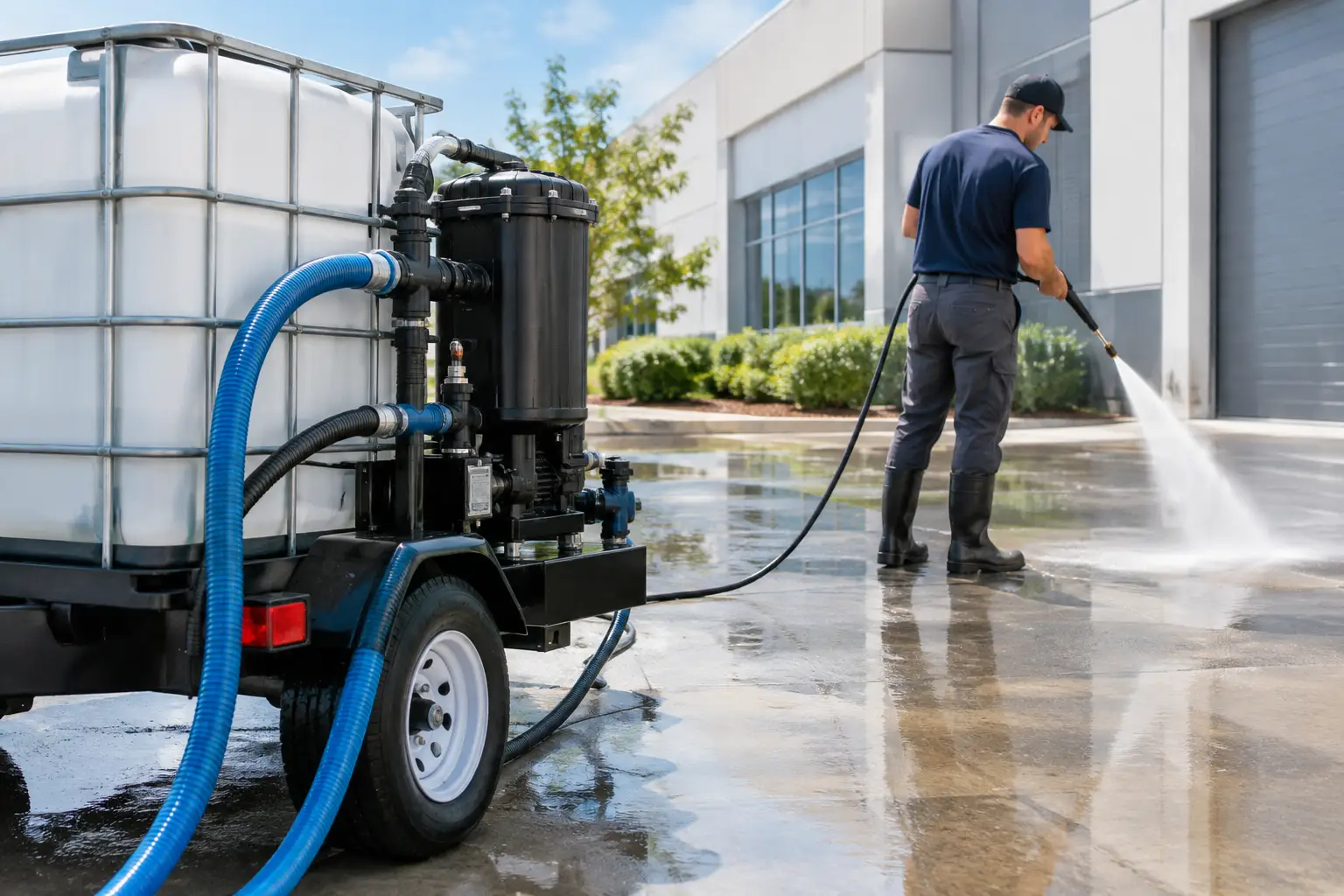
A clean parking lot can still create a dirty compliance problem. If wash water carries oil, grease, sediment, food waste, paint chips, or chemical residue into a storm drain, the job is not finished when the concrete looks good. Water reclaim gives commercial pressure-washing contractors a controlled way to capture that runoff before it leaves the work area.
For many operators, reclaim equipment becomes necessary when they move from residential work into fleet washing, dumpster pads, commercial flatwork, kitchen-exhaust cleaning, oil-stained loading areas, or municipal and institutional accounts. It is also one of the easiest systems to buy incorrectly. Start with the job, the wastewater you expect to create, and where that water can legally go after recovery. Do not start with a tank size or a catalog photo.
What Water Reclaim Actually Does
Water reclaim is the process of containing wash water, collecting it, separating out contaminants when required, and either storing it for disposal or treating it for reuse. The equipment may be as simple as containment berms, a vacuum surface cleaner, and a recovery tank. On a larger operation, it can include vacuum recovery, settling tanks, filters, oil-water separation, reclaim tanks, and plumbing that returns suitable water to the pressure washer.
Recovery and recycling are not the same thing. Recovery means you capture the wastewater. Recycling means you process recovered water so it can be used again, usually for the initial wash pass or another non-potable cleaning task. Some jobs only require capture and proper disposal. Others make recycling worthwhile because water access is limited, job volume is high, or the customer expects a closed-loop approach.
The right setup depends on the wastewater. Muddy water from agricultural equipment behaves differently than greasy water from a truck fleet. Restaurant-pad runoff may contain fats, oils, food debris, and strong degreasers. A system that handles one well may plug, foam, or overload on the other.
When a Reclaim Setup Makes Business Sense
Not every driveway job needs a full recovery trailer. But when runoff is likely to reach a storm drain, travel across a public lot, or enter a sensitive area, containment should be part of the work plan. Many commercial property managers, fleet managers, and facility teams now expect contractors to explain how they will control wastewater before work begins.
Water reclaim is especially common on fleet wash pads, equipment yards, parking garages, loading docks, dumpster enclosures, service bays, food-processing areas, and fuel-adjacent concrete. Agricultural washdown can also call for recovery, particularly where manure, soil, pesticides, or equipment fluids are involved.
The financial case is not only about compliance. Recovery can help you qualify for better commercial work, keep a customer site cleaner during service, and avoid the time-consuming mess of chasing runoff with a vacuum after it has already spread. It also reduces arguments with site managers who do not want dirty water flowing across their property.
There is a trade-off. Reclaim adds setup time, hose management, tank weight, maintenance, and disposal planning. A contractor who treats it as an afterthought will lose time on every job. A contractor who builds it into the workflow can price it correctly and work more predictably.
Build the System Around Flow, Not Just PSI
Pressure washer buyers often focus on PSI first. For washing speed, gallons per minute matters just as much. For water recovery, it matters a great deal.
A 4 GPM pressure washer can put 240 gallons of water onto a surface in an hour before accounting for rinse water. An 8 GPM machine can put out 480 gallons. Surface cleaners, open guns, and hot-water machines can move a lot of water quickly, and the recovery side has to keep up with the water being applied.
Your vacuum and recovery plumbing need enough capacity to collect runoff without allowing water to escape containment. Long hose runs, undersized vacuum hose, clogged filters, sharp bends, and weak seals all reduce real-world performance. A recovery system that looks adequate on paper can fall behind once the tank is half full and the operator is working 100 feet from the trailer.
For larger flatwork, a vacuum recovery surface cleaner can be the most efficient approach because it cleans and recovers in one pass. For irregular areas, walls, curbs, dumpster pads, and tight corners, a separate vacuum wand or sump pickup is usually necessary. Most commercial jobs require both methods.
Containment Comes Before Collection
A vacuum cannot recover water that has already crossed the property line or entered a drain. Block the path first. Use drain covers, water-filled barriers, rubber berms, sand snakes, or temporary containment mats based on the surface and job conditions.
Check the grade before unloading equipment. Water follows low points, expansion joints, cracked asphalt, curb lines, and storm-drain channels. A five-minute walk of the site can show you where to place berms and where to stage recovery hoses. It can also tell you that the planned wash direction is wrong.
Do not assume a drain is sanitary because it is near a building. Many exterior drains lead directly to stormwater systems. Confirm the discharge plan with the property owner and follow local, state, and customer requirements. If the answer is unclear, capture the water and hold it until the proper disposal method is confirmed.
Separate the Waste Before It Becomes a Problem
Reclaim systems work better when large debris and heavy solids are removed early. Letting leaves, gravel, shop rags, gum, and mud enter the vacuum tank creates clogs and slows every part of the job. Sweep first when the site allows it. Use screens and basket strainers where practical, and clean them before they become packed solid.
Settling tanks give sand, sediment, and grit time to drop out of suspension. Oil-water separation addresses free oils, but it is not magic. Emulsified oil created by aggressive detergents can be far harder to separate. Chemical selection matters. The strongest degreaser is not always the best choice if it creates disposal trouble or overwhelms the treatment equipment.
This is where operators need to be honest about the job. Water from a lightly dirty parking garage may be manageable with containment, recovery, settling, and approved disposal. Water containing paint, solvents, heavy petroleum contamination, or unknown industrial residue may require specialized handling. Do not pump questionable wastewater into a reclaim tank and hope the filters solve it.
Reusing Water Has Limits
Recycled water can reduce fresh-water demand, but it normally is not suitable for every stage of every job. Fine particles can wear pumps, clog nozzles, damage injectors, and leave residue if filtration is inadequate. If reclaimed water is being fed back to the pressure washer, filtration, tank cleanliness, and pump protection become non-negotiable.
Many contractors use recycled water for the rough wash and reserve fresh water for final rinse work. That approach can make sense on large fleet or equipment jobs, provided the system is designed for it. It may not make sense for oxidation removal, delicate surfaces, or work where appearance standards are extremely high.
Keep reclaimed water away from potable-water connections. Use the proper backflow protection and plumbing practices. If the water has a strong odor, excessive foam, visible oil, or unusual color, stop treating it as reusable process water until you understand what is in it.
Keep the Recovery Side Serviceable
Recovery equipment is working equipment. Tanks collect sludge. Float switches stick. Vacuum hoses collapse or split. Filters plug. Lid gaskets leak. Pumps lose prime. The machine may still make pressure while the reclaim side quietly fails and lets water escape across the lot.
Inspect the system before each job. Confirm the vacuum is pulling, drain covers are intact, hoses are not crushed, tank valves are closed, and filters are clean. During long jobs, monitor the tank level and vacuum performance instead of waiting for the recovery tool to lose suction.
At the end of the day, remove solids, flush the appropriate components, and address leaks while they are small. Letting wastewater sit in a tank turns routine maintenance into a foul, difficult cleanup. It also shortens the life of valves, fittings, and pumps.
For contractors building a new rig, leave room to access every filter, valve, tank lid, and hose connection. A reclaim system that cannot be serviced easily will not be serviced consistently. The best setup is not the one with the most tanks. It is the one your crew can deploy, operate, clean, and repair without slowing down the next revenue-producing job.
Water reclaim is a field process, not an accessory bolted onto a trailer. Get the containment plan, flow capacity, wastewater type, and disposal method right before the truck rolls out. That preparation protects the customer site, protects your equipment, and keeps a profitable commercial job from becoming a preventable problem.