

Best Degreasers for Oil Stains on Concrete
The best degreasers for oil stains are not simply the strongest chemicals on the shelf. They are the products that match the soil, surface, water temperature, application method, and recovery plan for the job in front of you.
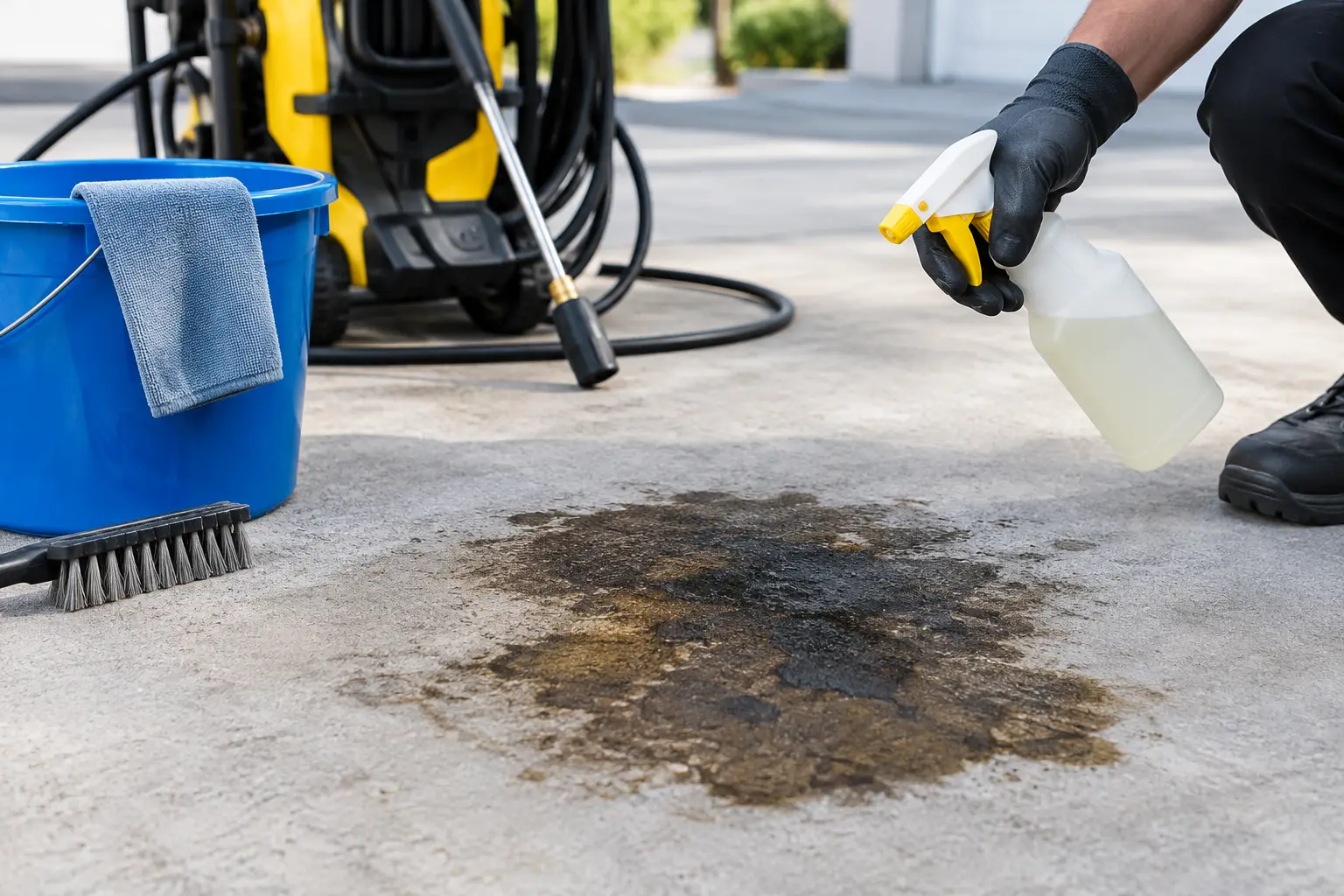
A fresh hydraulic-oil spot on a loading pad is one thing. A blackened drive lane that has collected motor oil, grease, tire tracking, and months of traffic is another. The best degreasers for oil stains are not simply the strongest chemicals on the shelf. They are the products that match the soil, surface, water temperature, application method, and recovery plan for the job in front of you.
For professional cleaners and maintenance crews, that distinction protects more than the appearance of the concrete. The wrong product can etch aluminum, stain painted surfaces, leave a slippery residue, waste labor, or create a wastewater problem that costs more than the cleaning job. Start with the job, not the catalog.
What Actually Removes an Oil Stain
Oil is hydrophobic. Water alone will push it around, especially on porous concrete. A degreaser works by breaking the bond between oily soil and the surface so the contamination can be lifted, rinsed, and ideally recovered before it reaches a drain.
Most commercial degreasers rely on some combination of alkalinity, surfactants, solvents, builders, and chelating agents. Alkaline chemistry helps saponify certain fats and oils. Surfactants surround and suspend loosened soil in water. Solvents can penetrate heavy petroleum deposits that water-based chemistry cannot reach quickly on its own. Builders improve performance in hard water, while chelators help keep minerals from interfering with the cleaning process.
That does not mean every heavy stain calls for a high-pH solvent blend. On an old, deeply absorbed motor-oil stain, a strong emulsifying degreaser may release the oil from the top portion of the slab but still leave a shadow below the surface. In that case, heat, repeat applications, agitation, absorbent material, or a poultice-style treatment may be necessary.
The Best Degreasers for Oil Stains Depend on the Job
There is no single best chemical for every oil stain. The right choice depends on what leaked, where it landed, and what sits nearby.
Heavy equipment pads and shop floors
For petroleum oil, hydraulic fluid, grease, and tracked-in grime on concrete, a concentrated alkaline degreaser with strong surfactants is usually the working choice. These products are economical when diluted correctly and effective on broad areas where a floor machine, surface cleaner, or hot-water pressure washer can do the heavy lifting.
Heat matters here. Hot water reduces viscosity, helping petroleum soils release faster. A properly operating hot-water machine paired with the right chemical often outperforms a cold-water machine using a harsher mix. Do not use heat as an excuse to skip dwell time, though. Apply chemical to a cool surface when possible, let it work without drying, agitate stubborn areas, then rinse at enough volume to carry the suspended soil away.
Fresh motor-oil leaks on porous concrete
Fresh oil responds best when the crew acts fast. First, stop the source and absorb free-standing product with an appropriate absorbent. Do not pressure wash a puddle toward a storm drain. Once the excess is removed, apply a concrete-safe degreaser at the manufacturer’s recommended dilution, work it into the stain with a stiff brush or rotary equipment, and recover the wastewater.
For one small leak, a ready-to-use or lightly diluted water-based degreaser may be more practical than setting up a large batch of concentrate. For a fleet yard with repeated spills, concentrate makes better economic sense, provided the crew can mix it consistently and safely.
Fleet washing and transportation work
Fleet oil stains frequently come with brake dust, road film, diesel residue, and oxidation-sensitive metal. A cleaner that works well on a shop floor may be too aggressive for polished aluminum, bare aluminum tanks, brightwork, or certain painted surfaces. Use a fleet-oriented degreaser that is compatible with the materials being cleaned, and test it in an inconspicuous area before committing to an entire unit.
Dilution is especially important. More chemical is not automatically more cleaning power. Overconcentration can leave streaks, attack sensitive finishes, foam excessively in recovery equipment, and add cost without improving results. Metered chemical application removes guesswork and makes it easier to reproduce a result across a fleet contract.
Food-service and kitchen-exhaust grease
Kitchen grease is not the same as crankcase oil. Animal fats and cooking oils often respond well to alkaline degreasers, particularly when heat is available. But kitchen exhaust work also involves painted surfaces, stainless steel, aluminum components, roof membranes, and strict containment requirements.
Choose a product designed for food-service grease and verify compatibility with the hood system and nearby surfaces. Caustic chemistry can be effective, but it demands disciplined handling, proper personal protective equipment, controlled dwell time, and thorough rinsing. If the chemical dries on glass, anodized aluminum, or painted finishes, a profitable job can turn into a damage claim.
Agricultural and industrial washdown
Farm and industrial sites often combine lubricants with organic soil, feed residue, manure, dirt, and mineral-heavy water. A versatile alkaline degreaser with good hard-water tolerance can make sense for routine washdown. Where petroleum deposits are thick, a stronger targeted pre-treatment may be needed before the general wash.
Here, the limiting factor is often runoff management rather than chemistry. Review where wash water travels, what the site’s containment system can handle, and whether the operation has discharge restrictions. The cleanest slab in the county is not worth a preventable environmental issue.
Match Chemistry to the Surface
Concrete can tolerate more than aluminum, but it is not indestructible. Fresh or unsealed concrete is porous and can hold oil deep below the surface. Repeated high-pressure cleaning may expose aggregate or roughen already-damaged concrete. Use pressure as a tool, not a substitute for chemical action.
Alkaline degreasers are the workhorse choice for many oil and grease jobs, but they require caution around aluminum, galvanized metal, glass, and sensitive coatings. Solvent-containing products can cut heavy petroleum soils quickly, yet they may introduce flammability, odor, material-compatibility, and disposal concerns. Citrus-based products can smell more pleasant and perform well on some oily residues, but “citrus” does not automatically mean safe for every surface or easy to discharge.
Read the product label and safety data sheet before use. Confirm the recommended dilution, required PPE, surface limitations, dwell time, and rinsing instructions. If the chemical supplier cannot clearly explain where the product belongs and where it does not, find a supplier who can.
Application Technique Is Half the Result
A good degreaser applied poorly will disappoint. Start by dry sweeping loose grit and removing pooled oil. This keeps abrasive debris from being driven into the concrete and prevents the chemical from getting diluted by standing water.
Apply from the bottom up on vertical areas to reduce streaking. On flatwork, keep the surface evenly wet but do not flood it. Give the chemical time to penetrate, usually a few minutes rather than a few seconds, and do not let it dry. Agitation is the difference-maker on old stains. A deck brush, rotary scrubber, or floor machine physically breaks the bond that chemistry has started to loosen.
Then rinse with adequate flow. PSI helps break surface soil, but GPM carries dissolved and suspended contamination away. On commercial oil jobs, a machine with usable water volume, a correct nozzle, and hot-water capability where appropriate will generally produce a faster, cleaner result than chasing the stain with high PSI alone.
Do Not Treat Wastewater as an Afterthought
Once oil is emulsified, it is mobile. Sending that water into a storm inlet is not cleaning responsibly. Plan containment before the first chemical hits the surface. Use drain covers, berms, vacuum recovery, filtration, and approved disposal methods that fit the site and local requirements.
Some operators assume a biodegradable degreaser makes discharge acceptable. It does not. Biodegradability describes what may happen over time under certain conditions. It does not erase oil, metals, detergents, or local discharge rules. For fleet lots, repair shops, and industrial sites, recovery capability is part of the equipment package, not an optional add-on.
A Practical Buying Standard
When comparing degreasers, ask four questions: What oil or grease am I removing? What materials can the product touch? How will I apply and rinse it? Where will the wastewater go? Those answers narrow the field faster than marketing claims about maximum strength.
For recurring work, buy chemistry from people who understand the equipment using it. Chemical choice affects downstream injectors, hoses, pumps, reclaim systems, and the labor time built into your bid. Dieter’s Industrial works from that same field reality: the best setup is the one that cleans effectively without creating a service issue, surface-damage issue, or disposal issue on the back end.
The next time an oil-stained pad lands on the schedule, inspect it before you quote it. Identify the stain, test a small area, plan containment, and give the chemical enough time to work. That is how you protect the surface, keep the crew moving, and leave the site genuinely cleaner than you found it.