

Gas Electric Washers for Commercial Cleaning
A customer asks for gas electric washers, and the first job is to clarify what they mean. That phrase can describe a gas-engine machine, an electric-motor machine, a gas unit with electric start, or a hot-water washer with an engine and a fuel-fired burner. Those are very different machines with different service needs.
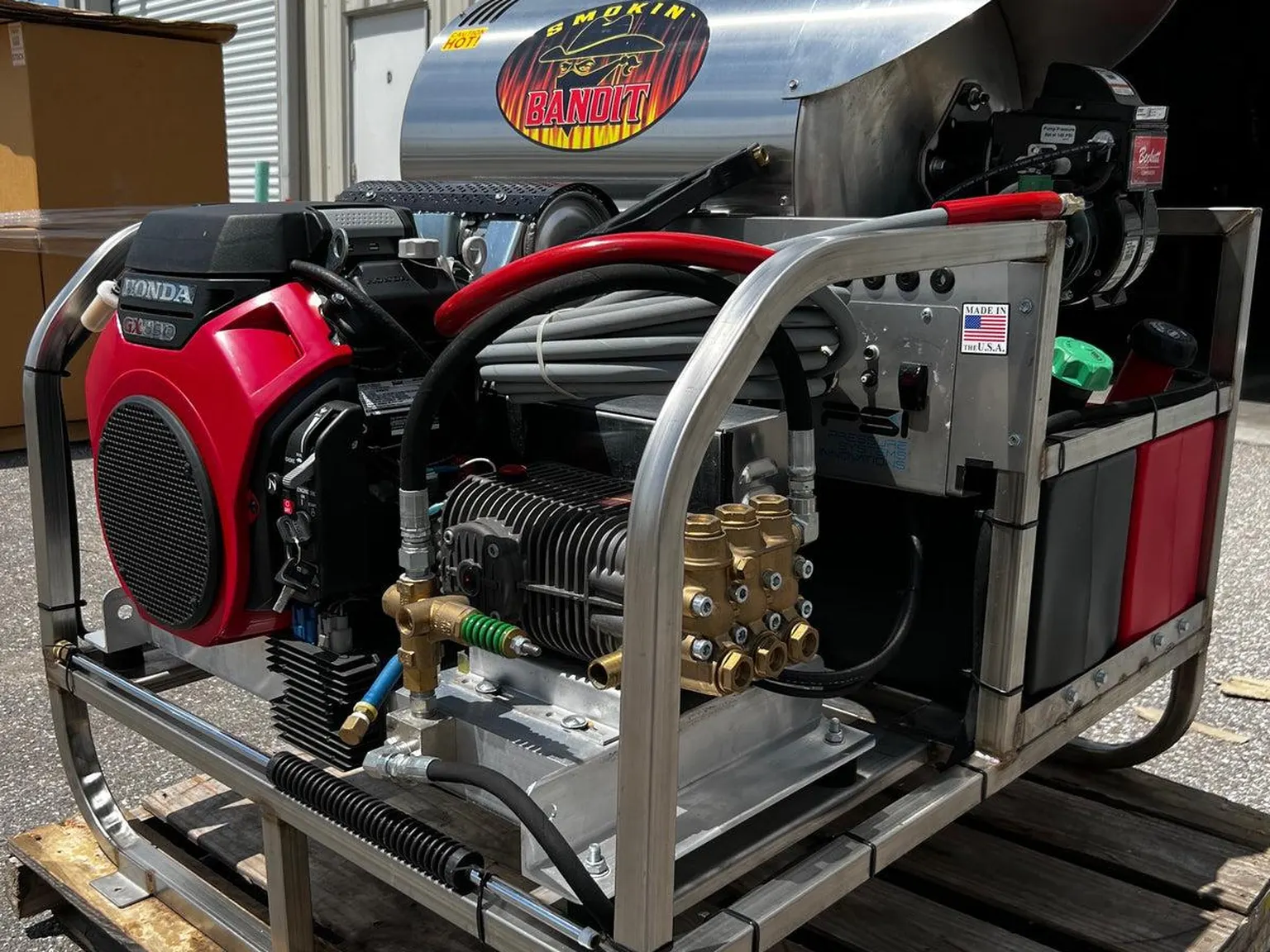
A customer asks for gas electric washers, and the first job is to clarify what they mean. In commercial cleaning, that phrase can describe a gas-engine machine, an electric-motor machine, a gas unit with electric start, or a hot-water washer with an engine and a fuel-fired burner. Those are very different machines with different service needs.
Start with the job, not the catalog. The right drive system depends on where the work happens, how much water volume the job requires, whether power is available, and what a lost day of production costs your operation.
What Gas Electric Washers Usually Mean
Most of the time, the question is really gas versus electric pressure washers.
A gas-engine pressure washer uses a small gasoline engine to drive the pump. It is self-contained, portable, and common on construction sites, fleet yards, agricultural properties, exterior-cleaning jobs, and remote commercial work. A contractor can pull up with a water source, hose, and fuel, then get to work without finding an outlet.
An electric pressure washer uses an electric motor to drive the pump. Commercial electric units are a different class from the light-duty machines sold at big-box stores. Properly specified models like the Landa 4 GPM electric can deliver serious working pressure and flow, often with the benefit of lower operating noise and no engine exhaust at the work area.
Then there are machines with electric start. A gas pressure washer with a battery and key start, like the 5.5 GPM electric-start CRX, is still a gas-engine machine. The electric system starts the engine; it does not power the pump during operation.
Hot-water equipment adds another layer. A typical hot-water gas-engine washer may have a gasoline engine driving the pump and a diesel, kerosene, or fuel-oil burner heating the water through a coil. An electric hot-water unit may use an electric motor for the pump but still rely on a separate fuel-fired burner. Never assume the word “electric” means an indoor-safe hot-water machine or that “gas” tells you how the burner is fueled. (The hot water vs. cold water guide covers when the burner is worth paying for.)
Gas Electric Washers: Choose by the Work Site
The drive system should support the work, not create another problem for the crew.
When a gas-engine washer makes sense
Gas power is usually the practical choice when jobs are mobile, remote, or spread across large properties. If your crews clean heavy equipment in a quarry, wash farm machinery, service a fleet in an uncovered yard, or perform residential exterior cleaning, engine-driven equipment keeps you independent of building power.
Gas machines also make it easier to build a complete mobile rig. A truck- or skid-mounted setup can include a buffer tank, hose reels, chemical tanks, soft-wash components, and a hot-water skid in one working package. For operators selling production-based cleaning, that mobility has real value.
The trade-off is maintenance. Engines need clean fuel, oil changes, air filters, spark plugs, and seasonal attention. Carburetors do not improve from sitting with old fuel in them. Batteries fail, recoil starters wear, and low-oil shutdowns can stop a machine at the worst time. None of that makes gas a bad choice. It means the machine needs a maintenance schedule instead of a hope-and-go approach.
Gas units also need ventilation. Never run one in a building, enclosed wash bay, trailer, or poorly ventilated loading area. Carbon monoxide is not a minor inconvenience, and routing exhaust away from doors is not the same as providing safe ventilation.
When an electric washer is the better tool
Electric pressure washers are a strong fit for indoor wash bays, food plants, equipment rooms, kitchens, facilities maintenance, and jobs where noise or exhaust creates a problem. With the right power supply, an electric unit is often easier to start, quieter at the work area, and simpler to maintain than an engine-driven machine.
For recurring work at a fixed location, electric can be the uptime choice. There is no gasoline to stabilize, no engine oil to check, and no carburetor to clean after a slow season. The pump, unloader, hoses, gun, nozzles, and water supply still require attention, but the power source is generally less temperamental.
The limitation is power availability. Commercial electric machines may need 230-volt single-phase or three-phase power, not a standard wall outlet. Before buying, confirm voltage, phase, amperage, breaker size, cord length, and whether the electrical service can handle the machine under load. Running an undersized extension cord or repeatedly tripping breakers is not an installation plan.
Electric equipment also needs protection from water intrusion. The machine may be built for wet cleaning work, but the motor controls, plugs, and connections still need to stay dry and properly grounded.
PSI and GPM Matter More Than the Fuel Choice
A common buying mistake is treating gas or electric as the main performance specification. It is not. The cleaning result comes from matching pressure, flow, heat, chemical, and nozzle selection to the surface and soil.
PSI affects impact. GPM affects how fast you can rinse, carry contamination away, and cover large areas. A 4 GPM machine can often finish a fleet or flatwork job faster than a higher-PSI machine with low flow. On the other hand, excessive pressure can damage siding, wood, mortar, decals, painted surfaces, and sensitive equipment. (If you are still weighing the two numbers, start with the PSI vs. GPM guide.)
For many exterior-cleaning contractors, chemical application and controlled rinsing matter more than chasing maximum PSI. For grease, oil, and heavy fleet soil, hot water may produce a better result than adding more pressure. For agricultural washdown, volume and reliable water supply often determine productivity as much as the washer itself.
Ask what you are cleaning, how many hours the machine will run, and what water source is available. A washer rated for strong performance on paper can still be a poor fit if the site only provides weak water flow or if the work requires indoor operation.
Service Differences That Affect Uptime
Both gas and electric machines use many of the same high-wear components. Pumps, unloaders, thermal relief valves, hoses, fittings, guns, triggers, nozzles, injectors, and filters can fail on either style of unit. Bad water supply, frozen equipment, chemical misuse, and running a pump dry will damage either one just as effectively.
Gas machines add engine-side diagnosis. If the unit starts but will not build pressure, the problem may be in the pump or unloader, not the engine. If it surges, stalls under load, or will not start, then fuel, ignition, governor, low-oil protection, or carburetor condition may be involved. A field diagnosis needs to separate engine trouble from pressure-washer trouble before parts get thrown at it.
Electric units bring their own failure points: capacitors, contactors, switches, thermal overloads, cords, plugs, and motor issues. A motor that hums but does not turn is not automatically a bad pump. A machine that quits after several minutes may be overheating, losing voltage, or dealing with a water-flow restriction that is loading the pump improperly.
The right machine is one your team can keep in service. That includes access to normal wear parts, competent repair support, and an honest answer when a major pump, coil, or engine repair is no longer worth the money.
Do Not Buy Around a Bad Power Assumption
Before selecting equipment, verify whether the job calls for portable engine power, fixed-site electric power, or a dedicated hot-water system. Measure the water supply instead of trusting a hose bib. Confirm where the machine will run, where exhaust can go, how far hoses must reach, and whether the crew needs to load the unit daily.
A compact electric washer may be exactly right for a wash bay that operates every week. A gas-engine machine like the Bandit 8 GPM skid may be the only sensible choice for a mobile fleet route. A contractor cleaning oil-soaked equipment may need hot water regardless of which drive system turns the pump.
At Dieter’s Industrial, the useful conversation starts with the cleaning work and ends with a machine your crew can service, transport, and run profitably. Pick the power source that removes friction from the job, then spec the PSI, GPM, heat, and accessories that keep the work moving. Browse the machines or ask us which one fits the job.