

Diesel Fired Washer Reviews: What Holds Up?
A hot-water washer can make a greasy fleet job profitable or turn it into a long day spent waiting on a burner that will not light.
A hot-water washer can make a greasy fleet job profitable or turn it into a long day spent waiting on a burner that will not light. That is the problem with many diesel fired washer reviews: they focus on a machine’s first impression, then skip the details that determine whether it will still produce heat halfway through a winter.
For a commercial operator, the right review is not just about PSI, price, or whether the unit arrived without damage. It is about recovery time, flow, fuel use, coil condition, parts access, and whether the machine fits the work that pays your bills. Start with the job, not the catalog.
What Diesel Fired Washer Reviews Often Miss
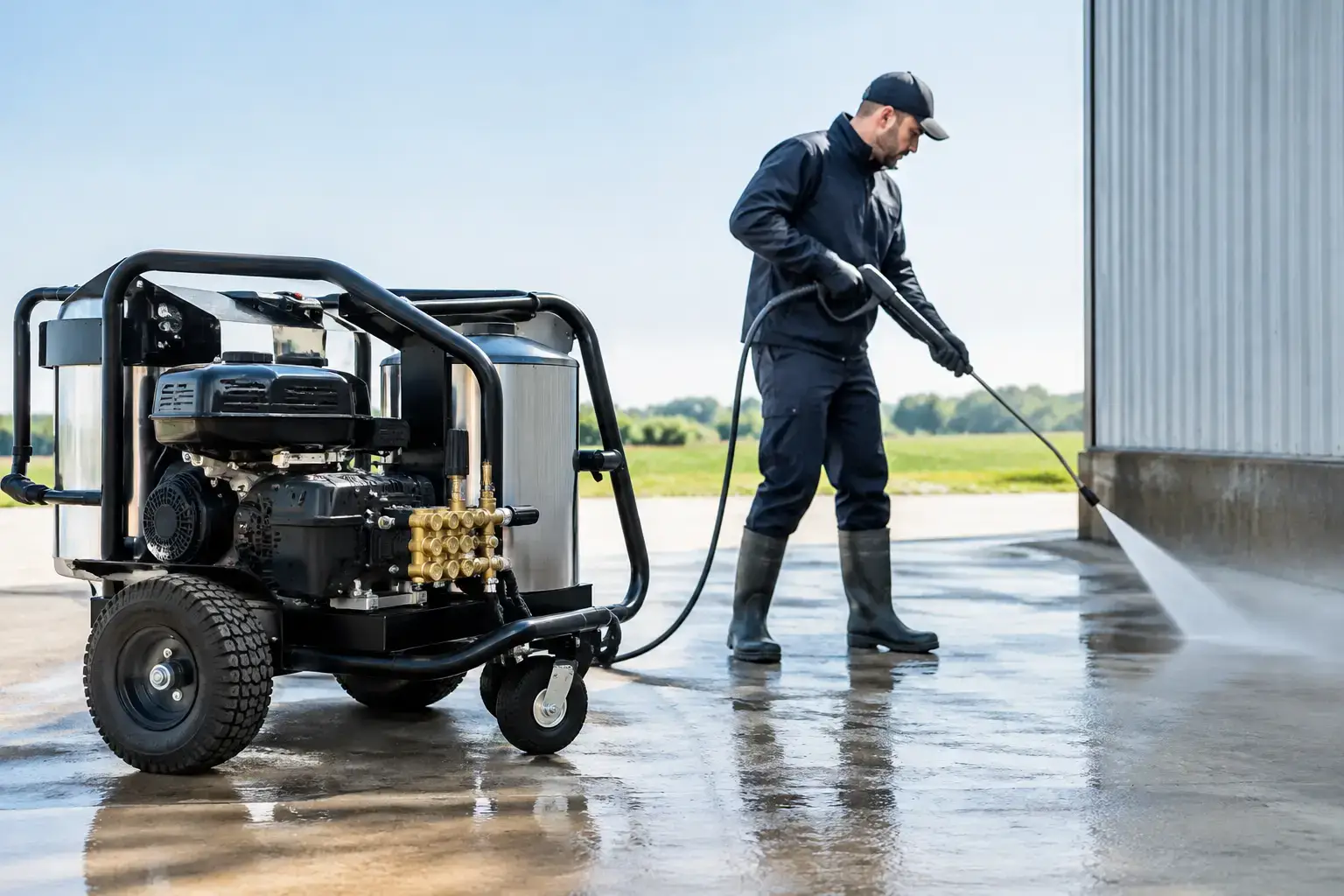
Most diesel-fired hot-water pressure washers use a fuel-fired burner to heat water as it passes through a coil. The washer itself may be powered by a gasoline engine, electric motor, or diesel engine. When contractors say they want a diesel-fired washer, they usually mean they want a diesel or kerosene burner for hot-water cleaning.
That distinction matters when comparing units. A stationary electric-powered washer with a diesel-fired burner may be an excellent fit inside a wash bay. It is a poor fit for a mobile crew without reliable electric service. A skid with a gasoline engine and diesel burner can work all day at remote sites, but it adds engine service, burner service, and more fuel management to the maintenance schedule.
The best machines earn good reviews because the system is matched correctly. Heat, water flow, engine or motor power, and the pump must all work together. A high pressure number alone does not make a productive washer.
Heat does the chemical work on oil and grease
For equipment washdown, oil-stained concrete, restaurant pads, exhaust cleaning, and fleet work, hot water changes the pace of the job. It helps break petroleum soils and animal fats loose with less chemical and less dwell time. If you clean mud, dust, siding, or general exterior surfaces most of the time, the added cost and complexity of a diesel-fired hot-water unit may not return enough value.
A cold-water machine can be the better business decision for some exterior cleaners. Do not buy heat because it sounds commercial. Buy it when heat cuts labor hours, improves results, or lets you take on work that cold water cannot handle efficiently.
Read the Specifications as a System
PSI gets attention because it is easy to market. GPM is often what determines how quickly you rinse and move soil. For many commercial wash applications, a 4 to 5 GPM machine provides a useful baseline. Higher-flow systems can clean faster, but they also demand more water supply, larger hose and reel capacity, proper drainage planning, and enough engine or motor horsepower to run the pump correctly.
A 4 GPM, 4,000 PSI hot-water washer is a common mobile setup for good reason. It is capable, transportable, and supported by widely available accessories. That does not mean it is right for every job. A fleet operation washing large trucks may gain more from 5.5 or 8 GPM than from chasing another 500 PSI. More water carries more soil away.
Also check the rated temperature and the burner output. A machine advertised with 200-degree water may achieve that temperature under specific incoming-water and flow conditions. Cold winter supply water, high flow, wind, scale in the coil, or a burner that is out of adjustment can all reduce actual outlet temperature.
The burner is not an accessory
The burner assembly is where inexpensive hot-water washers often reveal their limits. Look beyond a generic claim of diesel heat. Ask what ignition system the burner uses, whether the fuel pump and solenoid are serviceable, and how accessible the electrodes, nozzle, fuel filter, transformer, and photocell are.
A dependable burner needs clean fuel, proper air adjustment, correct electrode setting, and a clean nozzle. If it smokes, surges, trips the safety control, or produces weak heat, the problem may be simple. It may also be a cracked fuel line, restricted filter, failing transformer, worn fuel pump, damaged wiring, or a sooted coil. A review that says “the burner quit” does not tell you much unless it includes the operating conditions and maintenance history.
Coil construction deserves the same scrutiny. The coil is expensive, and it lives in a harsh environment of high heat, pressure, vibration, and mineral-bearing water. Scale reduces heat transfer and can restrict water flow. Freeze damage can split a coil. A machine with a good pump and engine is still a costly repair if the coil is neglected.
Where Popular Reviews Can Mislead Buyers
Online ratings tend to favor arrival condition, price, and early performance. Those are fair considerations, but professional buyers need to look further ahead. A lower-priced washer that uses uncommon burner controls or has limited replacement parts can be expensive when it is down during a busy week.
Pay attention to reviews from people doing work similar to yours. A homeowner cleaning a driveway once a year is not evaluating the same machine as a contractor washing a fleet every Friday. A five-star review from light use does not predict how a unit will behave after hundreds of hot-water hours, repeated transport, and exposure to freezing weather.
Negative reviews need context, too. Burners are sensitive to neglected fuel systems and improper winterization. Pumps fail early when machines run dry, bypass too long, use the wrong oil, or pull water through a restricted supply. A fair review separates a design problem from a maintenance problem.
Service Access Is Part of the Purchase Price
Every diesel-fired washer will eventually need a nozzle, filter, hose, unloader adjustment, pump seals, or burner service. The question is whether you can get the right part and diagnosis quickly. That is especially important for contractors with one primary machine. When it is down, revenue stops.
Before buying, find out whether the unit uses standard service parts and whether a technician can access the pump and burner without dismantling half the frame. Check the layout of the fuel tank, battery, control box, hose reel, and coil cover. A compact package can be convenient, but not if routine service becomes a multi-hour project.
At Dieter’s Industrial, the repair-bay view is straightforward: equipment should be judged not only by how it cleans on day one, but also by how it can be repaired on day 400. A machine with a supported pump, common burner components, and a sensible frame layout is usually worth more than a bargain unit that cannot be put back in service quickly.
Mobile, skid, and stationary setups have different strengths
A portable hot-water washer works well for smaller crews, property maintenance, and jobs where the machine must come off the trailer. A skid-mounted unit is better when the work is mobile, frequent, and built around a dedicated truck or trailer. It can carry larger water capacity, hose reels, chemical tanks, and higher flow, but it needs proper weight distribution, ventilation, and freeze protection.
Stationary equipment makes sense for wash bays, agricultural facilities, and shops with repeatable cleaning locations. Electric drive reduces engine maintenance and indoor exhaust concerns, while the fuel-fired burner still delivers heat. The trade-off is less mobility and a greater dependence on correct electrical installation and water supply.
Questions Worth Asking Before You Buy
Ask how many hours per week the machine will run, what soils you clean, whether you need hot water at every job, and where the water will come from. Then ask who will service the burner and pump when they need attention. If a seller cannot explain parts availability, winterization requirements, and the expected maintenance schedule, the price tag is not the whole story.
Fuel choice matters as well. Diesel is readily available for many fleets, while kerosene can burn cleaner in some burner applications. Use the fuel specified by the equipment manufacturer, keep it clean and dry, and do not treat the fuel tank as an afterthought. Water contamination and old fuel create burner problems that look far more complicated than they are.
The right diesel-fired washer should make your jobs faster without creating a service burden your operation cannot support. Choose enough heat and flow for the work you actually perform, maintain the burner before it becomes a no-heat call, and buy from people who understand what a down machine costs.