

Pressure Washer Nozzle Types and Selection
A pressure washer can still clean poorly because the wrong nozzle is on the gun. Match the nozzle to the job and the machine's rated GPM and PSI.
A pressure washer can have the right pump, burner, and hose setup and still clean poorly because the wrong nozzle is on the gun. Pressure washer nozzle types and selection determine how much working pressure reaches the surface, how wide the cleaning path is, and whether you are actually removing soil or just wasting water. Start with the job, then match the nozzle to the machine's rated GPM and PSI.
Start with the nozzle angle
Most commercial pressure washer tips are identified by spray angle. That angle controls the shape and concentration of the water fan. A narrow pattern hits harder but covers less ground. A wider pattern covers more area but spreads the force out.
0-degree nozzles
The red 0-degree nozzle produces a pencil stream. It is useful for reaching into cracks, cutting through stubborn buildup in a tight area, or cleaning equipment components where a fan pattern will not reach. It is also the nozzle most likely to scar concrete, cut wood, damage painted surfaces, or injure an operator.
For general exterior cleaning, a 0-degree tip usually creates more problems than it solves. If you need concentrated impact, a rotating nozzle is often a safer and more productive choice.
15-degree nozzles
A yellow 15-degree tip provides a tight fan with substantial impact. It works well on durable surfaces such as heavily soiled concrete, steel equipment, trailer frames, and some fleet applications. Keep the gun moving and maintain distance until you know how the surface reacts.
This is not a default house-washing nozzle. It can leave wand marks on siding, oxidized paint, soft wood, and aged concrete.
25-degree nozzles
The green 25-degree nozzle is the everyday working tip on many commercial cold-water units. It delivers a useful balance of impact and coverage for equipment, sidewalks, drive-through pads, painted metal, and general fleet washing. When a contractor says a machine is not cleaning, this is often the first tip we check for wear or incorrect sizing.
40-degree nozzles
The white 40-degree tip has a broad, softer fan. Use it for rinsing, washing more delicate surfaces, and covering larger areas after the heavy soil has been broken loose. It is a practical choice for vehicle rinse-downs, windows when the application allows it, and final rinsing after detergent dwell time.
The wider pattern does not make it harmless. High-pressure water can still force water behind siding, damage seals, and drive contamination into bearings or electrical components.
Soap nozzles
Soap nozzles are typically black and use a large orifice to reduce back pressure at the gun. That pressure drop allows a downstream injector to pull detergent into the water stream. They are for chemical application, not aggressive cleaning.
If your downstream injector will not draw soap, confirm that the soap tip is installed, the injector is oriented correctly, the chemical strainer is clear, and the injector matches the machine's GPM. A 40-degree rinse tip may look similar in use, but it will not create the low-pressure condition a downstream injector needs.
Pressure washer nozzle selection depends on orifice size
Spray angle is only half the decision. The nozzle orifice must be sized for your machine's flow and operating pressure. A tip that is too small restricts flow, drives pressure too high, and can cause the unloader to cycle or the pump to run outside its intended range. A tip that is too large lowers working pressure and leaves the operator blaming a perfectly good pump.
Commercial tips commonly use markings such as 2504 or 4008. The first two digits generally indicate spray angle, while the final digits identify the orifice size. A 2504 is a 25-degree nozzle with an orifice commonly matched to roughly 4 GPM at 4,000 PSI. That does not mean it is correct for every 4 GPM machine. Ratings vary with operating pressure, and the nozzle chart from the machine or tip manufacturer is the right reference.
Use the machine's actual rated GPM and PSI, not a guess based on engine horsepower or what the decal looked like five years ago. If the unit has been modified, has a replacement pump, or runs at a different pressure setting, verify the specifications before ordering tips.
Specialty nozzles have a place
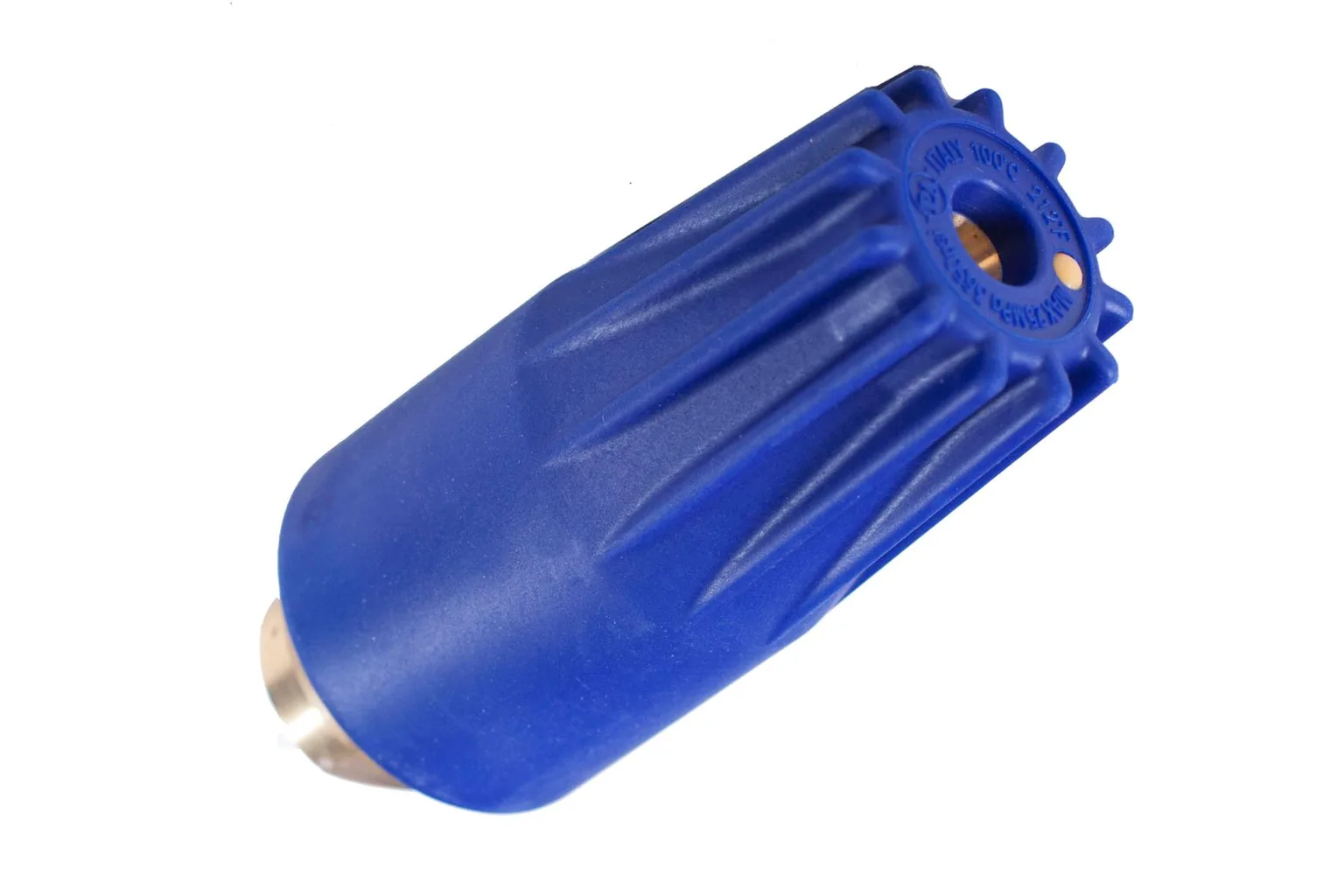
Rotating nozzles, often called turbo nozzles, combine a concentrated stream with a rotating motion. They can remove stubborn soil from concrete faster than a standard fan tip while reducing the striping risk of a fixed 0-degree stream. They are productive on the right surface, but they are not for painted equipment, wood, soft masonry, or delicate coatings.
Surface-cleaner nozzles deserve the same attention. Each bar needs matched tips sized to the washer's GPM and pressure. An oversized or undersized pair changes bar speed, cleaning quality, and pump load. Replace both tips together when one is worn.
Watch for nozzle wear before it costs you time
Nozzles wear gradually, especially when operators draw from hard water, use poor filtration, or work around grit. As the orifice enlarges, flow rises and operating pressure falls. The machine may still sound normal, but cleaning slows down, burner performance can suffer on hot-water units, and operators start holding the wand closer to compensate.
Keep a known-good test tip for each machine configuration. If pressure is down, compare the working tip to the test tip before assuming the pump, unloader, or coil is the problem. It is a quick check that can prevent an unnecessary repair bill.
A nozzle is a small, inexpensive wear item, but it controls the performance of the whole system. Keep the right angles and correctly sized spare tips on the truck, label them by machine, and replace them before a slow-cleaning job turns into a lost day.