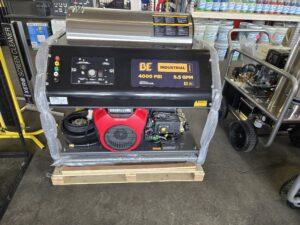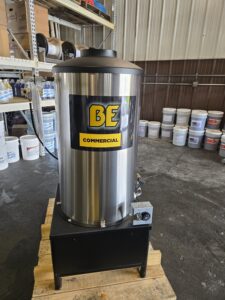
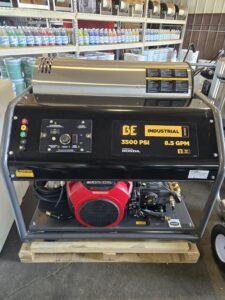

BE Commercial Hot Water Skid — 8.5 GPM @ 3500 PSI
- Pressure
- 3,500 PSI
- Flow
- 8.5 GPM
- Mounting
- Skid
- Brand
- BE
Freight — how it works and what it costs
How does freight work on this unit?Big machines like this one ship LTL freight on a pallet to your address. Freight pricing depends on your ZIP, whether it is a dock or a residence, and whether the driver needs a liftgate.
What does freight cost?We do not guess at it. You place the order, we get an exact quote from our carrier the same business day, and email it to you with a secure link.
When do I pay for freight?You approve the freight cost before anything is charged. If the number does not work for you, you are committed to nothing.
How fast will it arrive?Most quotes go out the same business day. Transit is typically a few business days after you approve the quote.
Can I skip freight and pick it up?Yes. Same-day will-call pickup at 665 Laura Ct, Lewisberry PA costs $0.
Awesome place to buy power washing machines and supplies. Thank you Ian for all your help
Patricio Alvarez · Ramsey, NJWhat it's for
This is the machine for operations where the water never really stops. At 8.5 gallons per minute it moves serious volume, and volume is what carries a loosened contaminant off the surface and down the drain. Pressure breaks the bond; flow does the removal. Most people buying their second or third machine have already learned this the hard way.
The natural homes for it are fleet wash bays, food plant washdown, and any operation cleaning large surfaces on a schedule. Hot water at this flow rate handles grease and protein soils that a cold machine will smear around and polish rather than remove.
If you are choosing between this and the 4,000 PSI unit, the question is what you clean. Large areas with organic soil want the flow. Baked-on, stubborn, localized deposits want the pressure.
Read before you buy
From the shop bench
What we see on the bench
- It is bought for flow, not pressureAt 8.5 GPM the machine sells on volume. Pressure breaks the bond; flow carries the soil away — that is why this unit belongs on wash bays and large flatwork. A machine moving this much water needs a supply that can keep up or the pump cavitates. See what a winter freeze does to the pump and coil before the hard frost.
- Burner is the part that stops productionHot water machines rarely leave the shop with a pump failure as the first problem; it is usually the burner that will not fire. Burner troubleshooting is the single most useful read for any hot water unit. A cold-morning no-fire is almost always ignition, not heat — cold-morning burner startup walks it through.
- Nozzle wear reads as lost flowWhen a crew says the machine “just doesn’t hit like it used to,” check the tip before the pump. A worn nozzle enlarges the orifice and pressure and impact drop. Nozzle sizing and wear explains the read.
Not for
Pairs with


Questions buyers ask
- Why does flow matter more than pressure at 8.5 GPM?
- Pressure loosens the contaminant; flow carries it off and over. On big flatwork and wash bays the removal side is the bottleneck, so more GPM cleans faster than a higher-PSI lower-flow machine. It is the same trade-off the PSI vs. GPM guide walks through.
- What fails first on a hot water unit?
- With a machine on a scheduled wash-down, the burner and the coil take the most work. A frozen machine cracks the pump manifold, unloader, coil and fittings — the freeze crack list covers all five. We service all of it in-house on the repair page.
Also in Hot Water
See all →