

Used Commercial Pressure Washer Inspection Guide
Whether a used machine starts tells you almost nothing. Here is how to find out if the pump, burner, engine, plumbing and safety controls will hold up under a real day of work.
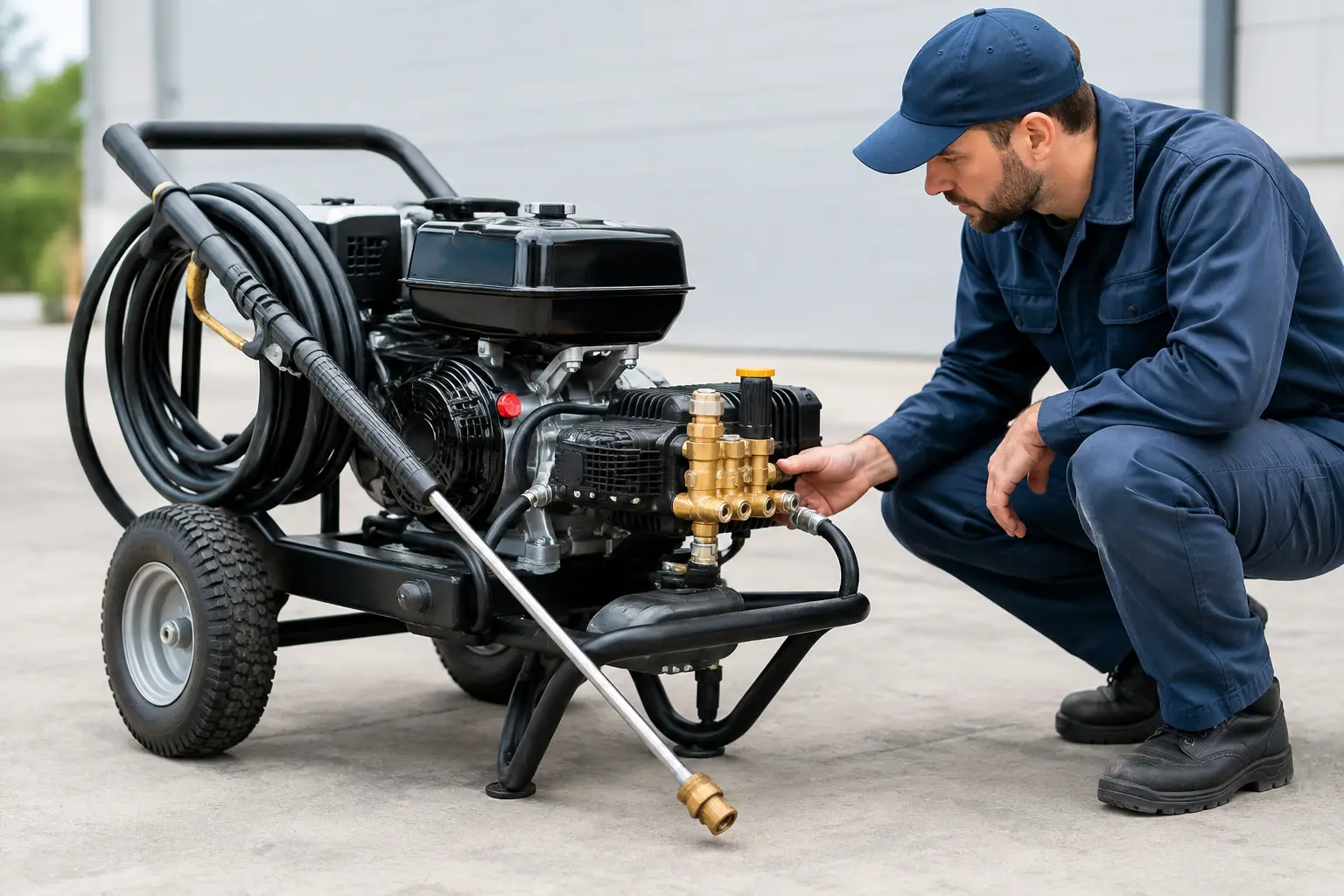
A used commercial pressure washer can be a smart way to add capacity without tying up cash in a new machine. It can also become a repair-bay project that sits on your trailer while jobs pile up. A proper used commercial pressure washer inspection is not about whether the unit starts. It is about whether the pump, burner, engine, plumbing, and safety controls will hold up under a real day of work.
Start with the job, not the price tag. A cold-water unit may be plenty for concrete, house washing, and general exterior work. If you clean greasy fleets, kitchen exhaust equipment, shop floors, or agricultural machinery, a hot-water machine can save labor — provided the burner system is sound. The right used machine is one that matches your work and leaves enough room in the budget for normal service, not one with the lowest number on the listing.
Used Commercial Pressure Washer Inspection Starts With Identification
Before running the machine, record the model and serial numbers for the pressure washer, engine, pump, and burner if equipped. Confirm the listed PSI and GPM against the machine’s data plate. Sellers sometimes quote the rating from a pump model, not the actual operating configuration.
PSI affects impact. GPM affects how quickly you move dirt and rinse a surface. A 4 GPM machine at 4,000 PSI is not automatically better than an 8 GPM machine at 3,500 PSI. For many commercial washing operations, more water volume improves production more than chasing maximum pressure. Make sure the machine has the output your surface cleaner, hose length, nozzles, and intended work actually require. (The full trade-off is in how to choose pressure washer PSI and GPM.)
Look at the overall build before focusing on cosmetic condition. Surface rust on a frame is normal. Heavy corrosion around coil supports, fuel tanks, electrical boxes, axle mounts, and plumbing fittings is different. Bent frames, cracked welds, missing guards, loose engine mounts, and homemade wiring repairs are warning signs. A machine that has been kept under cover and serviced regularly usually tells you that story before it is ever started.
Inspect the Pump Before You Trust the Pressure Gauge
The pump is where a cheap used machine often becomes an expensive purchase. Start with the oil. Milky oil points to water contamination, commonly from failed packings or seals. Oil that is extremely dark, low, or metallic-looking suggests neglected service or internal wear. Fresh oil alone is not proof of a healthy pump, but bad oil is a reason to slow down.
Check the pump manifold, fittings, hose connections, and unloader area for dried mineral buildup, leaking water, oil seepage, or damaged threads. Calcium deposits often reveal a leak that has been ignored. On direct-drive machines, inspect the connection between the engine and pump. On belt-drive machines, look at belt condition, pulley alignment, and guard hardware.
Then run it with a known-good hose, gun, and correctly sized nozzle. Do not accept a test with no nozzle installed or with a worn-out tip that changes the load on the machine — the nozzle sizing calculator will tell you what tip belongs on it. Watch the gauge while the trigger is open. Pressure should be stable, not hunting up and down. Release the trigger and listen closely. The unloader should bypass smoothly without violent pulsing, engine bogging, or water dumping from an unexpected fitting.
A few symptoms deserve extra attention:
- Pressure that surgesCan point to air entering the inlet, a restricted water supply, worn valves, a failing unloader, or pump packing issues.
- Pressure that will not reach ratingMay be a nozzle problem, but it can also mean worn packings, leaking valves, a weak engine, or the wrong pump setup.
- Water leaking from the pumpCan be a manageable seal repair or a sign of freeze damage and a cracked manifold.
- Heat while bypassingA machine that gets hot while bypassing may have an unloader issue, thermal relief issue, or a pump that has spent too much of its life recirculating water.
Run the machine long enough to get past the first minute. Some problems only show up after the pump warms up or the unloader cycles several times. (If the numbers come up short, when a pressure washer won't build pressure walks through what to check first, and when a pump rebuild pays helps you price what you find.)
Verify the Water Supply Side
Pressure washer pumps cannot make up for poor inlet water. Inspect the garden-hose connection, inlet filter, float tank if equipped, and supply plumbing. A damaged inlet screen, collapsing hose, restricted fitting, or air leak can cause cavitation. Cavitation sounds rough and rattly, and it can damage valves and packings over time.
If the machine has a buffer tank, make sure the float valve shuts off correctly and the tank is not cracked or contaminated. A tank that overflows is not just inconvenient. It can create a constant water issue on a trailer or in a shop.
Hot-Water Machines Need a Separate Burner Inspection
A hot-water unit has more production capability for grease and oil, but it also has more components that can fail. Do not pay hot-water money for a machine that only produces cold water.
Check the fuel tank for rust, leaks, old fuel, and water contamination. Inspect the fuel filter, fuel lines, burner motor, transformer or igniter, electrodes, and control wiring. A strong diesel odor, wet fittings, or fuel dripping under the burner should stop the test until the issue is corrected.
With adequate water flow established, fire the burner and let the unit reach operating temperature. The burner should light promptly and produce consistent heat without heavy smoke, rumbling, repeated shutdowns, or a strong raw-fuel smell. Watch the thermometer if equipped, but verify heat at the outlet carefully as well. A bad gauge can hide a weak burner. (Burner troubleshooting covers what each of those symptoms usually means.)
Inspect the coil jacket and combustion area for rust-through, soot accumulation, damaged insulation, and signs of previous overheating. Coil repairs can be worthwhile on the right commercial machine. A badly corroded coil or burner assembly can also change the economics of the purchase quickly. This is where a repair estimate matters more than a seller’s assurance that it “just needs a tune-up.”
Check the Engine or Electric Drive Under Load
For gasoline-powered equipment, inspect the engine oil, air filter, recoil or electric starter, throttle linkage, fuel lines, muffler, and charging system where applicable. Cold-start behavior matters. An engine that only starts after repeated cranking, choke adjustments, or starting fluid may need more than a carburetor cleaning.
Once running, the engine should hold RPM when the trigger is pulled. Hunting, stalling, excessive vibration, smoke, or a governor that cannot maintain speed will reduce pump performance. Blue smoke can indicate oil consumption. White smoke may point to fuel or moisture issues depending on the engine. Black smoke under load often deserves a closer look at fuel delivery, air flow, and engine condition.
On electric units, inspect the cord, plug, breaker, switch, contactor, motor, and wiring enclosure. Confirm the voltage and phase match the power available at your shop or jobsite. A three-phase machine is not a bargain if your operation only has single-phase power. Listen for motor bearing noise and verify that the motor does not overheat or trip protection during a working test.
Do Not Skip Hoses, Guns, and Safety Components
Accessories are not minor details when they can stop a job or injure an operator. Inspect high-pressure hose for cuts, wire braid showing through, blistering, soft spots, damaged ends, and repairs of questionable quality. Replace compromised hose rather than betting on it.
Cycle the trigger gun and inspect the lance, quick connects, nozzle holder, and nozzle threads. Make sure the trigger returns properly and does not leak heavily at the valve. Test the safety lock. Check that the thermal relief valve, pressure relief devices, and unloader plumbing are present and functional. Missing safety parts usually mean someone was trying to keep an aging machine running as cheaply as possible.
If the unit includes a surface cleaner, chemical injector, hose reel, or trailer setup, test those items too. A seized reel, plugged injector, worn swivel, or damaged surface-cleaner rotor may not kill the deal, but those costs belong in the number you are willing to pay.
Put Repair Cost Ahead of Asking Price
Used equipment rarely needs nothing. The question is whether it needs normal catch-up service or major component work. Budget for fluids, filters, nozzles, seals, hose ends, batteries, and routine maintenance unless there is clear service documentation. Those are ordinary ownership costs.
Be more cautious when the inspection points to a pump rebuild, cracked manifold, failed coil, burner control problems, engine replacement, motor replacement, or extensive rewiring. A commercial machine with a good frame and a known repair need may still be worth buying. It depends on the machine’s specifications, parts availability, age, and what the completed repair total looks like against a dependable replacement.
At Dieter’s Industrial, the repair bay sees both outcomes. Some older commercial machines deserve another productive life because the core equipment is solid and the repair is straightforward. Others cost more to revive than they can reasonably earn back. Get a clear estimate before you commit, and do not let a low purchase price hide a high downtime cost. (Our own checklist for trade-ins is in what we check before a used machine goes on the floor.)
The best used machine is not the cleanest one or the one with the biggest PSI number. It is the one you can test under load, service with available parts, and put to work without wondering whether the next trigger pull will end the day. See what is on our used equipment floor right now, or send us the listing you are looking at.