

Custom Pressure Washer Skid Build That Works
A skid should make your crew faster on the jobs that pay the bills, not just look organized in the back of a truck. Here is how to plan one around the work, the water and the wrench.
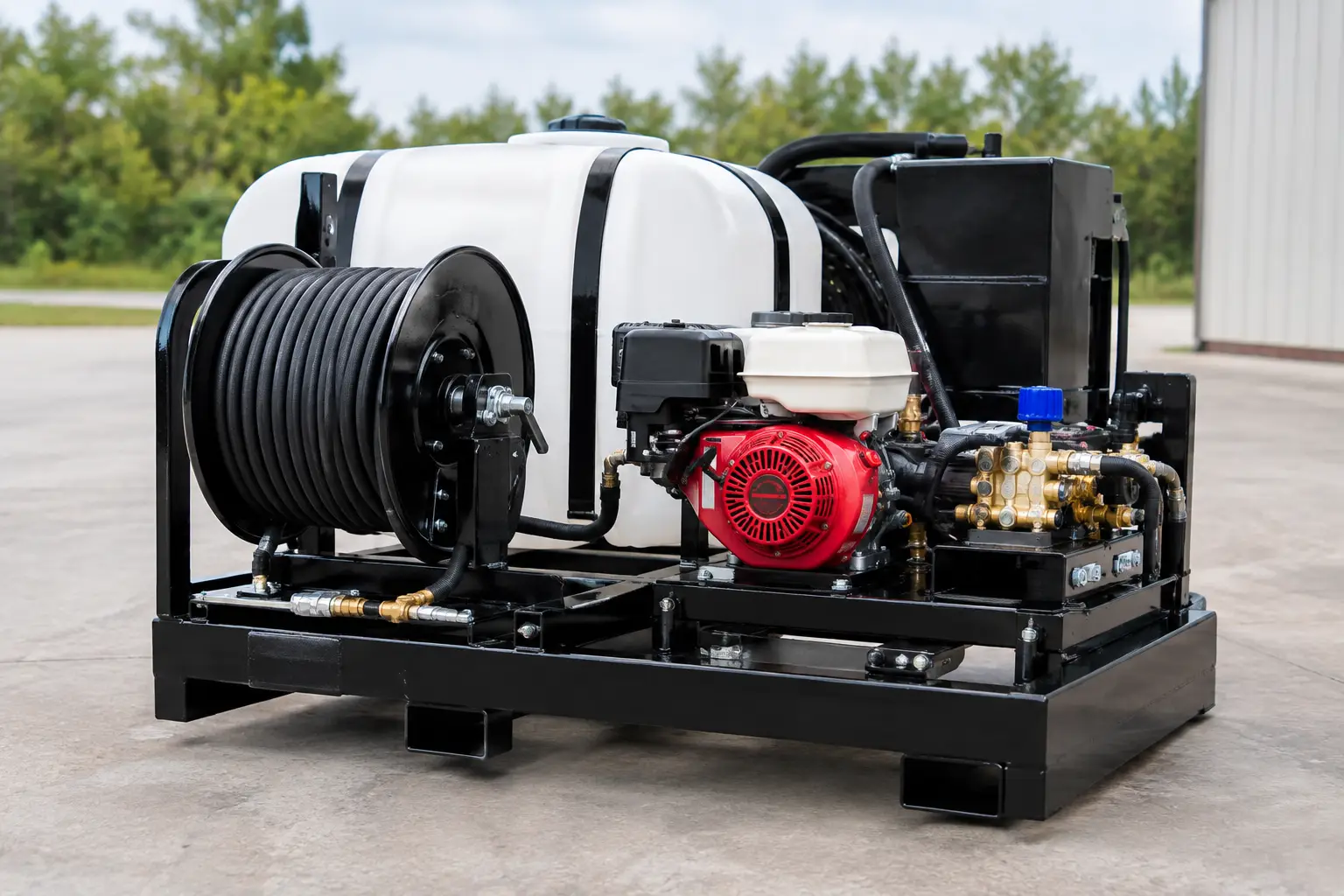
A custom pressure washer skid build should make your crew faster on the jobs that pay the bills, not just look organized in the back of a truck. The right rig keeps water flowing, chemicals controlled, hoses accessible, and service points reachable when something fails at 6:30 on a Monday morning. The wrong one creates expensive problems: starved pumps, overheated burners, overloaded trailers, tangled hose runs, and equipment that cannot be repaired without tearing half the skid apart.
Start with the work you actually do. A residential soft-wash contractor, a fleet washing company, and an agricultural washdown operation may all own pressure washers, but they need very different layouts, flow rates, tank capacities, and heating systems. A skid should be built around workflow and uptime, not around whatever components happen to fit on a frame. (If you are still deciding on the platform itself, read skid, trailer or truck mount first.)
Start With the Job, Not the Catalog
Before selecting a machine, define the daily workload. Look at the surfaces you clean, the water source at the job, the amount of travel between stops, the chemicals required, and whether you need hot water. Those answers determine the rest of the build.
A contractor cleaning vinyl siding and roofs may need a dedicated soft-wash system, chemical tanks, hose reels, and moderate-pressure rinse capability. A fleet operator dealing with road film, grease, and winter salt may need high flow, hot water, long hose runs, and enough onboard water to work at locations with poor supply. Kitchen-exhaust and industrial cleaning crews often need hot water, dependable burner performance, and a layout that safely manages grease-laden wastewater and chemical containers.
Do not spec a skid based solely on maximum PSI. Pressure helps break contamination loose, but gallons per minute determine how quickly you rinse and how effectively a surface cleaner performs. For many commercial flatwork and fleet applications, more GPM is where production improves. A 4 GPM machine can do good work, but an 8 GPM system moves twice the water and changes how quickly a crew can finish a large job.
Choose PSI and GPM as a Pair
PSI and GPM need to match the pump, engine, nozzle, hose, unloader, and cleaning application. High pressure with too little water volume can be slow on large surfaces. Excess pressure can also damage wood, siding, mortar, vehicle finishes, seals, and equipment components when the operator uses the wrong tip or gets too close. Once you know the numbers, the nozzle sizing calculator gives you the right orifice for them.
For many exterior-cleaning contractors, 3,500 to 4,000 PSI and 4 to 8 GPM is a practical commercial range. The right choice depends on whether the skid will spend its life washing concrete, equipment, homes, trucks, barns, or a mix of jobs. If you plan to run a large surface cleaner, verify its required flow before buying it. A surface cleaner that is oversized for the machine will leave streaks and waste time. (The full trade-off is in how to choose pressure washer PSI and GPM.)
Decide Whether Hot Water Earns Its Keep
Hot water is not automatically better. It adds burner maintenance, fuel storage, electrical components, coil service, and more weight. But when grease, oil, animal fats, heavy road film, or industrial grime are part of the work, hot water can reduce chemical use and labor enough to justify the added complexity. Hot water vs. cold water covers where the line usually falls.
If hot water is part of the plan, build around proper fuel capacity, burner access, exhaust clearance, and ventilation. The coil, fuel filter, ignition system, fuel solenoid, thermostat, and safety controls all need to be serviceable. A hot-water machine wedged against a tank may save a few inches of deck space, but it can turn a routine repair into a major teardown — the kind we see in burner troubleshooting every week.
Design the Custom Pressure Washer Skid Build Around Flow
The best custom pressure washer skid build follows the path of water, fuel, chemicals, and operator movement. Every component should have a purpose and a service path. That means considering where water enters the system, how it reaches the pump, where bypass water goes, how chemicals are applied, and where the operator stands when pulling hose or changing a nozzle.
Water Supply Is a Pump Protection Issue
A buffer tank is more than extra water storage. It protects the pressure-washer pump when a customer's spigot cannot provide enough volume to feed the machine. A pump that is starved for water can cavitate, run hot, lose pressure, and suffer premature damage.
Tank size depends on machine flow and job conditions. A larger tank gives more independence, but it adds weight quickly. Water weighs about 8.34 pounds per gallon, so a 325-gallon tank carries more than 2,700 pounds of water before you add the skid, machine, reels, fuel, chemicals, tools, and truck payload. Check the vehicle's payload rating, axle ratings, trailer capacity, and tongue weight before settling on tank size.
Use appropriately sized plumbing from the tank to the pump inlet. Restrictive fittings, undersized hose, clogged strainers, and poor tank venting can all create supply problems. Make the inlet filter easy to inspect and clean. If the system has a bypass return, route it correctly so hot bypass water does not continuously cycle back into the tank near the pump pickup. (The unloader and thermal relief valve are what keep that bypass loop honest.)
Build Chemical Capability Into the Layout
Chemical handling deserves the same attention as the pressure washer. Soft-wash chemicals, degreasers, downstream injectors, and proportioning systems all need compatible plumbing, clearly identified valves, and secure tanks. A chemical spill inside a truck bed or enclosed trailer is not a minor inconvenience. It can damage equipment, create fumes, and take a rig out of service.
Keep chemical lines organized and separate from fuel lines and electrical wiring. Place tanks where they can be filled safely without climbing over the skid, and give the operator a clear way to isolate each tank. If your work requires multiple products, label valves and hose connections in plain language. Your future technician should not have to guess which line feeds degreaser and which one feeds sodium hypochlorite.
Reels, Hoses, and Operator Access Matter
A reel location that looks good from the rear of the truck may be a bad choice if it forces the operator to climb onto the skid, drag hose over sharp edges, or reach across a hot burner. Position reels to support the way your crew works. Rear-mounted reels are common for curbside deployment, while side access can make sense for enclosed trailers or specific parking conditions.
Leave room for hose winding, gun storage, spare nozzles, wands, surface-cleaner connections, and daily inspections. Use reel capacity that matches the hose diameter and length you intend to carry. A reel packed too tightly makes hose retrieval frustrating and can damage fittings. Protect high-pressure hose from abrasion points, especially near the frame, doors, and tailgate.
Build It So It Can Be Repaired
Every skid eventually needs a pump seal kit, unloader adjustment, hose replacement, burner diagnosis, fuel-filter change, battery service, or electrical repair. A clean install is not enough. A serviceable install is what protects revenue.
Leave access around the engine oil drain, pump oil sight glass, belt drive or coupling, battery, fuel filter, burner controls, and plumbing unions. Mount components on a frame that can handle vibration and road use, not a light-duty rack intended for stationary equipment. Secure tanks properly, use vibration isolation where appropriate, and protect wiring in loom or conduit. Install shutoff valves where they will actually be useful during a repair.
Dieter's Industrial sees the consequences in our repair bay when a rig was assembled without service access. A simple failed fitting becomes a multi-hour job because the pump is trapped under a tank or the burner cannot be reached without removing reels. Good fabrication costs something up front. Downtime costs more when a scheduled route, fleet contract, or weekend cleaning job is on the line.
Confirm These Details Before Fabrication
Before anyone mounts the first component, confirm the complete operating plan. A written spec prevents costly changes after the frame is loaded.
- The machinePSI, GPM, engine or motor type, and whether the unit will use hot or cold water.
- Tanks and plumbingBuffer-tank size, chemical-tank count, fuel capacity, plumbing sizes, and tank placement.
- The vehicleTruck or trailer payload limits, axle ratings, frame dimensions, and tie-down strategy.
- LayoutHose-reel locations, hose lengths, surface-cleaner storage, tool storage, and operator walking paths.
- Electrical and safetyElectrical requirements, battery location, charging method, lighting, emergency shutoffs, and drain points.
Also plan for the work that happens away from the wash bay. If your crews work in freezing weather, provide a practical winterization method and a place for antifreeze connections. If you operate in regulated areas, account for wastewater recovery before the skid is built. If the rig will serve multiple crews, make the controls and labeling consistent enough that a new operator cannot easily damage the equipment.
A skid is worth building when it removes friction from your day: water where you need it, heat when the job calls for it, chemicals under control, and components you can service without losing a week. Bring the job details, vehicle information, and production goals to the design stage — see the custom rigs we have built, then send us your spec. That is where a working rig starts.