In stock


A pressure washer does not usually fail at a convenient time. It fails halfway through a fleet wash, at the start of a restaurant concrete job, or when a customer is waiting for a compliance washdown to be finished. To prevent equipment downtime, treat the machine as part of the job plan, not as something to load up and hope for the best.
A pressure washer does not usually fail at a convenient time. It fails halfway through a fleet wash, at the start of a restaurant concrete job, or when a customer is waiting for a compliance washdown to be finished. To prevent equipment downtime, treat the machine as part of the job plan, not as something to load up and hope for the best.
Most down-machine calls start with a small issue that was ignored: a plugged inlet filter, a worn nozzle, low pump oil, a collapsing supply hose, contaminated fuel, or a fitting that has been leaking for weeks. The good news is that most of these failures give you warning before they turn into a repair-bay problem.
When pressure drops, operators often blame the pump first. Sometimes the pump is the problem. Just as often, it is being starved for water.
A pressure washer pump can only deliver what the water source provides. A restricted garden hose, plugged inlet strainer, undersized supply line, weak well supply, or air leak on the inlet side can cause cavitation. Cavitation sounds rough or rattly and can damage valves, seals, and plungers. Running a pump dry, even briefly, is another fast way to create an expensive repair.
Before each job, inspect the inlet screen and make sure it is clean and seated correctly. Confirm that the supply hose is not kinked, soft, flattened, or leaking at the fittings. If you are pulling from a tank, verify that the tank vent is open, the outlet is clear, and the tank has enough water to support the machine’s gallons-per-minute rating.
Do not assume a long hose run will work just because water is coming through it. A 5 GPM or 8 GPM commercial machine needs adequate volume at the machine, not merely pressure at the spigot. If water supply is marginal, use a buffer tank or change the job setup before the pump tells you the setup is wrong. (The water supply guide goes through the numbers.)
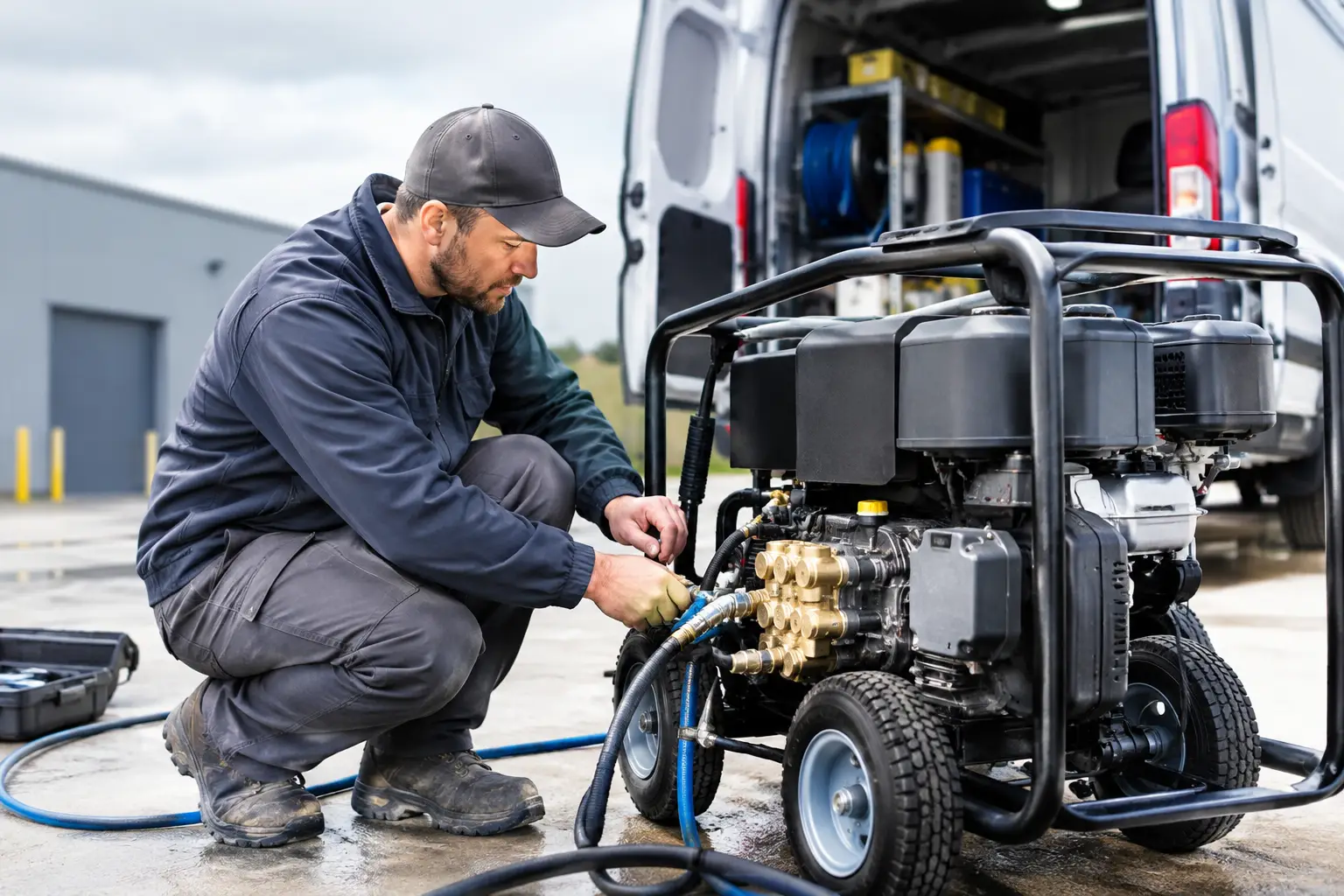
A two-minute inspection before startup is cheaper than losing an afternoon to a failed hose or loose connection. Look for obvious leaks, rubbed-through hose covers, bent fittings, loose hardware, and fresh fluid beneath the machine. Pay close attention to the places that see heat, vibration, and movement: hose reels, gun connections, bypass lines, burner plumbing, and engine mounts.
Run your hand along the high-pressure hose only when the system is shut down and pressure has been relieved. Do not inspect a pressurized hose with your hand. A pinhole leak can inject fluid into skin and requires immediate medical attention.
Check pump oil by condition as well as level. Milky oil points to water contamination. Very dark oil, metallic sheen, or a rising oil level can indicate an internal problem that deserves attention before the pump locks up. Follow the pump manufacturer’s oil interval, but shorten that interval when the machine works hard every day, runs in dusty environments, or has had a water-ingestion event.
Also look at the nozzle. A worn nozzle does more than change the spray pattern. As the orifice opens up, system pressure falls and the unloader may behave differently. Operators sometimes compensate by turning up pressure or adjusting the unloader, then create another problem. Start with the correctly sized nozzle for the machine’s PSI and GPM before changing any adjustment.
Experienced operators catch failures early because they know their equipment’s normal behavior. A pump that suddenly knocks, an engine that hunts under load, a burner that lights late, or an unloader that chatters is not something to work around for a week.
On hot-water units, pay attention to burner startup and shutdown. A clean burner should ignite consistently, produce stable heat, and shut off when trigger flow stops, depending on the unit’s control system. Excessive smoke, fuel odor, delayed ignition, or repeated lockouts can come from contaminated fuel, a restricted fuel filter, a worn fuel nozzle, improper electrode setting, a weak transformer, or an airflow issue.
Do not keep resetting a burner that is locking out. Repeated resets can flood the chamber with fuel and make a simple diagnosis more complicated. Check the basics first: fuel level, fuel condition, filter condition, battery voltage where applicable, and whether the machine has sufficient water flow. Then have the burner tested properly.
Heat is useful on grease and oil, but it adds components that need service. If hot water is essential to your revenue model, a cold-water backup machine may be a smarter investment than trying to limp through a burner failure on a deadline.
Some components wear because they are doing their job. Ignoring them does not make them last longer.
High-pressure hoses need replacement when the cover is cut, the hose is bubbling, wire braid is exposed, fittings are corroded, or the hose has been run over and crushed. A hose may still hold pressure after damage, but that is not a reason to keep it in service. Replace questionable hoses before they become a field emergency.
Guns, trigger valves, quick connects, and swivel fittings also deserve regular attention. A sticky trigger, leaking gun, or hard-to-connect coupler slows production and can leave the operator fighting the equipment all day. Keep O-rings clean, lubricated with a compatible product, and stocked in common sizes. Dirt in quick connects damages seals and creates leaks that appear to come from somewhere else.
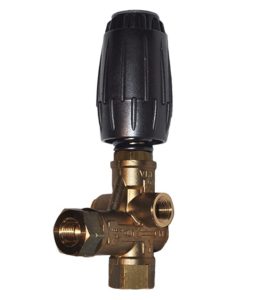
Unloaders need a different kind of attention. Their job is to manage water flow when the trigger is released. Thermal relief valves, by comparison, protect the pump if bypass water gets too hot. They are not interchangeable parts, and one does not replace the function of the other. If the machine spikes pressure, bypasses constantly, leaks from the thermal valve, or will not build pressure, diagnose the water supply, nozzle, gun, valves, and unloader in order rather than replacing parts at random.
A machine that washes a few pieces of equipment every Friday needs a different schedule than a rig cleaning restaurant pads six days a week. Hours of operation matter, but operating conditions matter too.
Keep a simple service record for each machine. Record oil changes, pump seal work, burner service, engine maintenance, filter replacement, hose replacement, and recurring symptoms. You do not need a complicated software system to get value from this. A log in the truck or a shared phone note is enough to reveal patterns, such as a burner filter that plugs every few months or a hose reel fitting that repeatedly loosens.
Stock the parts that can stop your specific operation. For many crews, that means correct nozzles, O-rings, quick connects, a trigger gun, an inlet filter, fuel filters, pump oil, and a repair coupling or spare hose. The right shelf stock depends on your machines and job mix. Carrying every part is wasteful; carrying nothing is expensive.
Freeze damage is one of the most avoidable causes of downtime in Pennsylvania and anywhere temperatures drop below freezing. Water left in a pump, coil, hose reel, or line can split fittings, crack manifolds, and damage valves. Winterize with the proper pump-safe antifreeze procedure whenever freezing conditions are possible, including overnight storage in an unheated trailer.
Storage also affects fuel, batteries, and chemical systems. Keep fuel clean and dry, drain or stabilize it when equipment sits for extended periods, and make sure batteries are charged and connections are clean. Flush chemical injectors and soft-wash components according to the chemicals used. Leaving aggressive product in the wrong line or pump can create damage that will not show up until the next job.
Not every repair should be approved. An older machine with a damaged pump, burner problems, engine issues, and a cracked frame can consume more money and downtime than it is worth. On the other hand, a quality commercial machine with a straightforward pump rebuild or burner service may have plenty of productive life left.
Get a clear diagnosis before authorizing major work. A repair estimate should identify the failed components, the likely cause, and any related wear that could affect reliability. At Dieter’s Industrial, the practical question is not whether a machine can be repaired. It is whether the repair makes sense for the work you need it to do. Bring it to the shop in Lewisberry and we will tell you straight.
The machine that earns money is the one you can trust to start, build pressure, heat when needed, and finish the job. Give it a short inspection before every run, fix small problems while they are still small, and your schedule will have fewer unpleasant surprises.
Everything the guide mentions, on the shelf in Lewisberry and shipped same day on orders in by 2 pm.

If the checks above did not get it running, stop throwing parts at it. Drop it at the shop in Lewisberry or ship it in, we diagnose it, and you get a number before any work starts. Every brand, not just the ones we sell.
We will pre-fill "Something else" on the form — change it if that is not quite it.